Why Your “Healthy” Breakfast Is Secretly Spiking Your Blood Sugar
Meet Sarah. Sarah is a 34-year-old marketing manager from Chicago who considers herself pretty health-conscious. She hits the yoga mat at 7:00 AM, drinks a big glass of water, and then sits down to what she’s been told is the “perfect” heart-healthy breakfast: a warm bowl of oatmeal topped with sliced banana and a drizzle of maple syrup, paired with a glass of fresh-squeezed orange juice.
It sounds virtuous, right? No bacon, no greasy diner potatoes, no sugary colorful cereal loops.
But by 10:30 AM, Sarah is sitting at her desk fighting the urge to nap. Her brain feels foggy, her focus is drifting, and—worst of all—she is ravenously hungry again. She finds herself prowling the office breakroom for a donut or a second cup of coffee just to power through until lunch.
 The 10:30 AM Crash: Brain fog and fatigue strike when blood sugar plummets after a “naked carb” breakfast.
Sound familiar? If you’ve ever eaten a “healthy” breakfast only to feel like you’ve hit a wall two hours later, you aren’t alone. You, like Sarah, are likely making the #1 breakfast mistake that secretly sends your blood sugar on a rollercoaster ride.
The Invisible Mistake: Eating “Naked” Carbs
The mistake isn’t that Sarah ate carbs. It’s that she ate them naked.
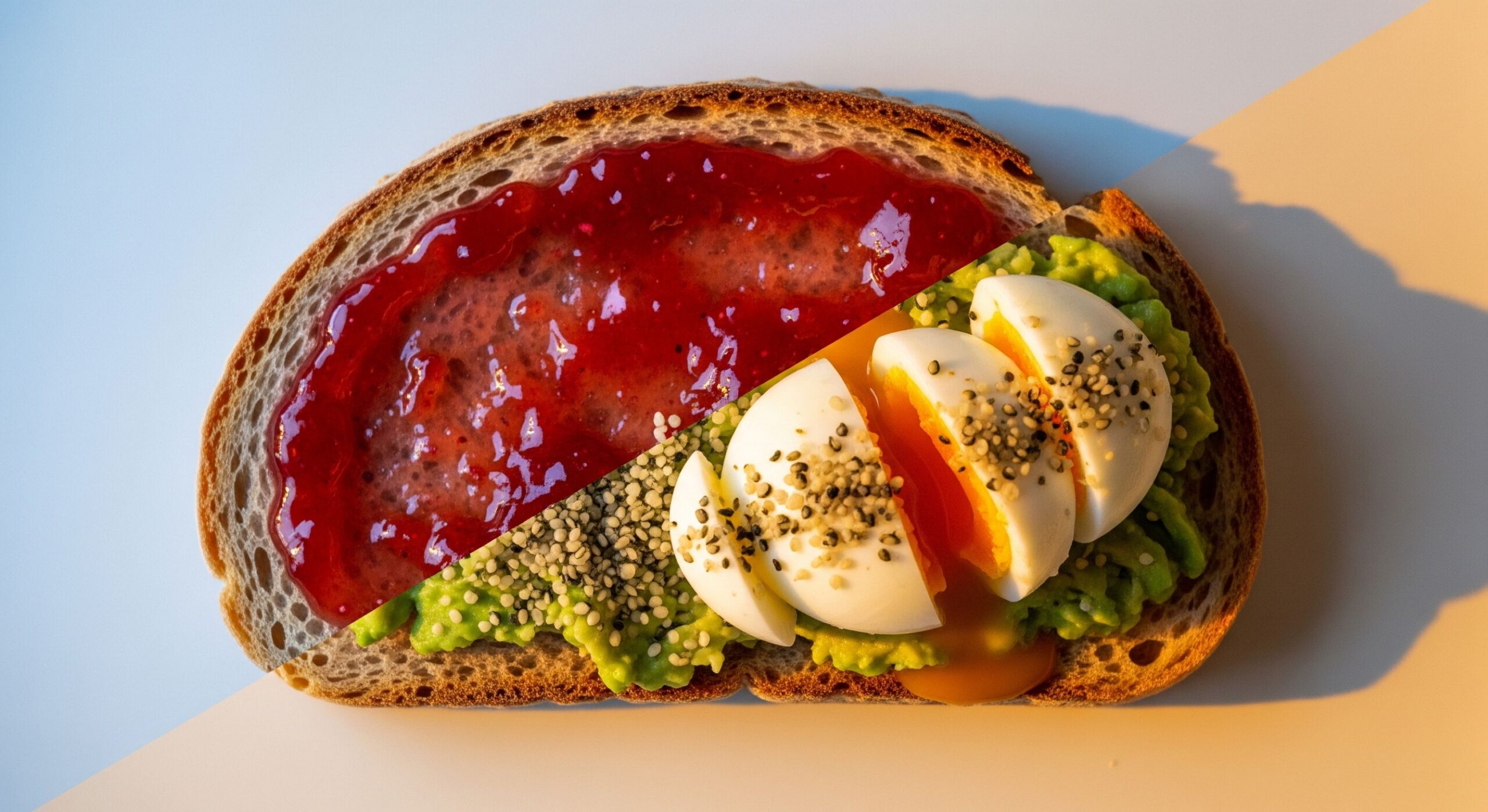
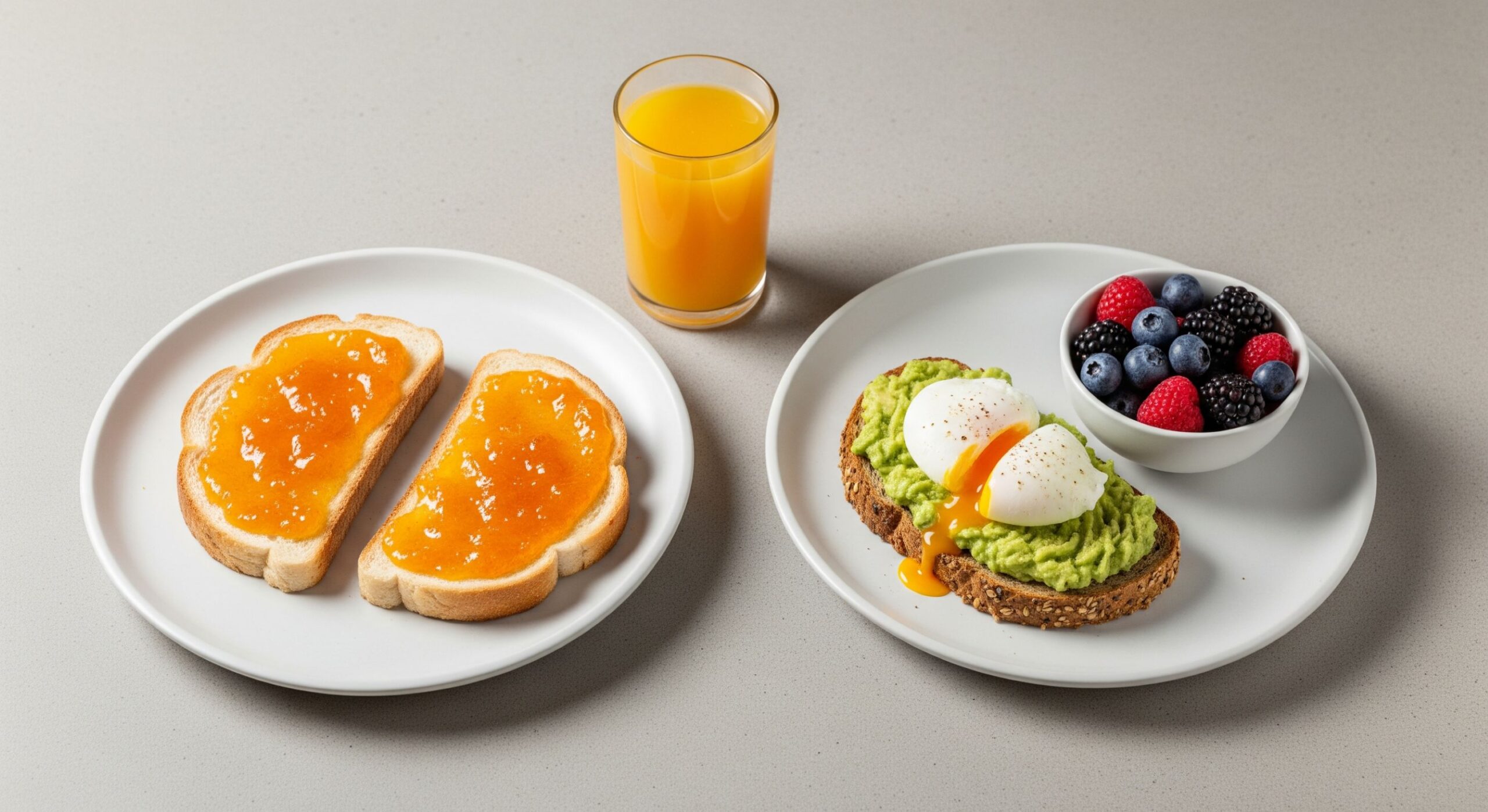 Visualizing the difference: The plate on the left spikes blood sugar rapidly, while the plate on the right uses fat (avocado) and protein (egg) to flatten the curve.
No, this isn’t about what you’re wearing at the kitchen table. In the world of modern nutrition, a “naked carbohydrate” is a carb eaten alone, without the protective company of protein, healthy fats, or fiber.
When you eat a bowl of oatmeal (a carb) with a banana (more carb) and maple syrup (sugar, which is a carb) and wash it down with juice (liquid carb), you are essentially injecting a massive load of pure glucose straight into your bloodstream.
Even though oats are a whole grain and bananas are fruit, your body breaks them all down into glucose—and fast. Without protein or fat to slow down that digestion, your blood sugar skyrockets. This is the Glucose Spike.
The Science of the Crash
Here is what happens inside your body when you eat that “healthy” fruit-and-grain breakfast:
 The Anatomy of a Spike: Eating naked carbs (like this pastry) sends glucose soaring, forcing your body to release a flood of insulin.
- The Launch: You eat the naked carbs. Your digestion works quickly because there’s no fat or protein to slow it down. Glucose floods your bloodstream.
- The Panic Button: Your body notices this massive surge of sugar. High blood sugar is dangerous, so your pancreas pumps out a hormone called insulin to tidy up the mess.
- The Crash: The insulin does its job a little too well. It shoves the glucose into your cells so fast that your blood sugar levels plummet below where they started.
- The Craving: Your brain senses this low blood sugar (hypoglycemia) and panics. It thinks you are starving. It screams, “Eat sugar! Now!”.
That is why Sarah was hunting for donuts at 10:30 AM. It wasn’t a lack of willpower; it was biology.
The “Healthy” Culprits
We often think of blood sugar spikes as something that only happens after eating candy bars or soda. But in the United States, our standard “healthy” breakfast options are actually sugar bombs in disguise.
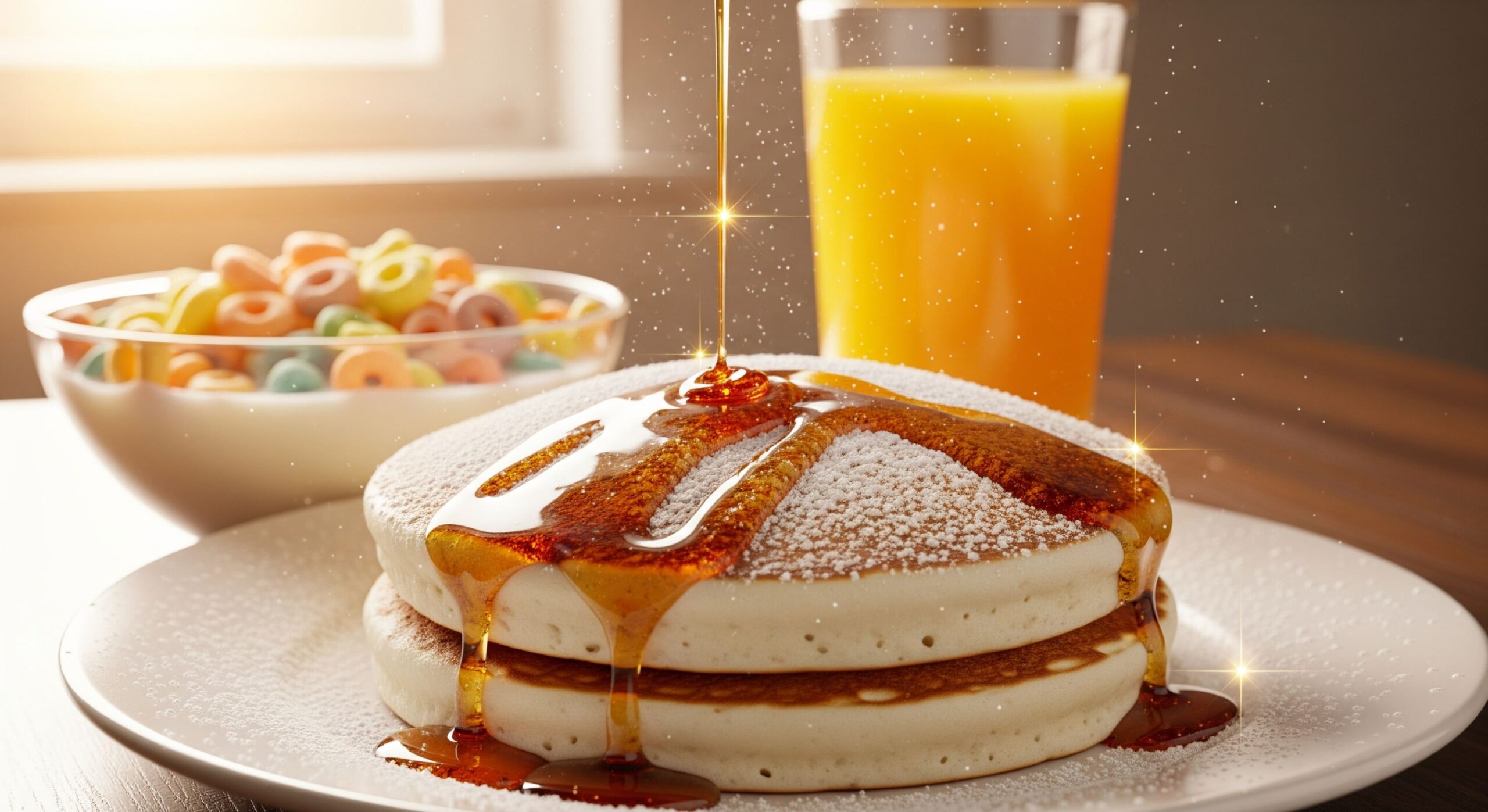 Standard breakfasts often combine “naked carbs” with liquid sugar, creating a perfect storm for glucose spikes.
- Instant Oatmeal: Often highly processed, which means it digests even faster than steel-cut oats.
- Fruit Smoothies: Blending fruit tears apart the fiber, making the sugar hit your system faster. If it’s just fruit and juice, it’s basically a dessert.
- Toast and Jam: Even whole wheat toast is still bread. Add jam, and it’s a carb-on-carb party.
- Acai Bowls: These are often loaded with honey, granola, and tropical fruits, sometimes containing more sugar than a milkshake.
The Fix: Put Some “Clothes” on Your Carbs
The solution isn’t to banish oatmeal or fruit forever. You just need to dress them up. This concept, popularized by biochemists like Jessie Inchauspé (the “Glucose Goddess”), suggests that you should never let your carbs walk around naked.
You need to pair them with Protein, Fat, and Fiber. These nutrients act like a buffer. They slow down the rate at which your stomach empties, meaning the glucose enters your bloodstream in a slow, steady trickle rather than a tsunami.
The Savory Switch (The Gold Standard)
The absolute best way to stabilize your energy is to switch to a savory breakfast. Instead of treating breakfast like a dessert, treat it like lunch.
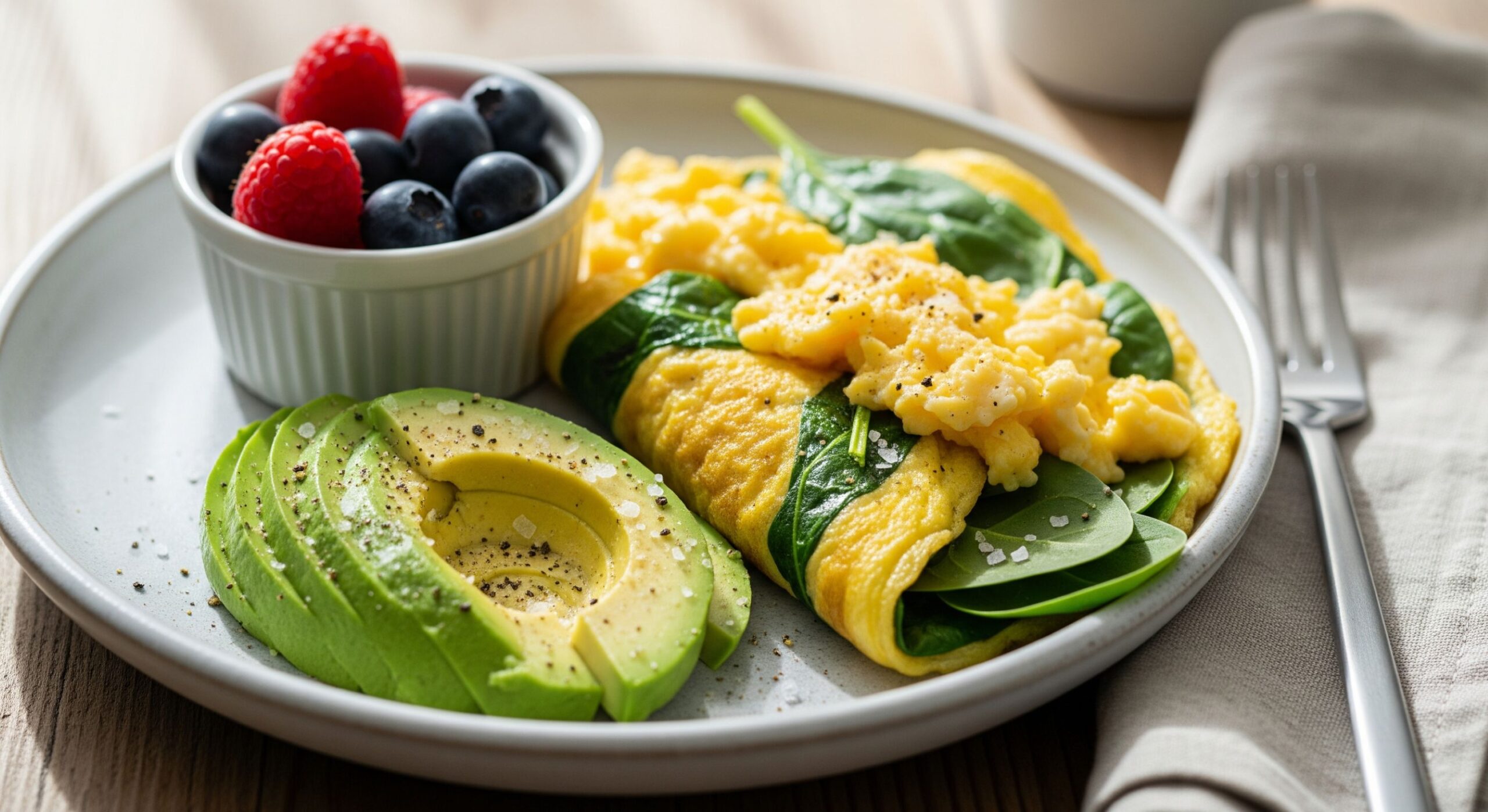 The “Savory Switch”: Eggs and avocado provide protein and healthy fats to keep you full for hours, unlike a bagel or cereal.
Anecdote: The Mike Makeover Mike, a 42-year-old teacher from Ohio, used to eat a bagel with cream cheese every morning. He’d be exhausted by his second period class. He decided to try the “savory switch.” He swapped the bagel for two eggs scrambled with spinach and a side of avocado.
“It was weird at first not having something sweet,” Mike said. “But the difference was instant. I cruised through to lunch without even thinking about the vending machine. I felt like my brain actually turned on.”
How to Hack Your Sweet Favorites
If you simply cannot live without your morning oats or smoothie, you don’t have to give them up. You just need to hack them.
1. The Oatmeal Hack
Don’t make it with water. Use milk or a high-protein plant milk. Then, add “clothing”:
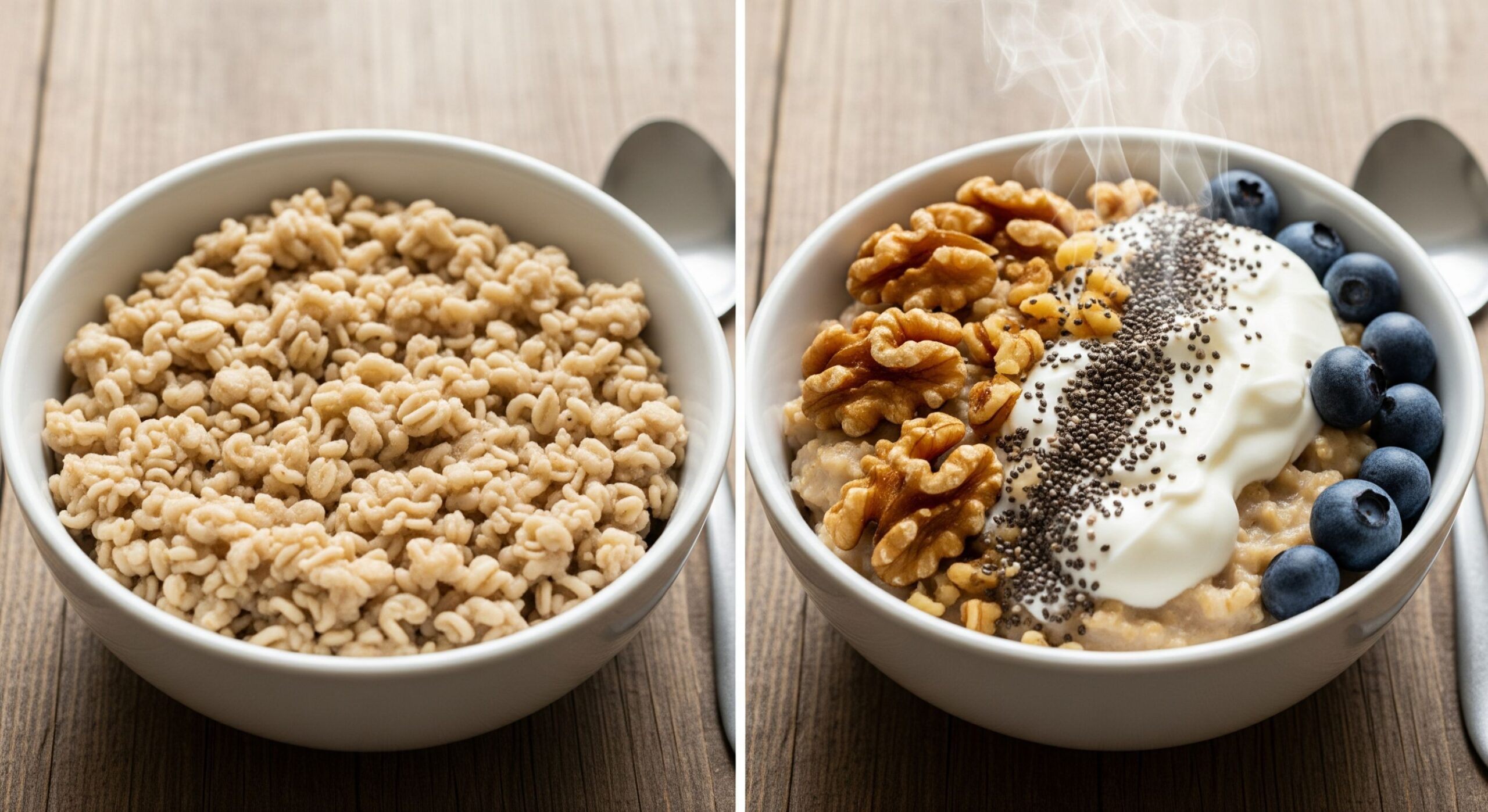 The Oatmeal Hack in action: Transformation from “naked” starch (left) to a balanced meal with fat, fiber, and protein (right).
- Add Fat: A scoop of peanut butter or a handful of walnuts.
- Add Protein: Stir in a scoop of protein powder or Greek yogurt.
- Add Fiber: Throw in some chia seeds or flaxseeds.
- Result: You get the comfort of oats without the aggressive spike.
2. The Smoothie Hack
Stop making smoothies with just orange juice and frozen berries.
- Liquid Base: Use unsweetened almond milk or water instead of juice.
- The bulk: Add a handful of spinach (you won’t taste it, promise).
- The anchor: You must add protein powder, avocado, or nut butter.
3. The Toast Hack
Never eat dry toast or toast with just jam.
- Smear it with avocado (fat and fiber).
- Top it with a poached egg (protein).
- Use peanut butter instead of jelly.
Why This Matters for Everyone (Not Just Diabetics)
You might be thinking, “I don’t have diabetes, so why do I care about blood sugar?”
Here is the reality: Unstable blood sugar affects everyone. Constant spikes and crashes are linked to inflammation, premature aging (wrinkles!), hormonal imbalances, and long-term metabolic damage. But in the short term, they are the thieves of your daily joy. They steal your energy, ruin your mood, and give you that “hangry” feeling that snaps at your coworkers.
Bonus Strategy: The Order of Eating
Here is a secret weapon used by athletes and metabolic experts: It’s not just what you eat, but how you eat it.
Research suggests that eating the components of your meal in a specific order can reduce the glucose spike of that meal significantly. The magic order is:
- Fiber first (Vegetables)
- Protein and Fat second (Eggs, yogurt, meat)
- Starches and Sugars last (Bread, fruit, sweets)
By eating the fiber first, you create a protective mesh in your intestines that slows down the absorption of the sugars that follow. So, if you are having that toast and eggs, eat the eggs first, then the toast!
Frequently Asked Questions
Can I never eat fruit again?
Not at all! Fruit is packed with vitamins. The key is to eat it whole (not juiced) to keep the fiber intact, and always pair it with fat or protein (like apple slices with peanut butter) to slow down sugar absorption.
What if I don’t like eggs?
No problem. Unsweetened Greek yogurt, cottage cheese, tofu scrambles, protein powder, or even leftovers from dinner (like chicken or beef) are excellent savory breakfast options high in protein.
Is coffee bad for my blood sugar?
Black coffee typically doesn’t spike blood sugar for most people. However, sweetened creamers, sugar, and even oat milk (which is high in starch) can cause significant spikes. Try using heavy cream, unsweetened almond milk, or stevia instead.
Conclusion: The New Morning Rule
Tomorrow morning, when you walk into the kitchen, remember Sarah. Don’t send your body on a rollercoaster ride before you’ve even checked your email.
 The result: Stable blood sugar means better focus, mood, and productivity throughout the workday.
Look at your plate and ask:
“Are my carbs naked?”If yes, throw some clothes on them. Add an egg, grab a handful of almonds, or stir in some yogurt.