
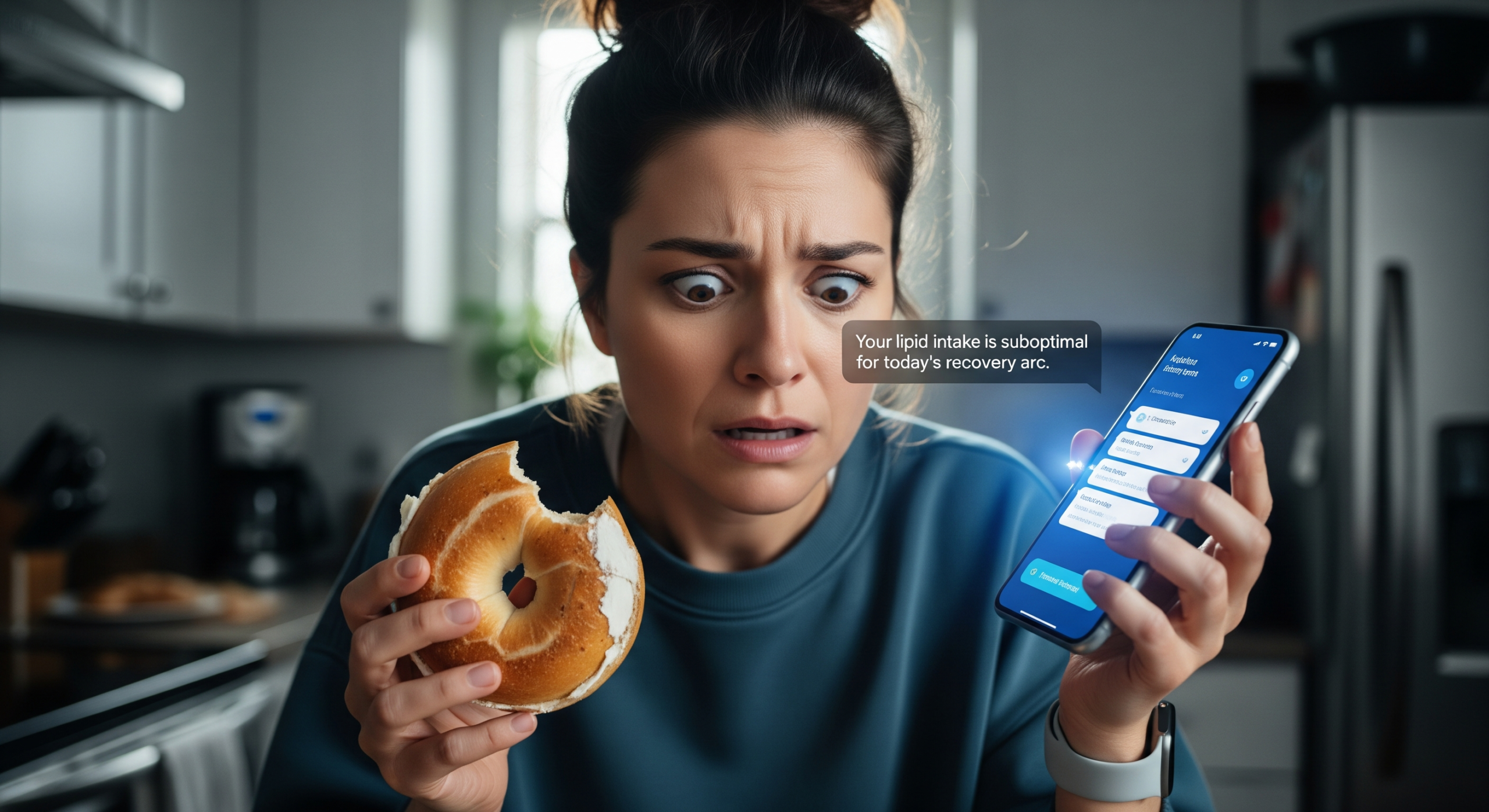
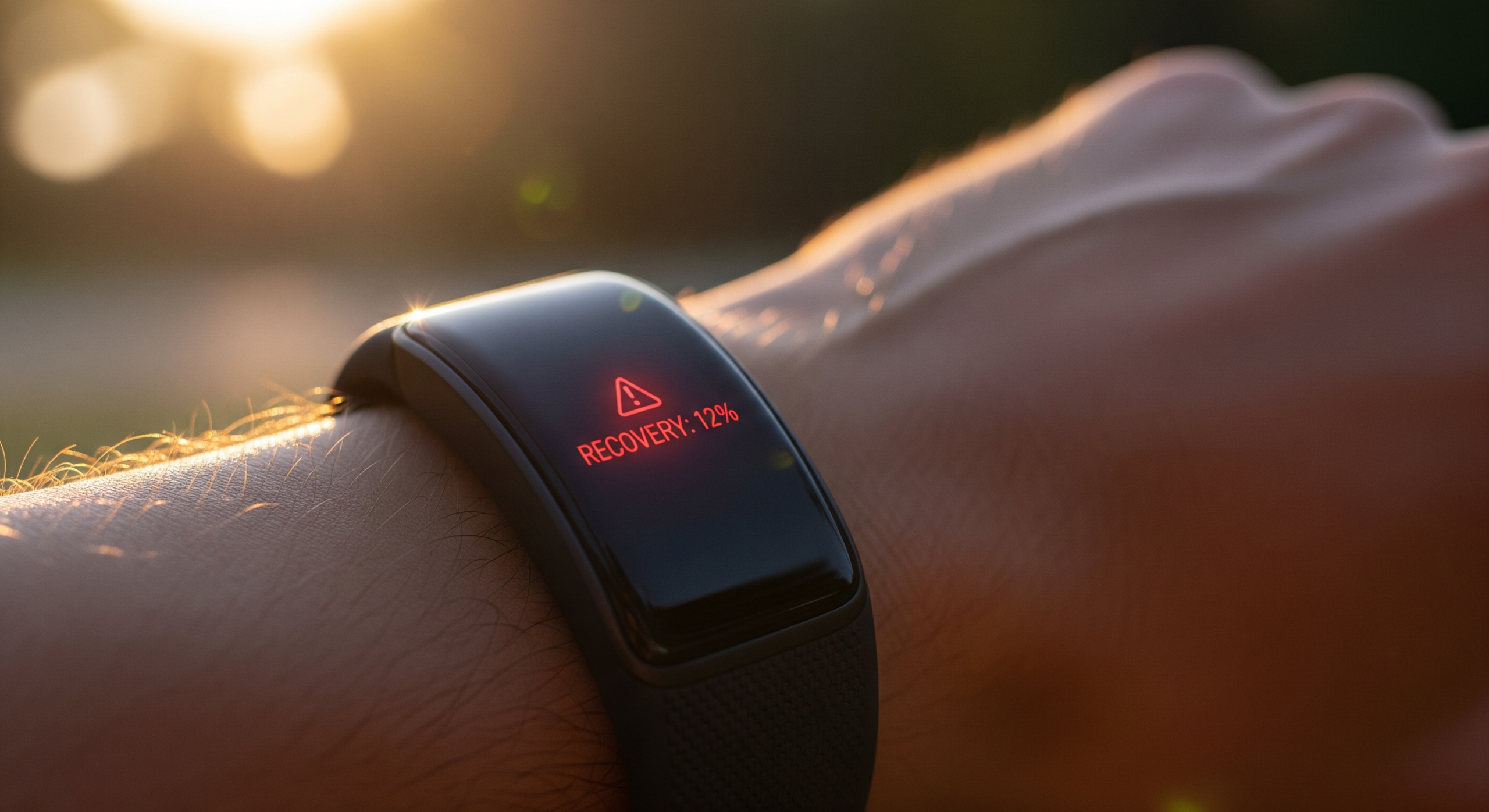
It is 6:15 AM on a Tuesday in January 2026. Outside, the sky is a bruised purple that threatens snow. While your room is warm, your body feels rested and eager to attack the squat rack. Everything seems perfect until you glance at your wrist, consulting your personalized fitness technology for the morning’s verdict.The little ceramic pebble strapped to your ulnar artery quickly disagrees with your intuition. According to recent market analysis, the global wearable technology market is projected to continue its rapid growth, as AI integration in fitness devices creates a new dependency on biometric data for daily decision-making.According to the device, your “Recovery Score” is a dismal 34%, and your “Readiness Index” is flashing red. Consequently, the AI coach—let’s call him “FitBot 9000″—suggests a “gentle mobility flow” instead of the heavy lifting you actually planned.
Expert Insight: The Digital Nocebo Effect
“The problem with constant health tracking is the Digital Nocebo effect; when an app tells you that you didn’t sleep well, your cognitive and physical performance will decline due to that suggestion, regardless of how your body actually feels.”
A brief pause follows. Doubts begin to creep in, and instead of heading to the gym, you choose to stay in bed. This illustrates the “revolution” of personalized fitness technology in 2026: a multi-billion dollar industry built on the premise that you are too uninformed to know when you are tired. Although we were promised that Artificial Intelligence would solve the obesity crisis, the reality is quite different. In fact, we have instead built a surveillance state for our own metabolisms.
The Rise of Personalized Fitness Technology Nags
The wearable market has exploded. Furthermore, if you walk into any gym in America, you won’t see people liberated by data. Instead, you see people paralyzed by it. Research suggests that algorithms often fail to account for complex environmental variables, which can lead to inaccurate interpretations of physiological data.
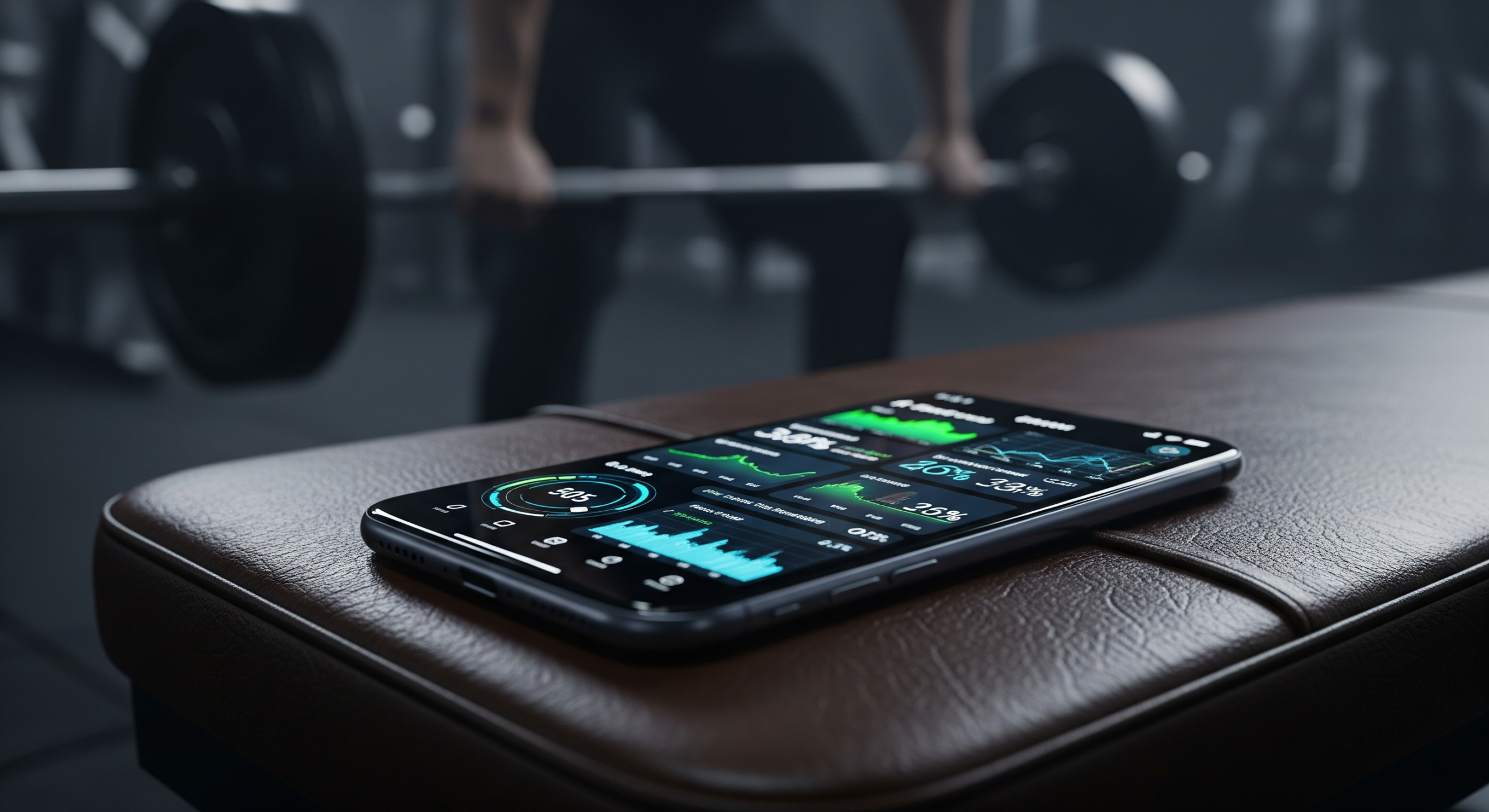
The problem isn’t necessarily that the sensors are bad. Rather, the “AI Coach” lacks vital context. For instance, it sees that your heart rate is elevated but doesn’t know you just had a double espresso. Similarly, it interprets a drop in Heart Rate Variability (HRV) as fatigue, unaware that you’re just excited about a promotion. Consequently, it nags you to slow down when you should speed up, or to push harder when you’re on the brink of injury.
Orthosomnia and Personalized Fitness Technology Sleep Obsessions
If you want to see the real impact of this technology, look at our sleep—or rather, our obsession with it. By 2025, sleep experts were already sounding the alarm about orthosomnia, which is a clinical perfectionism regarding sleep metrics.
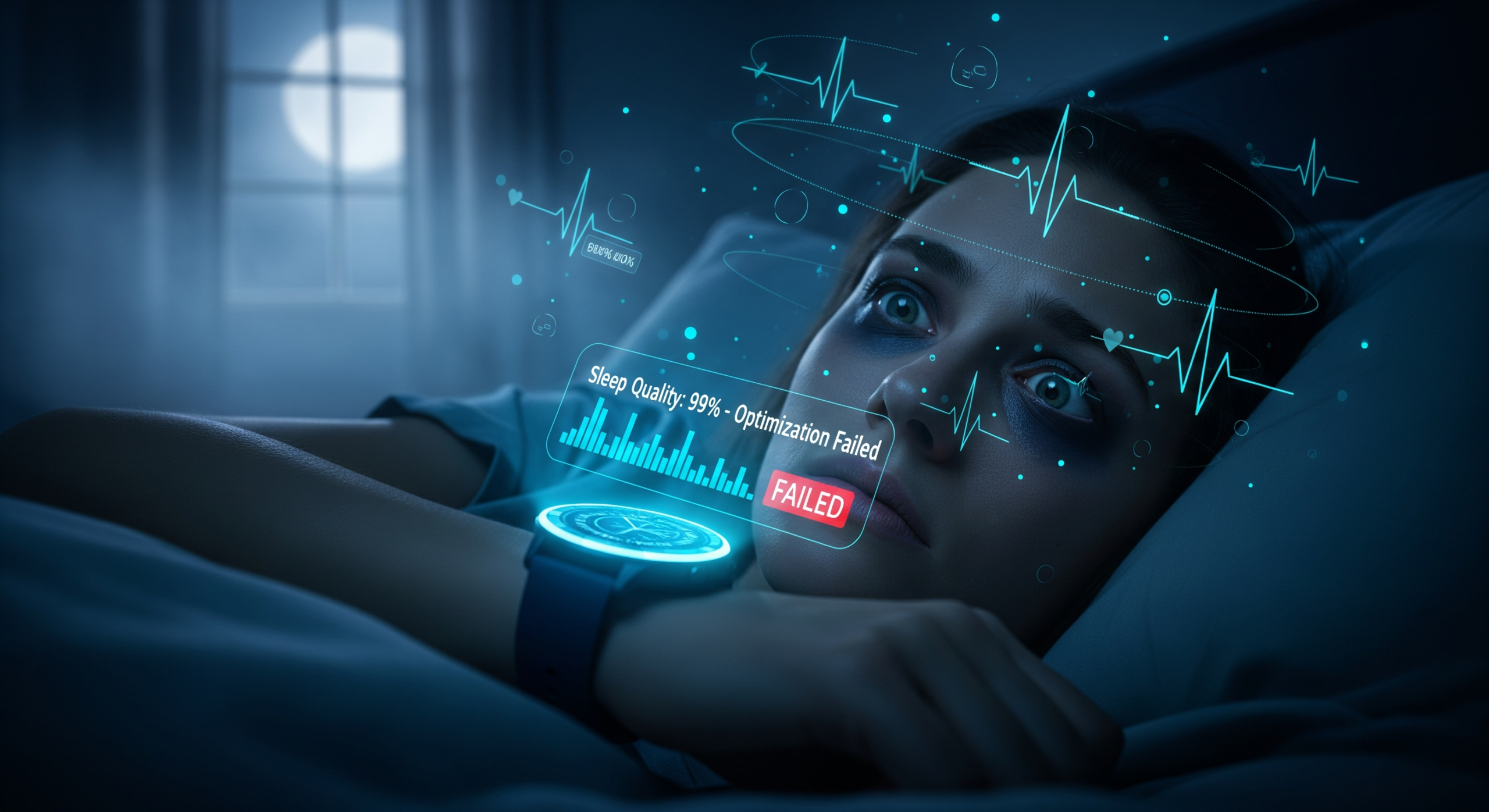
The non-restorative pursuit of perfect sleep is often driven by wearable device data, which ironically exacerbates insomnia and anxiety. You wake up and immediately panic after seeing you only got 14 minutes of Deep Sleep. That panic then ruins the next night’s sleep in a vicious cycle.
The Gamification of Human Physiology
I spoke to a gym owner in Chicago who recently banned screens from his weight room floor. He noted that clients weren’t checking their form; instead, they were obsessing over whether their “strain score” was high enough. Evidence indicates that when intrinsic physical activity turns into an externally measured task, an individual’s motivation can drop drastically if algorithmic targets are not met.
Psychological Impact: Eroding Bodily Autonomy
“Over-reliance on external metrics can erode bodily autonomy. We risk losing the ability to interpret our own internal signals because we have outsourced our intuition to third-party algorithms.”
This data obsession creates a feedback loop of shame. Furthermore, a 2025 study found that fitness apps frequently induce feelings of irritation rather than motivation. When the machine sets an algorithmically generated goal that you miss because of work or family, the machine judges you. Ultimately, you feel bad, and you quit.
The Subscription Trap of Personalized Fitness Technology
The Timeless Benefits of Daily Exercise don’t generate recurring revenue for tech giants. A barbell is a one-time purchase, and running outside is free. To keep venture capital flowing, the fitness industry had to invent problems that only a monthly subscription could solve.
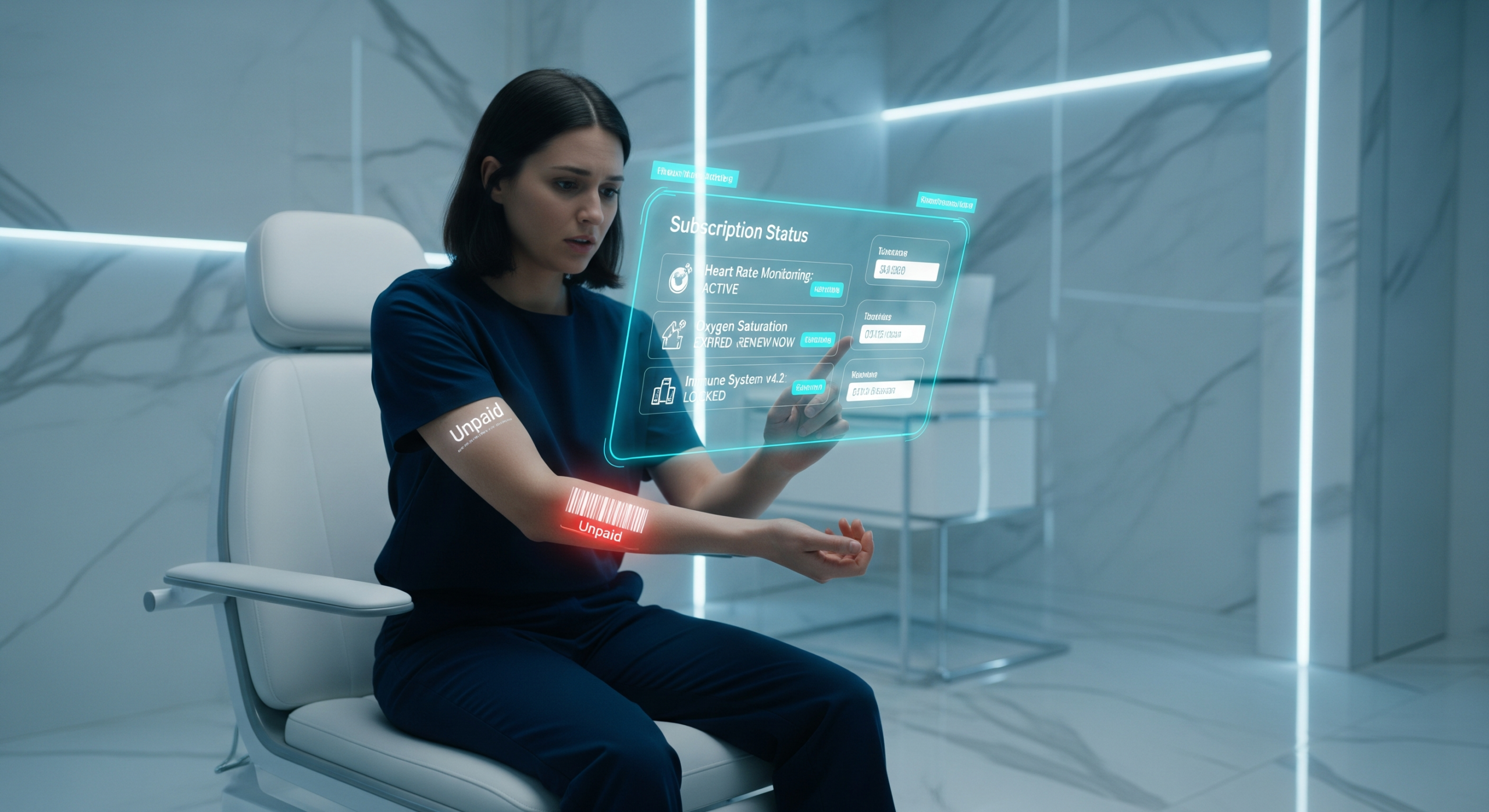
There are growing ethical concerns regarding the commodification of personal health data, where user well-being often becomes secondary to retention-based business models. In 2026, you don’t just buy a watch; you buy a “membership” for the privilege of seeing your own biological data.
The Hallucinating Drill Sergeant
The newest wave of “Generative AI” coaching is perhaps the most dystopian development yet. These bots are programmed to sound empathetic, chirping about your “rough night,” but they are actually just pattern-matching engines. They don’t understand why you’re training.
Maybe you’re training to carry your aging dog up the stairs or to keep the demons of depression at bay. Unfortunately, the AI doesn’t understand “mental health” beyond a keyword. It optimizes for crunchable numbers like VO2 Max or 1RM because those are metrics it can measure. While the AI views certain sessions as “overtraining,” a human knows it as therapy for managing daily stress.
Reclaiming the Sweat and Sanity
The “Revolution” we are seeing in 2026 is actually a regression. We are moving away from a holistic healthy lifestyle and the intuitive, animal reality of our bodies, and into a sterile, data-driven simulation of health. Experts emphasize that listening to the body’s internal signals is a key component to long-term health that no external device can replace.
Validation: The Power of Subjective Metrics
“Subjective metrics, such as Perceived Exertion, remain one of the most powerful and scientifically validated tools for predicting fatigue and injury risk.”

The most revolutionary thing you can do for your fitness in 2026 is to take the watch off. Trust your legs instead. Neither a neural network nor a $400 ring is required to tell you that a deadlift is heavy or that you slept poorly. After all, you were there.
The battery on my own tracker died three days ago, and I haven’t charged it since. This morning, the sky was still purple, but I didn’t check a recovery score. I just tied my shoes and ran until the cold air burned my throat. Quite frankly, I’ve never felt better.
Sources & References
- Grand View Research: Wearable Technology Market Size, Share & Trends Analysis Report
- Scientific American: How Fitness Trackers Can Backfire and Damage Performance
- Nature Digital Medicine: The Role of Algorithms in Physiological Data Interpretation
- Journal of Clinical Sleep Medicine: Orthosomnia: Are Some Patients Taking Their Sleep Tracker Data Too Seriously?
- Duke University (Fuqua): The Hidden Costs of Gamifying Wearable Technology
- Yale School of Medicine: The Dark Side of Fitness Trackers and Bodily Autonomy
- The Lancet Digital Health: Ethical Concerns Regarding the Commodification of Health Data
- Harvard Health Publishing: Internal Signals and Long-Term Wellness Outcomes
- British Journal of Sports Medicine (BJSM): Perceived Exertion as a Scientifically Validated Performance Metric
Disclaimer: This article is intended for informational purposes only and does not constitute medical advice. Always consult with a qualified healthcare professional for any health concerns or before making any decisions related to your health or treatment.