The Fever in Room 4
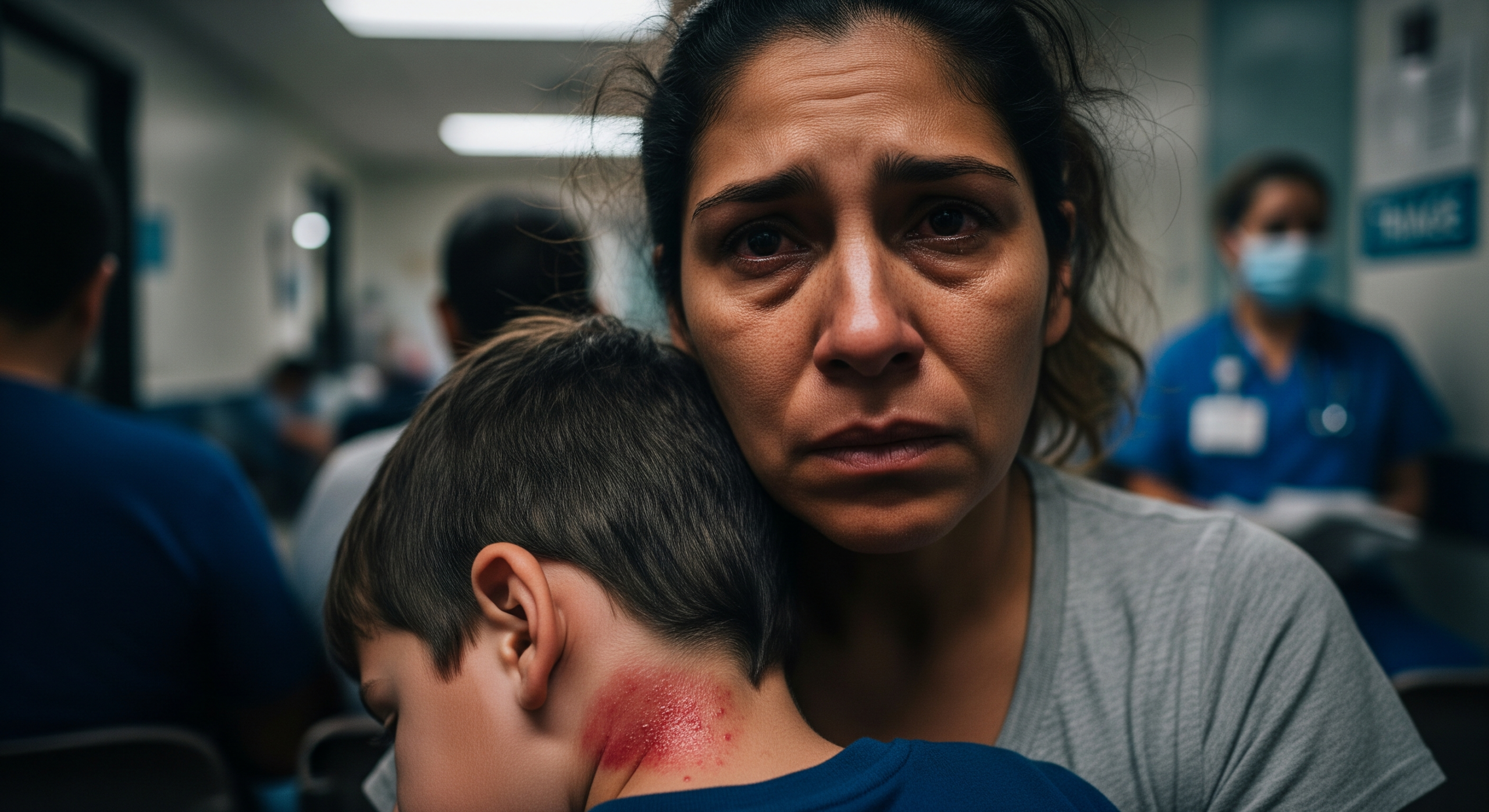
Elena Rodriguez sat in the corner of a crowded pediatric waiting room in Columbia, South Carolina, holding her 4-year-old son, Leo. It was 2 p.m. on a Tuesday, but the air felt heavy, charged with a specific kind of anxiety usually reserved for trauma centers. Leo wasn’t just warm; he was burning up, his temperature reading 104.2°F. But it was the rash—a blotchy, angry red map spreading from his hairline down his neck—that made the triage nurse stop typing and reach for a mask.
Elena had hesitated back in 2024. The online forums she frequented discussed “natural immunity” and the importance of spacing out shots. She wasn’t anti-science, she told herself; she was “pro-safety.” Now, staring at the white spots inside Leo’s cheek—Koplik spots, a hallmark of measles—she found herself at the epicenter of a national crisis.
Leo is one of 588 confirmed measles cases recorded in the United States in the first 29 days of 2026. He is part of a statistic that threatens to undo a quarter-century of public health achievement.
For decades, the path was clear: Vaccines were the shield, and mandates were the arm that held it. Today, that consensus has fractured. With the appointment of Dr. Kirk Milhoan as Chair of the Advisory Committee on Immunization Practices (ACIP), the United States stands at a philosophical and biological precipice. The question is no longer just about how to stop an outbreak; it is about whether the government should have the power to compel prevention at all.
The Anatomy of the 2026 Surge
To understand the gravity of the current moment, one must look at the trajectory. The United States declared measles eliminated in 2000—a designation meaning the disease was no longer constantly present in the country. For twenty years, that status held, despite sporadic flare-ups.
Then came the slide.
By the end of 2025, the CDC reported a staggering 2,267 confirmed cases, the highest number since 1992. The data paints a picture of a firewall that is not just cracking, but crumbling.
The Escalation: A Statistical Breakdown
| Year | Confirmed Cases | Major Outbreaks | Fatalities | Primary Hotspots |
|---|---|---|---|---|
| 2025 | 2,267 | 49 | 3 | Texas (760+), South Carolina, Utah-Arizona Border |
| 2026 (Jan 1–29) | 588 | 2 (New) + Carryovers | 0 (Reported) | South Carolina (847 total outbreak), Utah (237), Arizona (24) |
The current outbreak in South Carolina, which began in October 2025, has now ballooned to 847 total cases. In Utah, a cluster centered around Salt Lake City has resulted in 237 infections, with a hospitalization rate of nearly 9%.
What makes the 2026 surge distinct is not just the volume, but the demographics. According to state health departments, approximately 93% of the cases in 2025 occurred in individuals who were either unvaccinated or had an unknown vaccination status. In the Utah cluster, 89% of the infected were unvaccinated.
This is not a failure of the vaccine. It is a failure of coverage. Measles is biologically unforgiving; it requires a herd immunity threshold of 95% to prevent community transmission. When vaccination rates dip to 92% or 90%, the virus finds the gaps like water finding a crack in a dam.
The New Philosophy: The Milhoan Doctrine
Amidst this biological turmoil, the political landscape of public health has shifted tectonically. In December 2025, Health and Human Services Secretary Robert F. Kennedy Jr. overhauled the ACIP, the body responsible for setting the U.S. vaccination schedule. His choice for Chair was Dr. Kirk Milhoan.
Milhoan is a pediatric cardiologist, a specialist in the heart rather than the immune system or infectious epidemiology. His appointment signals a departure from the committee’s traditional composition of virologists and epidemiologists. More importantly, it signals a shift in ethos.
In a podcast interview aired in early January 2026, Milhoan laid out a vision that prioritizes “individual autonomy” above collective efficacy. His argument is rooted in the concept of consent. “Medical interventions should never be coerced,” Milhoan stated. “Vaccines, including those for polio and measles, should be optional, offered only in consultation with a clinician.”
“Medical Battery” and the Acceptance of Risk
Milhoan’s rhetoric is stark. He has referred to mandates as a form of “medical battery”—a legal term implying unauthorized physical contact. This framework reframes vaccination from a civic duty to a personal medical decision, akin to choosing a surgical procedure.
Crucially, Milhoan does not deny the danger of the diseases. In the same interview, he acknowledged the potential consequences of his proposed policy shift: “Some children might die of measles or become paralyzed with polio.”
For the public health establishment, this admission is chilling. For Milhoan’s supporters, it is a refreshing dose of honesty—an acceptance that freedom carries inherent risks, and that the state should not act as a paternalistic guardian. He argues that the “science” used to justify mandates has been dogmatic rather than observational. “Science is what I observe,” he noted, rejecting what he views as the rigid consensus of the CDC.
This philosophy has already begun to manifest in policy. The ACIP has recently discussed delaying Hepatitis B vaccinations for newborns, a move that critics argue leaves infants vulnerable but supporters claim allows the immune system to “mature” without interference.
The Clinical Reality of “Optional”
While the debate occurs in boardrooms and on social media platforms like X (formerly Twitter), the biological reality plays out in pediatric ICUs.
Measles is often dismissed by the lay public as a “childhood rite of passage,” a few days of spots and fever. This minimization is dangerous. The measles virus is one of the most contagious pathogens known to human medicine. Its “R-naught” (R0)—the number of people one infected person will infect in a susceptible population—is between 12 and 18. By comparison, the R0 for the original strain of COVID-19 was roughly 2 to 3.
The Utah Case Study
Consider the situation in Utah. Of the 237 cases reported in early 2026, 21 patients required hospitalization. These were not minor admissions. They included cases of severe dehydration, pneumonia (the most common cause of death from measles in young children), and corneal scarring.
The most feared complication, however, is encephalitis—swelling of the brain. It occurs in approximately 1 out of every 1,000 measles cases. In the 2025 Texas outbreak, two children died from complications related to the disease.
Furthermore, measles possesses a sinister capability known as “immune amnesia.” The virus attacks memory B-cells, effectively wiping out the immune system’s memory of previous infections. A child who recovers from measles may be left vulnerable to other diseases—flu, pneumonia, strep—that they were previously immune to, for up to three years.
When Dr. Milhoan speaks of “optional” vaccines, clinicians see a future where these complications become routine rather than rare. Dr. Sruti Nadimpalli, an infectious disease specialist at Stanford, warns that losing the elimination status is not just a label change. “It signals significant gaps in our safety net,” she explains. “It means we are returning to an era where parents must actively fear the air in a grocery store.”
The Elimination Status: A National Identity Crisis
The United States is currently under review by the Pan American Health Organization (PAHO). The criteria for losing “elimination status” is the re-establishment of endemic transmission—meaning the virus has been spreading continuously within a defined geographic area for 12 months or more.
With the South Carolina outbreak stretching from October 2025 into early 2026, and the Texas clusters showing sustained transmission throughout 2025, the U.S. is on the razor’s edge. PAHO revoked the regional status in November 2025. The U.S.-specific review, scheduled for April 2026, looms large.
The Consequences of Revocation
Losing elimination status is more than an embarrassment; it has tangible economic and logistical costs:
1. Global Travel Restrictions: Other nations may issue travel advisories for the U.S., impacting tourism and business travel.
2. Healthcare Strain: Treating a single case of measles involves contact tracing, isolation protocols, and post-exposure prophylaxis for contacts. A 2019 study estimated the public health cost of controlling a single outbreak can exceed $400 per contact. With thousands of cases, the financial burden on state health departments is immense.
3. The “New Normal”: If the U.S. accepts measles as endemic, schools will face frequent closures. Quarantine protocols—keeping exposed, unvaccinated children home for 21 days—will disrupt the workforce as parents are forced to stay home.
Ralph Abraham, a CDC official, has downplayed the potential loss of status, referring to it as the “cost of doing business” in a free society. This laissez-faire approach contrasts sharply with the frantic efforts of local health departments trying to stem the tide.
The Debate: Autonomy vs. The Social Contract
The core of the “Vaccine Crossroads” is a conflict between two valid American values: individual liberty and the social contract.
The Argument for Choice
Supporters of Dr. Milhoan argue that the public health overreach during the COVID-19 pandemic broke the trust between the government and the people. They contend that the only way to restore that trust is to dismantle the mandates. By making vaccines optional, they argue, physicians can engage in “shared decision-making,” convincing parents through education rather than coercion.
Polls on X and other platforms suggest a significant minority—up to 50% in some unscientific surveys—support the right of parents to opt out of all vaccines. They cite data, often unverified or misinterpreted, suggesting that vaccine injuries are underreported. For this group, the risk of a rare vaccine side effect feels more immediate and tangible than the risk of a disease they have never seen.
The Argument for Mandates
The counter-argument, championed by the American Medical Association (AMA) and the American Academy of Pediatrics (AAP), is that public health relies on collective action. They point out that “autonomy” fails when one person’s choice endangers another’s life.
This is particularly true for the vulnerable who cannot be vaccinated: infants under 12 months, leukemia patients, and organ transplant recipients. For these groups, the “choice” of a neighbor to skip a measles shot can be a death sentence.
“Herd immunity is not a belief system; it is mathematics,” says Dr. Elena Rios, a public health advocate. “You cannot opt out of gravity, and you cannot opt out of viral transmission dynamics. If we drop below 95%, the fire spreads. It’s that simple.”
Clinical Outlook: The Path Ahead
As the April 2026 PAHO review approaches, the U.S. faces two distinct futures.
Scenario A: The Return of the Mandate
State legislatures, alarmed by the rising case counts and the economic cost of outbreaks, could double down on state-level mandates, bypassing federal recommendations. This would create a patchwork nation—high-vaccination “safe zones” and low-vaccination “hotspots.” We are already seeing this dynamic between states like Massachusetts (high coverage) and Idaho (low coverage).
Scenario B: The Milhoan Vision
If the ACIP formally recommends removing school-entry mandates for MMR (Measles, Mumps, Rubella) and Polio, and states follow suit, the U.S. will enter a new epidemiological era. We will likely see a return to cyclical epidemics. Measles will become a standard differential diagnosis in pediatric ERs. Polio, currently a ghost of the past, could re-emerge in unvaccinated pockets, as seen in Rockland County, New York, in 2022.
The irony of the current moment is profound. The vaccines that Dr. Milhoan suggests making optional are the very tools that allowed Americans to forget how terrifying these diseases are. We are, in effect, victims of our own success.
Conclusion
Back in South Carolina, Elena watches the nurse check Leo’s vitals again. The isolation room is quiet, save for the hum of the HEPA filter designed to scrub the virus from the air. She is scared, not just for her son, but for the realization of what her “choice” actually meant.
The debate over vaccine optionality is often framed as a theoretical discussion about rights and government power. But in the end, it resolves into something far more visceral: a feverish child, a worried parent, and a virus that does not care about political philosophy.
As the United States stands on the brink of losing its measles elimination status, the question posed by Dr. Milhoan’s tenure is simple yet devastating: How much preventable suffering are we willing to tolerate in the name of freedom? The numbers from 2026 suggest we are about to find out.
Sources:
Associated Press. (2025, December 1). Chairman of vaccine committee leaves for new HHS job. AP News.
Centers for Disease Control and Prevention. (2026, January 29). Measles cases and outbreaks. CDC.
Harmon, Amy. (2026, January 23). U.S. to ban foreign aid recipients from promoting D.E.I. The New York Times.
McNeil, Donald G. Jr. (2025, December 17). Tracking U.S. measles outbreaks. The New York Times.
Roubein, Rachel. (2026, January 27). South Carolina measles outbreak surpasses Texas’ 2025 total, with little sign of slowing. STAT News.
Disclaimer: This article is intended for informational purposes only and does not constitute medical advice. Always consult with a qualified healthcare professional for any health concerns or before making any decisions related to your health or treatment.