
Mastering Balanced Nutrition: A Practical Guide for Modern Life
In our fast-paced world, the concept of eating a “balanced diet” often feels like an elusive goal. We hear the term constantly, yet many of us struggle to translate this advice into the food we put on our plates every day. Consequently, we find ourselves navigating a sea of conflicting information—low-carb, high-fat, plant-based, paleo—each promising to be the definitive path to health. This information overload can lead to confusion, frustration, and a diet that is anything but balanced.
However, understanding and implementing a balanced diet doesn’t have to be complicated. At its core, it’s about providing your body with the essential nutrients it needs to function at its best. It’s about feeling energized throughout the day, maintaining a healthy weight, sharpening your mental focus, and protecting yourself against chronic diseases. This guide will strip away the complexity and provide you with a clear, actionable blueprint for mastering your daily nutrition. Ultimately, this isn’t about restriction; it’s about empowerment.
Why Balanced Nutrition is Your Body’s Best Friend
Before we dive into the “what” and “how” of portioning, it’s crucial to understand the “why.” Think of your body as a highly sophisticated machine. Just like a high-performance car requires premium fuel, your body needs a high-quality mix of nutrients to perform optimally. When you consistently provide this fuel, the benefits are profound and far-reaching.
Fueling Your Body for Sustained Energy
To begin with, balanced nutrition is the primary source of your energy. The carbohydrates, fats, and proteins in your food are broken down to produce adenosine triphosphate (ATP), the molecule that powers every single cell, tissue, and organ in your body. Without a steady supply of these macronutrients, you may experience fatigue, brain fog, and a general lack of vitality. Conversely, a well-balanced meal provides a slow, sustained release of energy, preventing the dreaded afternoon slump and keeping you active and alert.
The Role of Growth, Repair, and Maintenance
Furthermore, the right nutrients are essential for growth, repair, and maintenance. For instance, protein is the building block of life. Your body uses it to build and repair tissues, make enzymes and hormones, and support a strong immune system. Similarly, vitamins and minerals, though needed in smaller amounts, act as catalysts for thousands of biochemical reactions. For example, calcium builds strong bones, iron carries oxygen in your blood, and vitamin C helps your body heal wounds. Neglecting any of these components can therefore compromise your body’s ability to maintain itself.
Preventing Chronic Disease
A balanced diet also plays a pivotal role in disease prevention. According to the World Health Organization, “A healthy diet is essential for good health and nutrition. It protects you against many chronic noncommunicable diseases, such as heart disease, diabetes and cancer.” A diet rich in fruits, vegetables, whole grains, and lean proteins provides a powerful arsenal of antioxidants, fiber, and anti-inflammatory compounds that protect your cells from damage, help regulate blood sugar, and keep your cholesterol levels in check. In essence, every healthy meal you eat is a crucial investment in your long-term health.
The Gut-Brain Connection
Finally, the connection between your gut and your brain is undeniable. The food you eat directly impacts your mood and cognitive function. A diet centered on whole foods can foster a healthy gut microbiome, which in turn influences the production of neurotransmitters like serotonin, the “feel-good” chemical. This explains why eating well can lead to improved mood, better concentration, and a reduced risk of mental health issues.
The Core Components: Understanding Your Macronutrients
At the heart of balanced nutrition are the three macronutrients: carbohydrates, proteins, and fats. Each one plays a unique and indispensable role, and understanding their function is the first step toward building a perfect plate.
1. Carbohydrates: The Primary Fuel Source
Carbohydrates have unfairly earned a bad reputation in many modern diets, but they are your body’s preferred source of energy. As noted by the Harvard T.H. Chan School of Public Health, “Carbohydrates are the body’s main source of energy.” The key, however, is to choose the right kind.
- Simple Carbohydrates: These are sugars that are quickly digested and absorbed, leading to a rapid spike in blood sugar followed by a crash. You find them in sugary drinks, candy, white bread, and processed snacks. You should consume them sparingly.
- Complex Carbohydrates: These are made of long chains of sugar molecules, which your body breaks down slowly. This provides a more stable, long-lasting supply of energy. Additionally, they are often rich in fiber, which aids digestion, helps you feel full, and supports heart health. Excellent sources include whole grains (oats, quinoa, brown rice, whole-wheat bread), legumes (beans, lentils, chickpeas), and starchy vegetables (sweet potatoes, corn, peas).
Your Goal: Make complex carbohydrates the star of your carb intake. They should form the foundation of your energy supply for the day.
2. Protein: The Master Builder
Protein is essential for virtually every process in your body. The Academy of Nutrition and Dietetics explains, “Protein is an important component of every cell in the body… Your body uses protein to build and repair tissues.” It also forms the backbone of enzymes that drive chemical reactions and hormones that regulate bodily functions.
A diet adequate in protein helps you feel satiated, which can prevent overeating and support weight management. It’s also critical for maintaining muscle mass, especially as you age or if you are physically active.
High-Quality Protein Sources:
You can find excellent protein in both animal and plant-based foods.
- Animal Sources: Lean meats (chicken breast, turkey), fish (salmon, tuna), eggs, and dairy products (Greek yogurt, cottage cheese).
- Plant-Based Sources: Legumes (lentils, black beans), tofu, tempeh, edamame, nuts, seeds, and quinoa.
Your Goal: Include a source of protein with every meal to promote satiety, stabilize blood sugar, and support your body’s continuous repair and maintenance cycles.
3. Fats: The Essential Operator
Like carbohydrates, fats have often been villainized, but they are absolutely vital for your health. The American Heart Association reminds us that “Dietary fats are essential to give your body energy and to support cell function.” In addition, fats also protect your organs and are necessary for absorbing fat-soluble vitamins (A, D, E, and K). The secret, once again, lies in choosing the right types.
- Unsaturated Fats (The “Healthy” Fats): These fats can improve blood cholesterol levels, ease inflammation, and stabilize heart rhythms. They are predominantly found in plant-based foods.
- Saturated Fats: Found primarily in animal products like red meat, butter, and full-fat dairy, as well as in tropical oils. Most dietary guidelines recommend limiting their intake in favor of unsaturated fats.
- Trans Fats (The “Unhealthy” Fats): These are industrially produced fats found in fried foods and processed snacks. They should be avoided as much as possible.
Your Goal: Focus on incorporating healthy unsaturated fats into your diet while minimizing trans fats and limiting saturated fats.
Micronutrients and Hydration: The Unsung Heroes
While macronutrients provide the bulk of your energy, micronutrients—vitamins and minerals—are the spark plugs that enable your body to use that energy. A diet rich in a variety of colorful fruits and vegetables is the best way to ensure you get a wide spectrum of these essential nutrients.
Equally important is water. It makes up about 60% of your body weight and is crucial for numerous functions. According to research from Harvard University, water has many important jobs, such as “carrying nutrients and oxygen to your cells, flushing bacteria from your bladder, preventing constipation, [and] normalizing blood pressure.” Therefore, don’t wait until you’re thirsty to drink; by then, you’re already dehydrated.
From Theory to Practice: Mastering Your Portions
Knowing what to eat is only half the battle. Knowing how much to eat is where true balance is achieved. Fortunately, you don’t need a food scale. You can use simple, intuitive methods to gauge your portions. The Centers for Disease Control and Prevention (CDC) suggests, “Using a smaller plate can help you control your portion sizes. You can eat a satisfying amount of food and feel full without overeating.”
The Healthy Plate Method
This is perhaps the easiest and most effective visual guide for building a balanced meal. Imagine your dinner plate and divide it as follows:
- Fill Half Your Plate (50%) with Non-Starchy Vegetables and Fruits.
- Fill One Quarter of Your Plate (25%) with Lean Protein.
- Fill the Final Quarter of Your Plate (25%) with Complex Carbohydrates.
- Add a Serving of Healthy Fat.
The Hand-Jive Method
When you don’t have a plate to visualize, your own hand can serve as a surprisingly accurate portioning tool.
- Protein: A serving should be about the size of your palm.
- Carbohydrates: A serving should fit into your cupped hand.
- Vegetables: A serving should be what you can hold in two open hands.
- Fats: A serving should be about the size of the tip of your thumb.
The Art of Reading Nutrition Labels
Understanding nutrition labels is a crucial skill for navigating the modern food environment. Pay attention to serving size, calories, macronutrients, and the ingredients list to make informed choices.
A Day of Balanced Eating: Putting It All Together
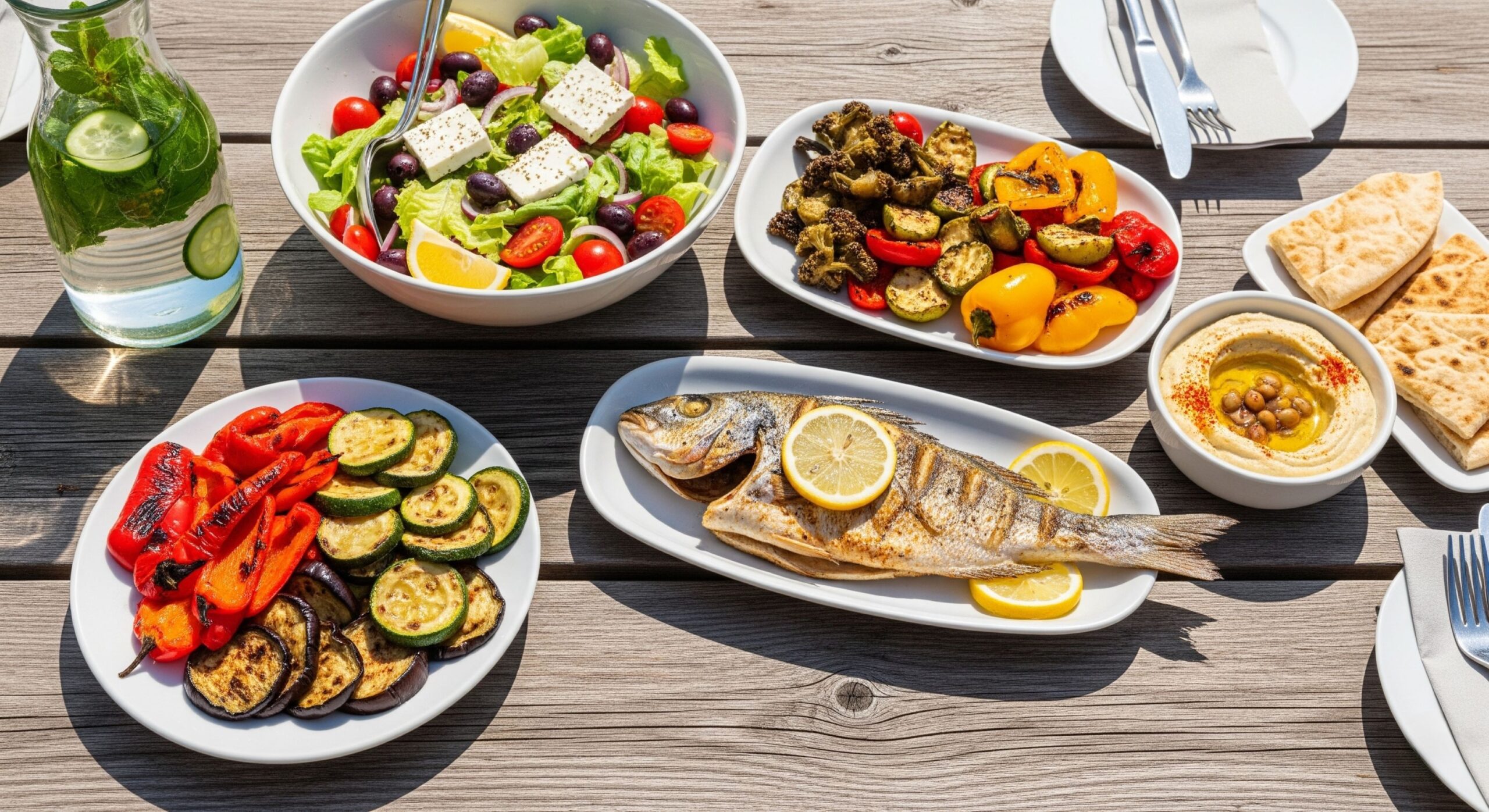
Let’s see what these principles look like in a typical day: oatmeal for breakfast, a large salad with chicken for lunch, baked salmon with quinoa and vegetables for dinner, and nutrient-dense options like Greek yogurt or nuts for snacks.
Beyond the Plate: Lifestyle Habits that Support Balance
True wellness extends beyond just the food you eat. Certain lifestyle habits can amplify the benefits of your balanced diet.
- Practice Mindful Eating: As the Mayo Clinic explains, “Mindful eating is eating with intention and attention.” By paying attention to your body’s hunger and fullness cues, you can prevent overeating.
- Listen to Your Body: Learn to differentiate between true physical hunger and emotional hunger. Eat when you’re hungry, and stop when you’re comfortably full.
- Stay Active: Physical activity and nutrition go hand in hand. Exercise helps your body utilize energy effectively, builds muscle, and boosts your metabolism and mood.
Conclusion: A Journey of Progress, Not Perfection
Mastering balanced nutrition is not about achieving a perfect diet overnight. Rather, it’s a journey of making small, consistent, and intelligent choices every day. The National Institutes of Health (NIH) advises that “Lasting weight management is a lifestyle, not a diet. It requires making small, manageable changes that you can stick with over time.”
Start by making one or two small changes. These small victories build momentum and create lasting habits. Remember that your nutritional needs are unique. Use this guide as your blueprint to build a healthy, enjoyable, and sustainable relationship with food that will energize you for years to come.
References:
- World Health Organization. (n.d.). Healthy diet. Retrieved from https://www.who.int/news-room/fact-sheets/detail/healthy-diet
- Harvard T.H. Chan School of Public Health. (n.d.). Carbohydrates. The Nutrition Source. Retrieved from https://www.hsph.harvard.edu/nutritionsource/carbohydrates/
- Academy of Nutrition and Dietetics. (n.d.). Functions of Protein. EatRight.org. Retrieved from https://www.eatright.org/food/nutrition/protein/functions-of-protein
- American Heart Association. (2021). Dietary Fats. Retrieved from https://www.heart.org/en/healthy-living/healthy-eating/eat-smart/fats/dietary-fats
- Harvard T.H. Chan School of Public Health. (n.d.). The Importance of Hydration. The Nutrition Source. Retrieved from https://www.hsph.harvard.edu/nutritionsource/water/
- Centers for Disease Control and Prevention. (2023). Healthy Eating for a Healthy Weight. Retrieved from https://www.cdc.gov/healthyweight/healthy_eating/portion_size.html
- Mayo Clinic. (2020). Mindful eating: The art of presence at the table. Retrieved from https://www.mayoclinic.org/healthy-lifestyle/weight-loss/expert-answers/mindful-eating/faq-20058460
- National Institute of Diabetes and Digestive and Kidney Diseases (NIDDK). (n.d.). Changing Your Habits for Better Health. Retrieved from https://www.niddk.nih.gov/health-information/weight-management/changing-habits-better-health