
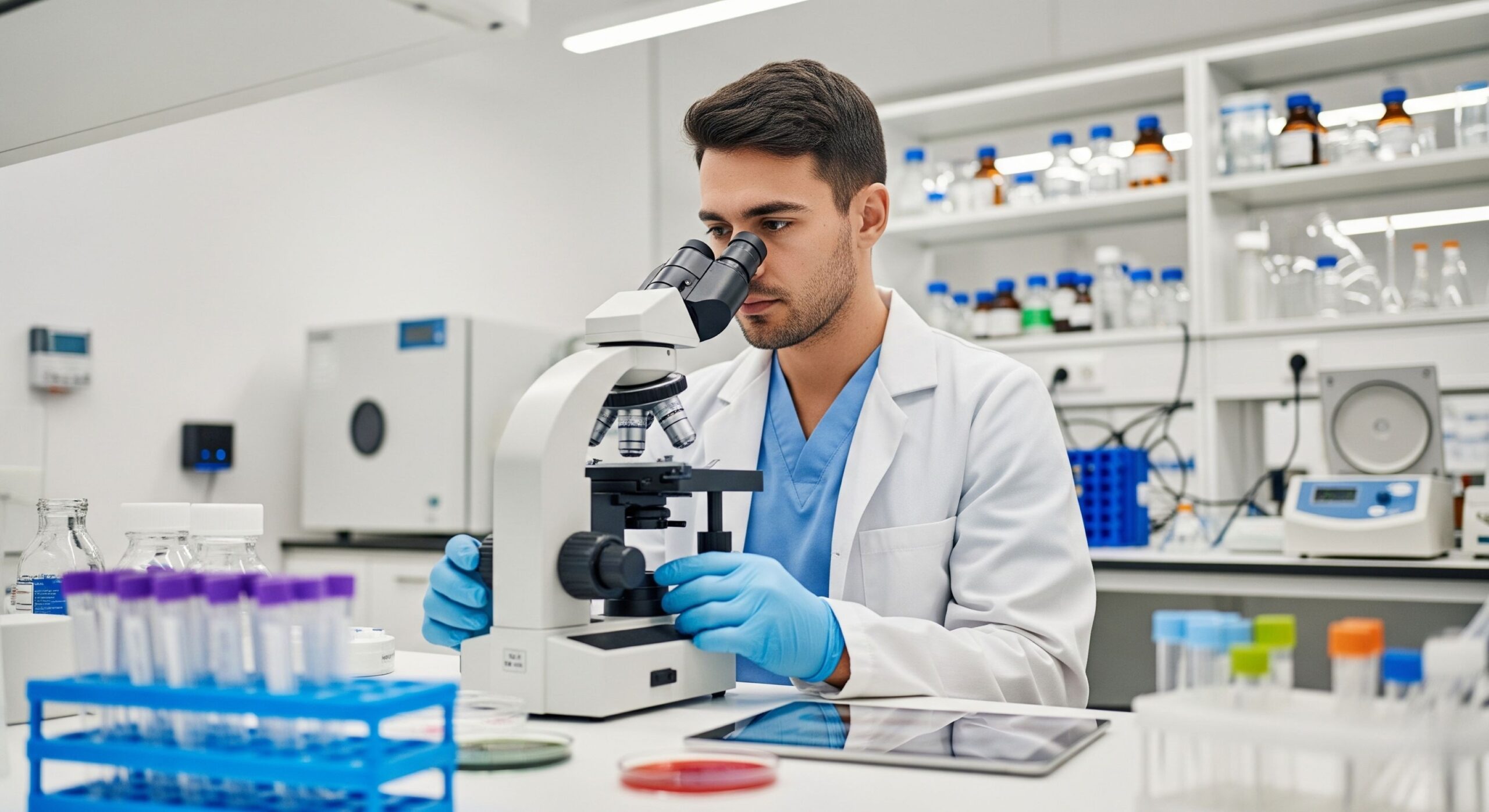
Every day, countless individuals walk into hospitals and clinics seeking answers. They trust doctors and nurses to provide accurate diagnoses and effective treatment plans. But what many people do not realize is that a hidden force, a team of highly skilled professionals working behind the scenes, makes modern medicine possible. They are the Medical Laboratory Technicians (MLTs) and Medical Laboratory Scientists (MLS), and they hold the keys to understanding a patient’s health. They are the unsung heroes of healthcare. Poor sleep quality and its impact on health can also be determined through laboratory tests.
This article provides a detailed look into the rewarding and essential career of a medical laboratory professional. It explores the vital roles they play, the educational pathways they follow, the skills they need to succeed, and the bright future that awaits those who choose this fulfilling path. We will peel back the curtain to reveal a world of scientific discovery, critical thinking, and a direct impact on patient care that you might never have imagined.
The Role: The Detectives of Modern Medicine
Think of a medical laboratory professional as a detective. When a doctor orders a test, a medical lab professional receives the clues—a blood sample, a urine specimen, a tissue biopsy. They use advanced scientific knowledge and sophisticated instruments to analyze these clues, searching for evidence of disease, infection, or other conditions. They provide the doctor with the crucial information needed to solve the medical mystery and find the best course of action for the patient.
The Two Main Roles: MLT and MLS
There are two primary roles within the medical laboratory: the Medical Laboratory Technician (MLT) and the Medical Laboratory Scientist (MLS), often referred to as a Medical Technologist (MT). While both roles are fundamental to the lab’s function, their educational requirements and scope of practice differ.
A Medical Laboratory Technician (MLT) typically completes a two-year associate’s degree program. They perform a wide variety of routine tests and analyses under the supervision of a technologist. Their work is precise and crucial; they handle sample processing, operate automated equipment, and report results with meticulous attention to detail. According to the U.S. Bureau of Labor Statistics, a typical day for an MLT includes preparing specimens and operating lab equipment to analyze them.
A Medical Laboratory Scientist (MLS), on the other hand, earns a four-year bachelor’s degree. This more extensive education gives them a deeper understanding of complex lab procedures, diagnostic principles, and quality control. MLS professionals perform complex tests, interpret abnormal results, manage quality assurance programs, and may even supervise MLTs or oversee entire lab sections. They are also instrumental in developing new procedures and troubleshooting complex instrument issues. The collaboration between MLTs and MLSs is what makes a laboratory run efficiently and accurately, ensuring patients receive the best care possible. As explained by the American Society for Clinical Pathology (ASCP), MLS professionals possess a comprehensive understanding of clinical laboratory procedures.
The Daily Rhythm: A Glimpse into the Laboratory
A medical laboratory is a bustling environment, a place of constant activity and intense focus. The work happens around the clock, with professionals handling a continuous flow of samples from emergency rooms, operating theaters, and outpatient clinics. A typical day for a lab professional is anything but mundane, as they might rotate through various specialized departments.
“Approximately 70% of all decisions regarding a patient’s diagnosis, treatment, and hospital admission are based on laboratory test results.” – American Association for Clinical Chemistry (AACC)
Clinical Chemistry
In Clinical Chemistry, professionals analyze blood and body fluids for a vast range of substances. They measure cholesterol levels, blood glucose, electrolytes, and enzymes, helping doctors diagnose conditions like diabetes, kidney disease, and liver problems. The work in this section involves running samples on high-tech analyzers, maintaining the instruments, and validating the accuracy of every result. They are constantly on guard, looking for values that fall outside the normal range and could signal a serious health issue.
Hematology
Hematology is the study of blood. Here, lab professionals count and classify red blood cells, white blood cells, and platelets. They look for abnormalities that could indicate leukemia, anemia, or other blood disorders. Using powerful microscopes, they examine blood smears, identifying subtle changes in cell shape and size that tell an important story about a patient’s health. The precision required here is immense, as a single misidentified cell could have a significant impact on a diagnosis.
Microbiology
The Microbiology department is a world of its own, a place where professionals act as detectives searching for microbial culprits. They culture patient samples to identify bacteria, fungi, parasites, and viruses. Once they isolate the microbe, they perform sensitivity tests to determine which antibiotics will be most effective in treating the infection. This work is critical for public health, as it helps prevent the spread of infectious diseases and fights against antibiotic resistance. The pace in this section can be unpredictable, especially during a new era of disease outbreaks. A study published in CDC’s Morbidity and Mortality Weekly Report highlights the crucial role of clinical laboratories in identifying and reporting infectious disease outbreaks.
Immunohematology (Blood Bank)
In the Immunohematology (or Blood Bank) department, every action is a matter of life and death. Professionals in this section type blood samples, cross-match blood for transfusions, and screen for unexpected antibodies. They meticulously ensure a safe blood supply for surgical procedures, trauma patients, and individuals with chronic blood conditions. This work demands an unparalleled level of accuracy and a constant awareness of the critical nature of their tasks. The AABB (formerly the American Association of Blood Banks) provides the standards and best practices for this crucial work. This work is also vital for the future of vaccine technology.
Molecular Biology
Finally, in Molecular Biology, professionals work with a patient’s genetic material. They perform DNA and RNA analyses to identify genetic markers for cancer, inherited diseases, and infectious agents. This cutting-edge field is growing rapidly, giving lab professionals a chance to work with some of the most advanced technology in medicine. This work is pivotal for personalized medicine, tailoring treatments to a patient’s unique genetic makeup. The National Center for Biotechnology Information (NCBI) frequently publishes research on molecular diagnostics, showcasing the importance of this field.
The Educational Journey: Building a Foundation
The path to a career in the medical laboratory is structured and comprehensive, providing a strong foundation in the sciences. The journey begins with education, with the degree level determining the specific career path. According to the National Accrediting Agency for Clinical Laboratory Sciences (NAACLS), accredited programs ensure students receive a high-quality education and meet professional standards.
The MLT Path: Associate’s Degree
For the Medical Laboratory Technician (MLT) role, a prospective student needs to complete a two-year associate’s degree program from an accredited institution. These programs combine classroom theory with hands-on practical training. Students take a variety of science courses, including general chemistry, organic chemistry, biology, anatomy, and microbiology. The curriculum is designed to provide the technical skills necessary to perform routine lab tests accurately and efficiently.
“An education in clinical laboratory science is a great first step toward a fulfilling career in health care.” – Michigan Technological University
The MLS Path: Bachelor’s Degree
To become a Medical Laboratory Scientist (MLS), a bachelor’s degree is required. The most common degree is a Bachelor of Science in Medical Laboratory Science. This four-year program builds on the foundational science courses with more advanced topics. Students delve deeper into areas such as immunology, hematology, urinalysis, virology, and clinical microbiology. They also take courses in molecular diagnostics and laboratory management, which prepare them for a wider range of responsibilities.
The Clinical Practicum
A crucial component of both programs is the clinical internship or practicum. This is a supervised rotation in a hospital or clinical laboratory. Students spend several months working alongside practicing professionals in each of the core lab departments. This immersive experience is essential for developing proficiency with lab equipment, mastering complex procedures, and understanding the practical application of their knowledge.
Certification and Licensure: The Gold Standard
Certification is a critical milestone for any aspiring medical laboratory professional. It serves as a testament to their knowledge and competence, signaling to employers that they have met the highest professional standards. While many employers will not hire a candidate without certification, some states also require licensure to practice. The American Medical Technologists (AMT) is another well-respected certifying body for the profession.
Essential Skills and Qualities: More Than Just Science
While a strong background in science is a prerequisite for this career, it’s not the only thing you need to succeed. Medical laboratory professionals rely on a unique blend of technical expertise and personal attributes. Mastering work stress is another vital skill for these demanding roles.
“Accuracy and precision are hallmarks of the profession, as test results significantly impact a patient’s diagnosis and treatment.” – Lab Tests Online
Attention to detail is arguably the most important skill. A single misplaced decimal point or a misidentified tube can have life-altering consequences for a patient. Critical thinking and problem-solving are also paramount. A lab professional needs to investigate issues, identify the root cause, and find a solution. Communication skills are surprisingly vital. While they may not have direct patient contact, lab professionals constantly communicate with doctors, nurses, and other healthcare staff. Teamwork is essential, and finally, an unshakeable ethical compass is non-negotiable.
The Future is Bright: Job Outlook and Impact
Growing Demand and Key Drivers
The demand for medical laboratory professionals is strong and growing. According to the U.S. Bureau of Labor Statistics (BLS), the employment of medical laboratory technologists and technicians is projected to grow much faster than the average for all occupations. This positive outlook is driven by several key factors.
The aging population is increasing the demand for diagnostic services. As people live longer, they require more medical tests to manage chronic conditions and detect diseases early. This trend creates a steady need for skilled lab professionals. The advancement of medical technology and the development of new tests are expanding the role of the laboratory in patient care. The ability to help with joint pain relief and other age-related issues makes this career even more valuable. Finally, the increasing focus on preventive medicine and early disease detection is also driving demand. A career in the medical laboratory offers more than just a stable job; it provides a profound sense of purpose. A single test result can confirm a life-saving diagnosis, determine the right antibiotic to fight a deadly infection, or ensure a blood transfusion is safe. The work is challenging, intellectually stimulating, and incredibly rewarding.
Impact on Patient Care and Technology
The medical laboratory professional is more than a technician; they are a scientist, a detective, and a vital part of the healthcare team. They are the unseen heroes who work tirelessly in the background, providing the data that saves lives. When you consider a career in healthcare, look past the scrubs and stethoscopes and remember the individuals who make it all possible—the dedicated professionals in the lab. Their work is a silent testament to the power of science and its ability to heal.
Dispelling Common Myths
Despite their vital role, medical laboratory professionals often operate in the shadows. This lack of visibility can lead to common misconceptions about their work.
Myth vs. Reality: More Than Just “Pushing Buttons”
“Medical laboratory professionals are highly skilled scientists who use cutting-edge technology to perform complex testing.” – National Society for Histotechnology (NSH)
One frequent myth is that a lab professional simply “pushes buttons” on automated machines. While technology has automated many routine tasks, it has not diminished the need for human expertise. Professionals must set up and maintain the equipment, calibrate it for accuracy, and, most importantly, interpret the results. The machine is a tool, but the professional is the scientist. Another misconception is that the work is not intellectually challenging. On the contrary, the job requires a deep understanding of human physiology, disease processes, and biochemistry.
“Behind every diagnosis and treatment plan is a medical laboratory professional who is an integral part of the healthcare team.” – NAACLS
The Path Forward: Your Next Steps
A career as a medical laboratory professional is a smart choice for anyone with a passion for science, an eye for detail, and a desire to make a difference in healthcare. It offers job stability, a competitive salary, and a clear path for advancement. The work is challenging, but the reward of knowing you contributed to a patient’s health is immeasurable.
“Medical technologists and technicians are an integral part of the health care team, providing the information needed to diagnose and treat patients.” – Mayo Clinic
The medical laboratory professional is more than a technician; they are a scientist, a detective, and a vital part of the healthcare team. They are the unseen heroes who work tirelessly in the background, providing the data that saves lives. When you consider a career in healthcare, look past the scrubs and stethoscopes and remember the individuals who make it all possible—the dedicated professionals in the lab. Their work is a silent testament to the power of science and its ability to heal.
Sources
- U.S. Bureau of Labor Statistics
- American Society for Clinical Pathology (ASCP)
- American Association for Clinical Chemistry (AACC)
- Centers for Disease Control and Prevention (CDC)
- AABB (formerly the American Association of Blood Banks)
- National Center for Biotechnology Information (NCBI)
- National Accrediting Agency for Clinical Laboratory Sciences (NAACLS)
- Michigan Technological University
- American Medical Technologists (AMT)
- Lab Tests Online
- National Society for Histotechnology (NSH)
- Mayo Clinic