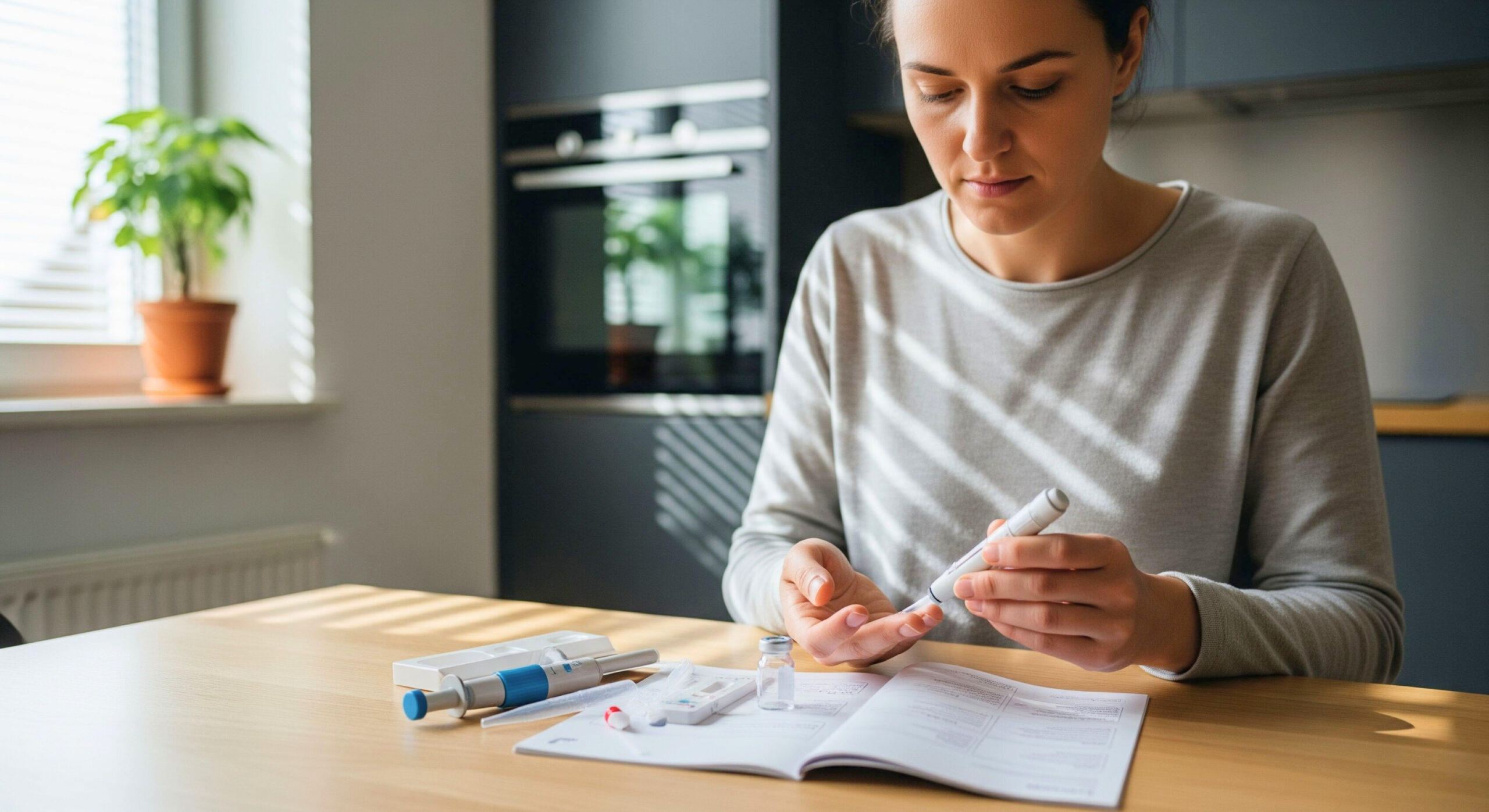

An actionable guide to understanding and managing stress and anxiety in daily life, transforming abstract concepts into clear, visual steps.
The Prevalence of Stress
A significant portion of adults report experiencing stress that negatively impacts their mental and physical health. Recognizing this is the first step toward taking control.
77%
of people experience stress that affects their physical health.
The Mind-Body Connection
Your mental state and physical health are deeply intertwined. The strategies below leverage this connection to build a strong foundation for resilience against stress.
1. The Power of Breath
Use this simple breathing technique to instantly activate your body’s relaxation response and calm a racing mind.
“Diaphragmatic breathing slows the heart rate, lowers or stabilizes blood pressure, and improves oxygenation. It’s one of the best ways to reduce the body’s ‘fight or flight’ response.” – Harvard Health Publishing
Inhale through your nose for 4 seconds.
Hold your breath for 4 seconds.
Exhale slowly through your mouth for 6 seconds.
2. Daily Movement is Key
Just 30 minutes of moderate exercise a day releases mood-boosting endorphins. This small slice of your day yields a huge return in stress reduction.
“Physical exercise is a powerful stress antidote. It prompts your brain to release endorphins, chemicals that stimulate and elevate your mood.” – American Psychological Association
3. Nourish to Flourish
Your diet directly fuels your mental state. Whole foods provide stable energy, while processed items can worsen anxiety symptoms.
“The gut-brain axis is a two-way street. Nutrient-rich foods can soothe inflammation and support the production of mood-regulating neurotransmitters.” – Mayo Clinic
Taming Your Thoughts & Actions
You can actively reshape your mental landscape. These habits help you gain control over your thoughts, focus your energy, and build a more positive internal dialogue.
4. The Joy of a Hobby
Engaging in a hobby you love creates a “flow state,” providing a healthy escape and a powerful distraction from anxious thoughts.
“Hobbies are a way to find ‘flow state’—that is, a state of immersive focus where you become so engrossed in an activity that you lose track of worries and self-consciousness.” – Mihaly Csikszentmihalyi
🎵
🌿
🧩
5. Practice Gratitude
Shift your focus from what’s wrong to what’s right. A daily gratitude practice retrains your brain to see the positive.
“Neurologically, a regular gratitude practice can literally rewire your brain to process experiences in a more positive way, reducing the activation of the amygdala which is tied to fear.” – Center for Neuroscience
- A kind word from a friend.
- The taste of morning coffee.
- A moment of quiet solitude.
6. Prioritize Quality Sleep
Sleep is non-negotiable for mental health. Aim for 7-9 hours to allow your brain to recharge and better manage stress the next day.
“Lack of sleep significantly raises levels of cortisol, a hormone released in response to stress, making you more vulnerable to anxiety.” – National Sleep Foundation
7-9 Hours Recommended
Structuring Your Life for Calm
Your environment and relationships play a huge role in your stress levels. By setting boundaries and fostering positive connections, you create an external world that supports your inner peace.
7. The Power of Connection
Strong social ties are a powerful buffer against stress. The chart shows the relative impact of different support systems on well-being.
“Social support serves as a buffer against stress by triggering the release of oxytocin, the ‘cuddle hormone’ that promotes feelings of calm and bonding.” – University of California, Berkeley
8. Set Boundaries & Detox Digitally
Reclaim your time and mental space. Learning to say “no” and taking intentional breaks from screens reduces feelings of being overwhelmed.
“Setting boundaries isn’t about being selfish; it’s about managing your energy. Saying ‘no’ to non-essential things empowers you to say ‘yes’ to what matters most.” – Dr. Henry Cloud
📱 Turn off non-essential notifications.
🗓️ Schedule “no-phone” time blocks.
🗣️ It’s okay to politely decline requests.
The Path Forward: A Holistic View
Implementing these strategies creates a dramatic shift in overall well-being. The final step is knowing when to seek support. Seeking professional help is a sign of strength.
9. Your Wellness Transformation
This chart illustrates the potential improvement across key areas of life when you actively manage stress versus letting it go unchecked.
“Addressing mental health concerns with professional help is an investment in yourself. Therapy is not just about overcoming difficulties, but about developing skills to thrive.” – National Alliance on Mental Illness (NAMI)
10. Seek Professional Help
If stress and anxiety feel unmanageable, a therapist can provide personalized tools and support. It’s a proactive step towards lasting well-being.
“Therapy can provide individuals with the tools to manage symptoms, cope with stressful situations, and improve their overall quality of life.” – National Institute of Mental Health (NIMH)
Strength is asking for help.