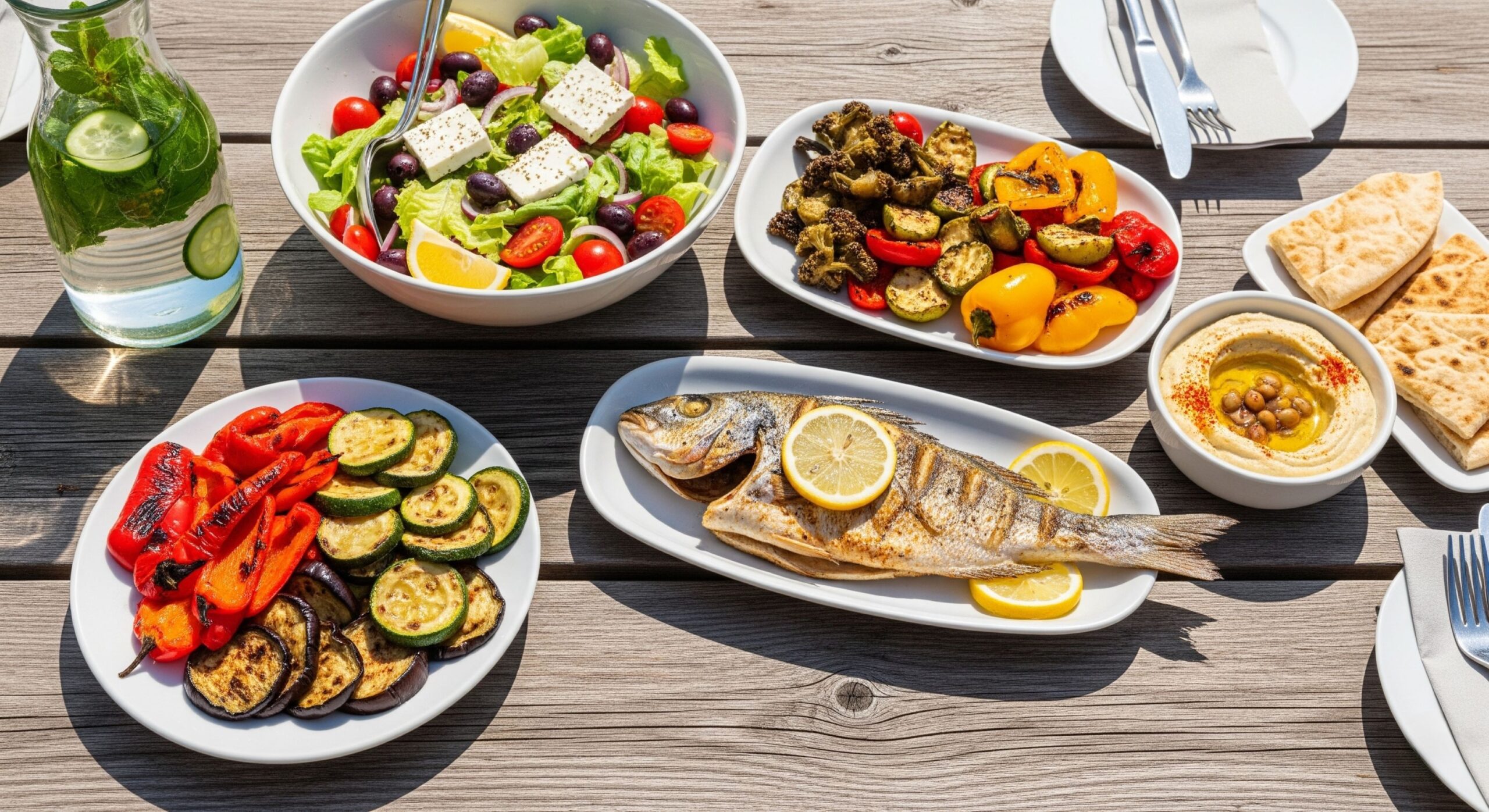

Why Meal Prep is a Total Game-Changer
Let’s be real. Does this scene feel familiar? It’s 6 PM on a Tuesday. You just walked in the door after a ridiculously long day, your brain feels like mush, and the thought of cooking dinner feels like climbing Mount Everest. Your energy is shot, and the siren song of that delivery app is getting louder. We’ve all been there. It’s a vicious cycle of decision fatigue followed by convenience-driven choices that can sabotage our health and budget. But what if you could break that cycle for good with a practical meal prep guide for healthy results?
Fortunately, that’s where meal prepping comes in. It’s the not-so-secret weapon of busy, healthy-ish people everywhere. At its heart, it’s just preparing meals ahead of time. But calling it “simple” doesn’t do it justice. It’s a strategic approach to food that gives you back control over your wallet and stress levels. This isn’t just about sad-looking chicken and broccoli in Tupperware; it’s a complete system for reclaiming your time, money, and sanity—one delicious, pre-planned meal at a time.
The Big Wins: Why This Healthy Meal Prep Guide Works
Putting in a couple of hours over the weekend unlocks some seriously amazing benefits all week long. This healthy meal prep guide is about more than just recipes; it’s about the tangible benefits you’ll feel every day. Think of it as an investment in your future, less-stressed-out self. Here’s the real-deal breakdown of what’s in it for you.
You’ll Actually Eat Better (No, Really.)
First and foremost, when a nutritious, balanced meal is already portioned out and waiting in your fridge, it becomes the easiest choice. You’re no longer making decisions when you’re “hangry”—that dangerous state of hunger and fatigue where your brain is hardwired to crave high-calorie, low-nutrient junk. As a result, meal prep flips the script. The healthy option becomes the path of least resistance. And that’s a win.
You’re the Boss of Your Food
Furthermore, you get to call all the shots. Restaurant and processed foods are notorious for hidden sugars, insane amounts of sodium, and preservatives you need a chemistry degree to understand. When you cook, you control every single thing that goes into your body. This is a huge deal if you’re managing a health condition or have food sensitivities. In addition, you can actually control your portion sizes, something the American Heart Association points out is often way out of whack when you’re eating out.
Save a Ton of Money
On top of the health benefits, the cost of convenience is no joke. That daily $15 lunch, a couple of $25 dinner deliveries—it adds up faster than you can say “where did my paycheck go?”. Consequently, meal prepping slashes this expense. By planning your meals and buying ingredients with purpose, you can turn that expensive lunch into a delicious, nutrient-dense meal that costs you maybe $3-4 to make. That’s real money you can put toward something you actually care about.
Kiss That “What’s for Dinner?” Stress Goodbye
Finally, every day, our brains have a finite amount of energy for making good decisions. Psychologists call it “decision fatigue.” That nagging, relentless question of “What’s for dinner?” drains your mental battery every single day. The good news is that meal prep eliminates that entire category of stress from your week, freeing up your brainpower for your work, your family, and, you know, actually relaxing.
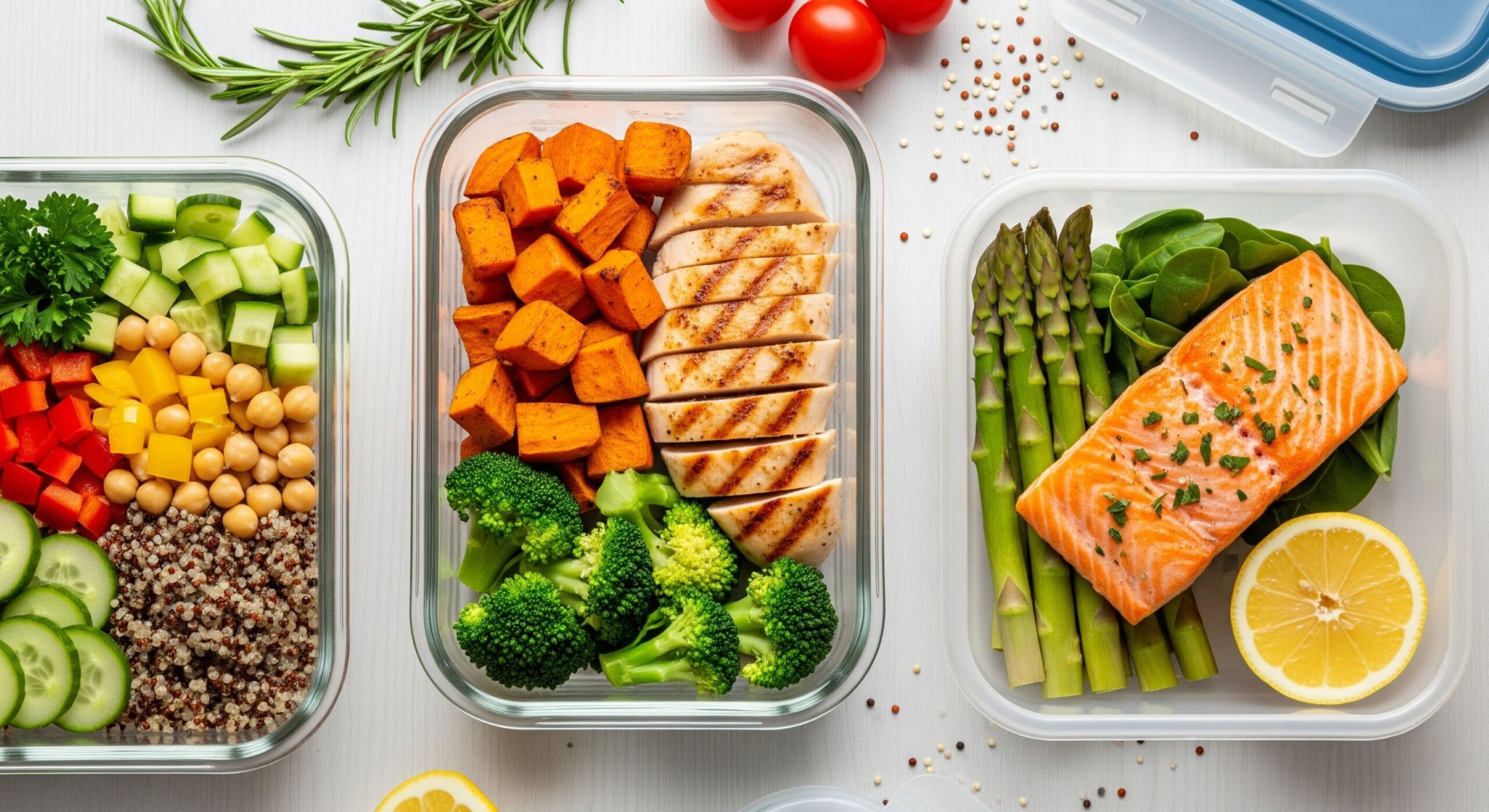
“Planning meals can help you eat a greater variety of foods… Research shows that people who plan their meals are more likely to have a higher-quality diet and a lower risk of obesity.”
— The Academy of Nutrition and DieteticsYour Healthy Meal Prep Toolkit: What You Actually Need
You don’t need a professional kitchen, but investing in a few key items will certainly make your life easier. Don’t feel like you need to buy everything at once! Instead, start with what you have and build your collection over time.
The Foundation: Containers
- Glass vs. Plastic: Ah, the age-old debate. Generally speaking, you should reach for glass containers when you want durability and versatility; they don’t stain, are oven-safe, and last forever. The downside, however, is that they’re heavy. Good quality, BPA-free plastic, on the other hand, is your lightweight, portable, and budget-friendly friend, perfect for lunches on the go. A mix of both is usually the sweet spot.
- Compartments Are Your Friend: While single-compartment containers work fine, ones with built-in dividers are a game-changer. They keep your food from getting all mushy and mixed together. For instance, they’re perfect for salads with toppings or mains with sides.
- The Right Size for the Job: It’s also wise to get a variety of sizes. Large ones for storing a whole batch of shredded chicken, medium ones for your individual meals, and little ones for dressings, sauces, or nuts.
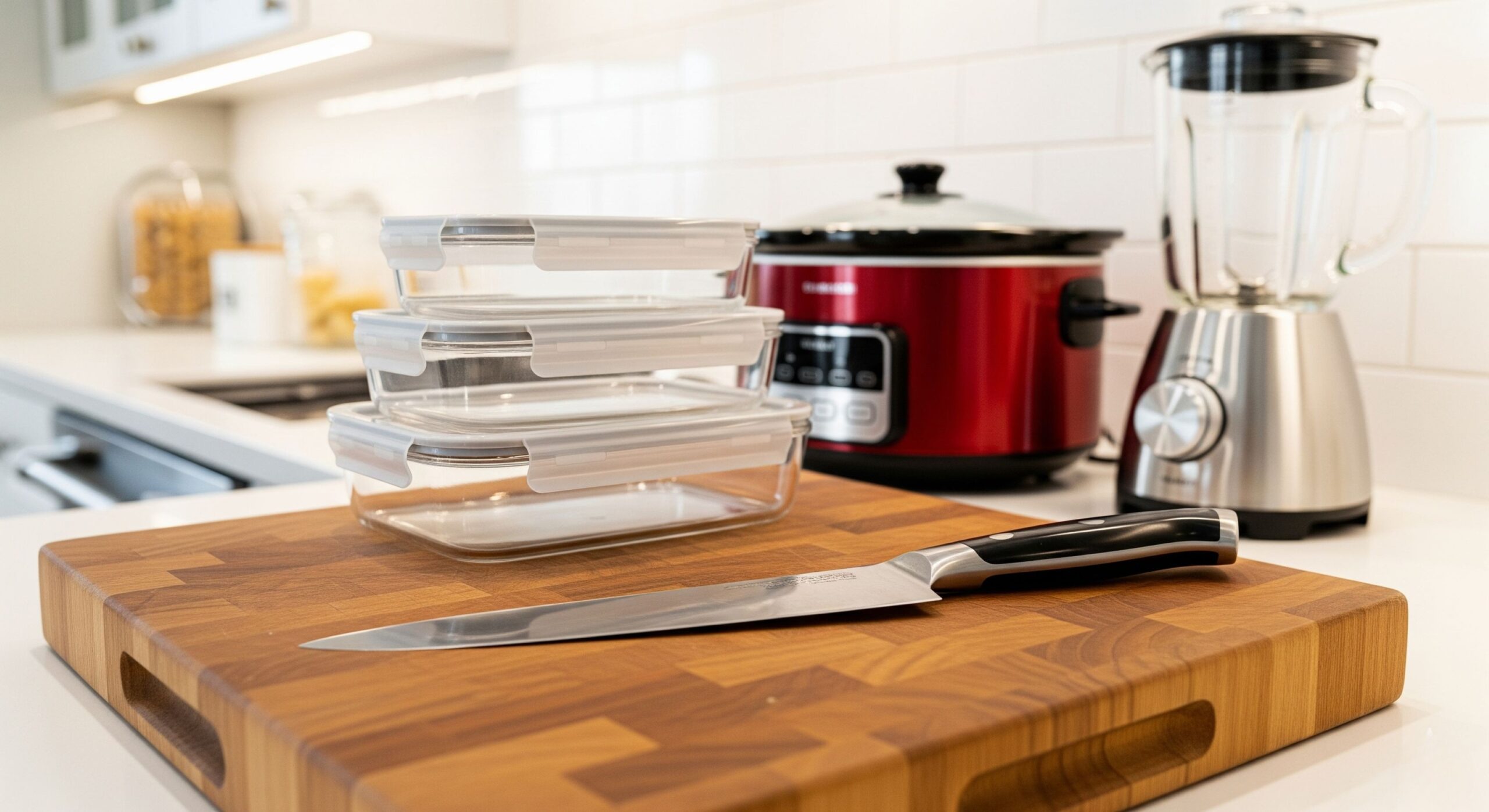
The Workhorses: Essential Tools
- Sheet Pans (Plural!): Having at least two big, sturdy baking sheets is a must. You can roast your protein on one and your veggies on the other at the same time. Ultimately, it’s all about efficiency.
- A Good Chef’s Knife: A dull knife isn’t just frustrating, it’s dangerous. You don’t need a 20-piece set. One solid 8-inch chef’s knife will do 90% of the work. Just promise us you’ll keep it sharp!
- A Big Cutting Board: Stop trying to chop on that tiny cutting board. Get a nice big one that gives you room to work without veggies falling all over your counter.
- A Slow Cooker or Instant Pot: These are the champions of hands-off cooking. For example, you can make tender pulled pork, huge batches of chili, or perfectly cooked beans with almost zero effort.
Food Safety: Non-Negotiable Rules for Healthy Meal Prep
Now, let’s talk about the most important part of this whole process, because it’s the one thing you can’t afford to get wrong: food safety. Don’t be intimidated; the rules are simple but crucial for any meal prep guide for healthy results.
The 2-Hour Rule and Proper Cooling
So, you’ve cooked a beautiful batch of food. Now what? You can’t just stick a giant, steaming pot of chili in the fridge. In fact, this can raise the overall temperature inside your refrigerator, putting other foods at risk. The USDA recommends following the “2-hour rule”: don’t leave food out at room temperature for more than two hours. To cool food quickly and safely, you should divide large batches into smaller, shallow containers. This increases the surface area and allows the food to cool down much faster. Once it’s no longer steaming hot, you can pop it in the fridge.
The 4-Day Guideline for the Fridge
For most cooked foods, you should plan to eat them within 3-4 days. This is the sweet spot for maintaining both safety and quality. Any longer, and you risk spoilage and foodborne illness. This is precisely why planning is key. For instance, don’t prep seven days’ worth of chicken and rice to sit in the fridge. A better approach is to prep for Monday through Thursday, and maybe have a plan to use freezer components or cook fresh on Friday.
Mastering Your Freezer for Long-Term Prep
The freezer is your best friend for long-term meal prep. Soups, stews, chilis, casseroles, and cooked grains freeze beautifully. To prevent freezer burn (which happens when food is exposed to air), make sure you use freezer-safe containers or bags and remove as much air as possible before sealing. Of course, always label everything with the name of the dish and the date.
Safe Thawing Practices
When it’s time to eat your frozen meals, how you thaw them matters. The safest method, by far, is to move the container from the freezer to the fridge the day before you plan to eat it. Thawing on the counter is a no-go, as it allows the food’s surface to enter the temperature “danger zone” where bacteria can grow, even while the center is still frozen.
Your 5-Step Weekly Strategy: A Simple Blueprint for Healthy Meal Prep
Ready to dive in? This isn’t about complicated rules; it’s about creating a simple system that works for you. Follow these steps for a successful and healthy meal prep routine.
- Step 1: Plan Your Eats (But Keep it Simple!): First, sit down for 20 minutes. That’s it. Plan your work lunches and maybe three dinners. Stick with recipes you already know and love. You can get fancy later. Pro Tip: Try “Theme Nights” like “Meatless Monday” or “Taco Tuesday” to make planning a no-brainer.
- Step 2: Write a Smart Grocery List: Next, create an organized list. Go through your recipes and write down everything you need. Then, do a quick scan of your kitchen and cross off what you already have. Group the list by store section (produce, meat, etc.) so you can get in and out of the store without wandering around.
- Step 3: Make it an Appointment: After that, block out 2-3 hours in your calendar. Treat it like an important meeting. For most people, Sunday afternoon works best. Put on some great music or a podcast. The goal is to make it feel less like a chore and more like a relaxing, productive ritual.
- Step 4: Become a Batch-Cooking Boss: This is where the magic happens. In short, be efficient. Start with whatever takes the longest to cook (like roasting veggies). While that’s in the oven, you can chop other ingredients or cook grains on the stovetop. Use all your tools!
- Step 5: Pack it Up Right: Finally, once everything is cooked, let it cool down a bit before you put the lids on. This prevents things from getting soggy. You can either pack full, ready-to-go meals or store ingredients separately so you can mix and match during the week.
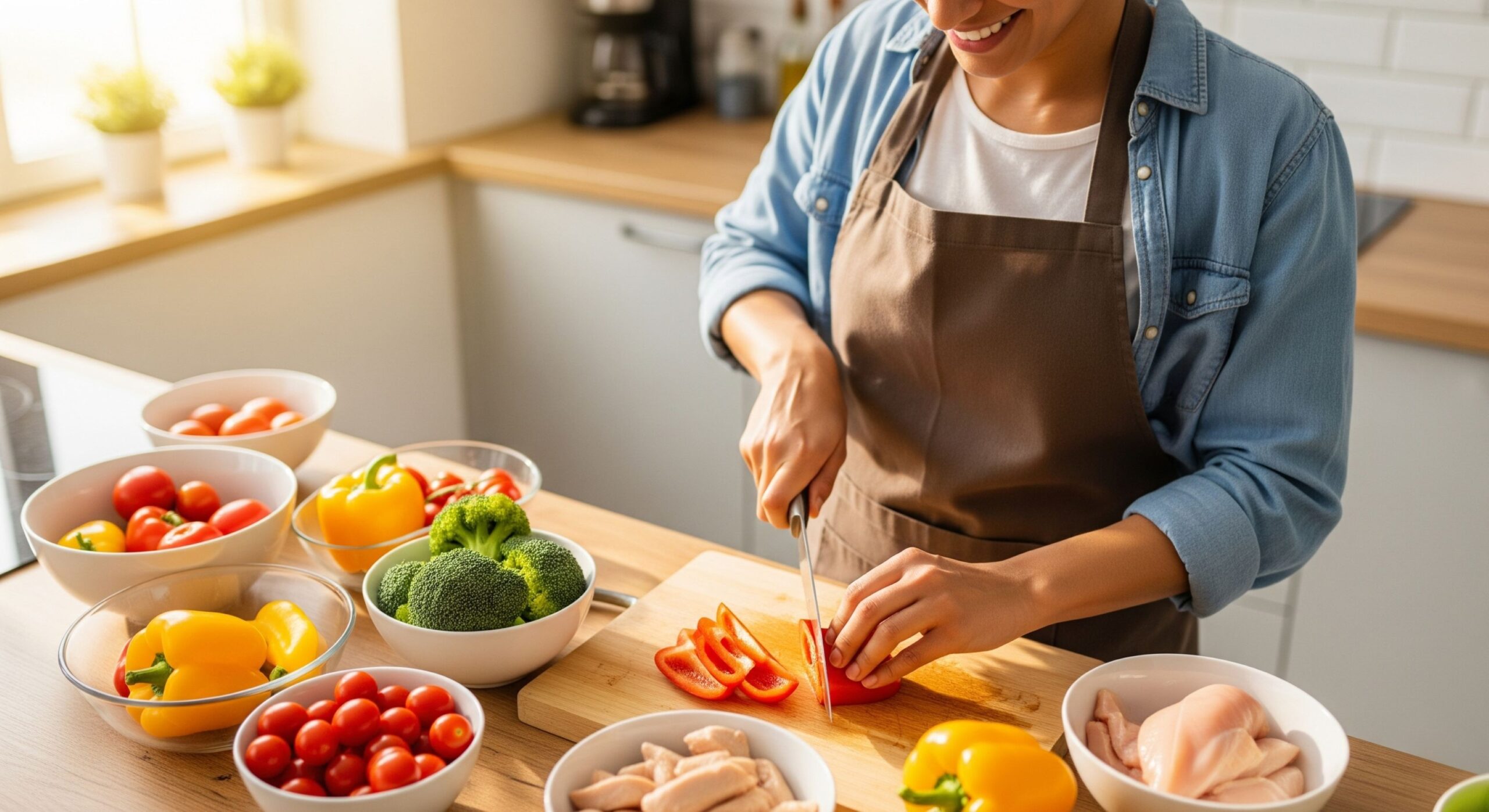
“Planning meals ahead is one of the easiest ways to trim your food budget. When you have a plan, you know exactly what to buy, which helps you avoid impulse purchases at the grocery store.”
— Forbes Advisor
Bonus: Breakfasts and The Secret to Not Getting Bored
Once you’ve got lunches and dinners down, you can level up your prep game to make your whole week even smoother and tastier.
Breakfast on Autopilot
Mornings can be chaotic. Therefore, having breakfast ready to grab can be the difference between a calm start and a frantic, sugar-fueled one.
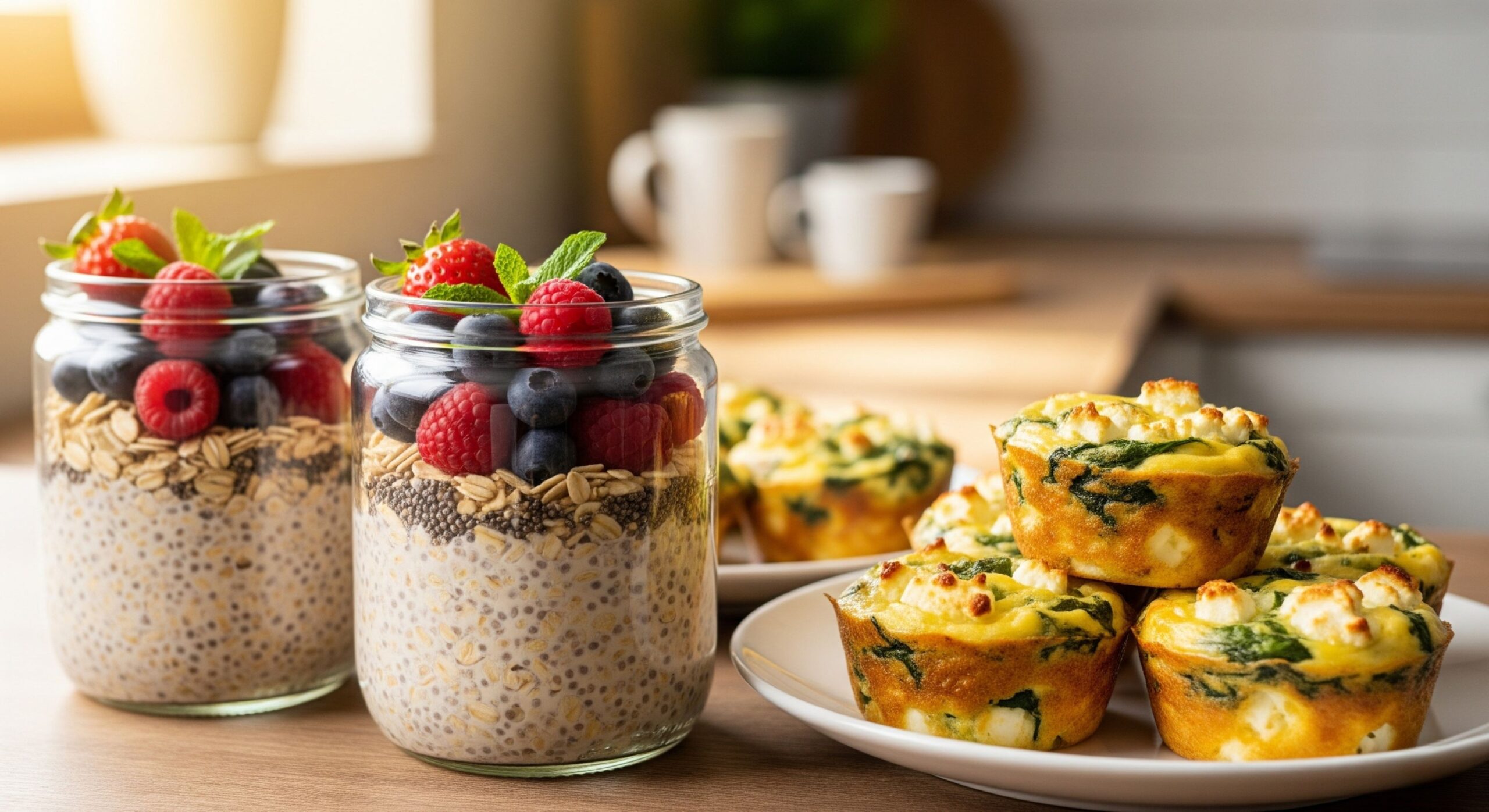
- Overnight Oats: The undisputed champ. Mix rolled oats, your milk of choice, and chia seeds in a jar. Let it sit in the fridge overnight. In the morning, you’ve got a delicious, creamy breakfast waiting for you.
- Egg Muffins: Think of these as mini, portable frittatas. Whisk eggs with veggies and cheese, pour into a muffin tin, and bake. In other words, they’re easy to grab on your way out the door.
- Smoothie Packs: Put all your smoothie ingredients (fruit, spinach, protein powder) into freezer bags. When you’re ready, just dump a bag into the blender with some liquid. Boom, instant smoothie.
The Secret Weapon Against Boring Food: Flavor Bombs
This is how you keep things interesting. “Flavor bombs” are pre-made sauces, dressings, and toppings that can turn a simple meal into something special.
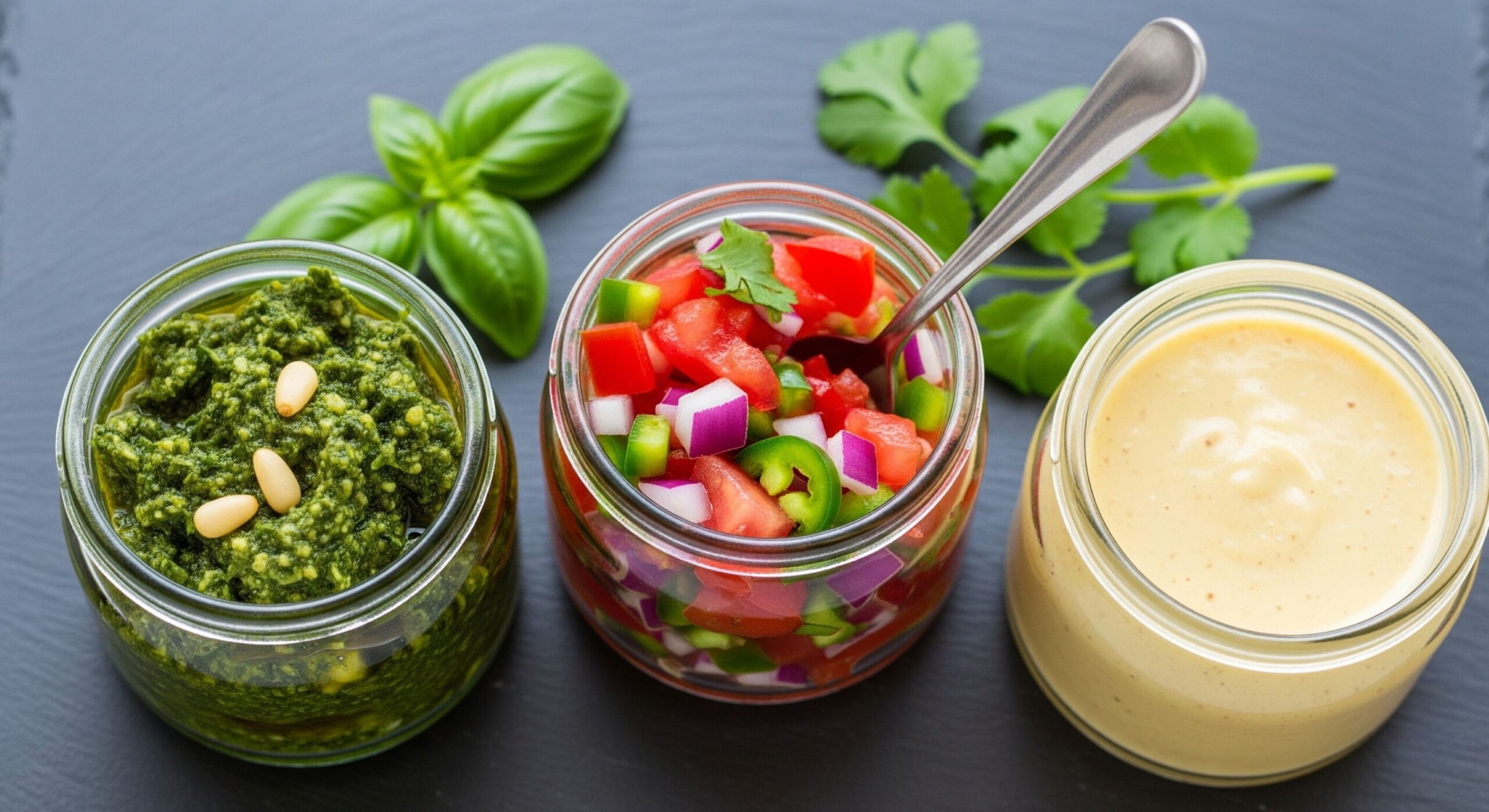
- Dressings & Vinaigrettes: Stop buying bottled dressing! It takes two minutes to shake up a simple vinaigrette in a jar, and it tastes a million times better.
- Pestos & Salsas: Similarly, a fresh pesto or a chunky pico de gallo can make chicken, fish, or even scrambled eggs feel brand new.
- A Little Bit of Crunch: Texture makes food satisfying. For example, you can toast some nuts or seeds, or roast some chickpeas until they’re crispy. A little crunch goes a long way. Trust us on this one.
Case Study: How the Miller Family Won Back Their Weekends
Meet the Millers: two working parents, a 10-year-old in soccer, and a 7-year-old with a picky palate. Their weeknights were a blur of homework, practice, and drive-thru dinners. Weekends, meanwhile, were spent running errands, leaving everyone exhausted. They decided to try “Team Meal Prep.” On Sunday, they put on music and worked together. The kids helped wash vegetables and measure ingredients. They prepped components: a big batch of taco meat, grilled chicken strips, cooked pasta, and containers of chopped veggies and fruits. The result? Taco night was an assembly line of fun. Lunches were easy-to-pack chicken wraps. One night, they just had to boil water for the pre-cooked pasta and add a jar of sauce. Not only did they eat healthier and save money, but their Sunday prep session became a new family tradition, a time to connect before the crazy week began.
Final Thoughts: Just Start. Seriously.
We talk a lot about the practical benefits of meal prep—the health, the money, the time. But don’t underestimate the mental win. In a world that often feels chaotic and out of our control, the simple act of planning and preparing your food gives you a sense of order and accomplishment. It’s a powerful, tangible form of self-care, a key part of any holistic health plan. In fact, it’s you, looking out for future you.
At the end of the day, this meal prep guide for healthy living isn’t about perfection. It’s about making your life a little easier and a lot less stressful. Therefore, don’t try to go from zero to prepping every single meal for seven days straight. That’s a recipe for burnout. Instead, start small. Like, really small. This weekend, just prep your lunches for Monday and Tuesday. See how it feels. Master that one small step, enjoy that feeling of relief on a busy weeknight, and then build from there. You’ve got this. Your future self will thank you.
Sources and References
- Academy of Nutrition and Dietetics – 5 Steps to Meal Planning and Prepping.
- American Heart Association – Portion Size Versus Serving Size.
- Forbes Advisor – How To Save Money On Groceries.
- U.S. Department of Agriculture (USDA) – Leftovers and Food Safety.
Win Back Your Weeknights
Your complete visual guide to healthy, stress-free meal prepping.
Eat Healthier
Make the healthy choice the easy choice. Control ingredients, portions, and nutrients.
Reduce Stress
Eliminate the daily “What’s for dinner?” panic and free up your mental energy.
Save Money
Avoid expensive takeout and impulse buys by planning meals and shopping smart.
Reclaim Time
Spend a few hours prepping on the weekend to free up your weeknights for what matters.
Your 5-Step Weekly Prep Strategy
Plan Your Meals: Keep it simple. Plan work lunches and 3-4 dinners. Stick to familiar recipes to start.
Write a Smart List: Group items by store section (produce, meat, etc.) to shop efficiently and avoid impulse buys.
Schedule Your Prep: Block 2-3 hours in your calendar. Treat it like an appointment you can’t miss.
Batch-Cook Like a Boss: Cook components in parallel. Roast veggies while grains cook on the stove. Maximize your time.
Pack & Store: Cool food before lidding. Store ingredients separately for mix-and-match meals or pack full portions.
Your Meal Prep Toolkit
Start with the basics. You don’t need a professional kitchen.
Good Containers
Sheet Pans
Sharp Knife
Slow Cooker
Safety First!
- 2-Hour Rule: Cool food quickly in shallow containers. Refrigerate within 2 hours of cooking.
- 4-Day Guideline: Eat refrigerated leftovers within 3-4 days for optimal safety and quality.
- Freeze Smart: Use freezer-safe containers, remove air, and label with the date. Thaw in the fridge.
Level Up: Breakfast & Flavor
Breakfast on Autopilot
- Overnight Oats
- Egg Muffins
- Smoothie Packs
Beat Boredom: Flavor Bombs
- Homemade Vinaigrettes
- Fresh Pestos & Salsas
- Toasted Nuts & Seeds
Start Small, Not Perfect.
Just prep two lunches this week. That’s it. See how it feels. You’ve got this!