
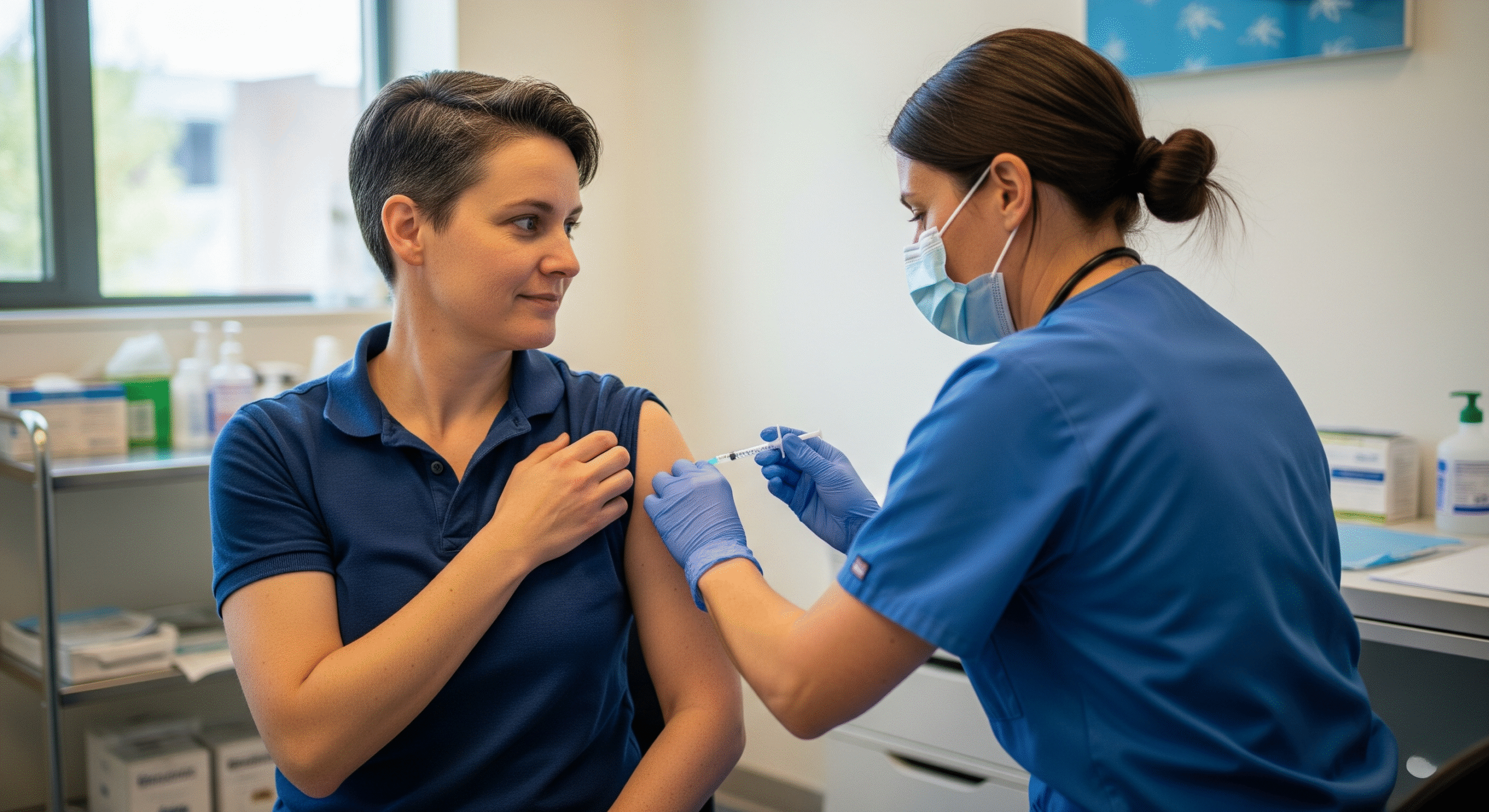
The Importance of Dual Vaccination
Key Takeaways
- COVID-19 is an Evolving Threat: The virus is always changing into new types (variants like Omicron). Because of this, we need new vaccines and boosters. They teach your body to fight the latest versions of the virus. This helps stop severe sickness, hospital stays, and death.
- The Flu is a Perennial Foe: The flu virus also changes every year. This is called antigenic drift. We need a new flu shot each year to protect against the specific types of flu expected that season.
- Prevent a “Twindemic”: Experts worry about a “twindemic.” This is when both viruses spread a lot at the same time. This would put a big load on hospitals. Getting both shots is the best way to prevent this.
- Dual Vaccination Offers Cumulative Protection: Each vaccine targets a different virus, creating two separate shields. This greatly lowers your risk of getting sick from either one. If you do get sick, it makes the illness less severe.
- The Science is Sound:
- COVID-19 vaccines use modern technologies. They teach your cells to create a harmless spike protein. This triggers an immune response. They do not change your DNA.
- Flu vaccines usually use a killed virus. This virus cannot make you sick. It is just enough to build your immunity.
- Debunking Common Myths: The article clears up common false ideas. For example, it explains that vaccines were not rushed. It also explains that the flu shot cannot make you sick.
- A Collective Responsibility: Vaccination is not just about protecting yourself. By getting vaccinated, you help stop the virus from spreading. This protects the most vulnerable people in your community.
Our world has a complex health situation. The COVID-19 pandemic made this very clear. It showed us how important vaccines are. We still face challenges from new variants and old threats, like the flu. Many people ask: why are vaccines so important right now? And why do we need both a COVID-19 shot and a flu shot? By understanding the science and the combined threat, we can make smart choices. These will protect us and our communities.
The Evolving Threat of COVID-19
The COVID-19 pandemic changed how we see global health. The virus, SARS-CoV-2, appeared in 2019. It spread fast, creating a public health emergency. Hospitals were overwhelmed, and people’s lives changed a lot. In response, scientists worked very fast to make effective vaccines. They created shots that offered a powerful shield. These shots helped against severe sickness, hospital stays, and death.
A global study published in The Lancet confirmed the real-world effectiveness of vaccines. The researchers concluded, “The global vaccination programme against COVID-19 has had a substantial impact on the course of the pandemic, preventing millions of deaths worldwide.”
— Source: The Lancet
The Importance of Updated Vaccines
Yet, the virus has not stopped changing. It has made new variants like Omicron, Delta, and their sub-types. These new variants often have changes that make them spread more easily. They can also partly get around the protection we have from past infections or vaccines. As a result, health groups now suggest updated COVID-19 vaccines and boosters. These new shots target the latest variants. They give our immune systems the best tools to fight the virus. Doctors say that while early vaccines were a strong start, the updated boosters refresh our immune cells. They help our bodies recognize the newest versions of the virus.
A Collective Responsibility
Furthermore, getting vaccinated helps stop the virus from spreading in our communities. When fewer people get infected, the virus has fewer chances to change. This helps slow down the start of new, possibly more dangerous variants. Therefore, your choice to get a shot helps protect everyone. It especially helps people who cannot get the vaccine for health reasons. When more people are vaccinated, it builds a wall of defense for the whole community. This makes everyone safer.
Understanding the Perennial Foe: Influenza
The Flu Virus and Antigenic Drift
COVID-19 has been in the news a lot, but we must not forget about the flu. The flu is a serious breathing illness that affects millions of people every year. Many people think it’s just a bad cold. However, it can cause severe health problems. These include pneumonia, bronchitis, and even death. It is especially dangerous for young children, the elderly, and people with other health issues.
The Centers for Disease Control and Prevention (CDC) states that “Influenza viruses are constantly changing. Each year’s seasonal flu vaccine is developed to protect against the influenza viruses that research indicates will be most common during the upcoming season.”
The flu virus changes its surface parts every year. This process is called antigenic drift. Consequently, a flu shot you had last year might not protect you this year. It might not work against the new types of flu that are spreading.
Because of this, health groups like the Centers for Disease Control and Prevention (CDC) and the World Health Organization (WHO) create a new vaccine each year. They watch flu viruses all over the world and predict which types of flu will be most common. The new vaccine is then made based on these predictions. It usually has three or four different types of flu viruses in it.
Why the Flu Shot Cannot Give You the Flu
Many people wrongly believe that the flu shot gives you the flu, but this is not true. Inactivated vaccines use a dead virus that cannot make you sick. Instead, it is enough to make your immune system build protection. While you might have some small side effects like a sore arm or a low fever, these are simply signs that your immune system is working well. These minor side effects are worth the protection from a sickness that could be very serious.
The Synergy of Dual Vaccination
In recent years, doctors have warned about a “twindemic.” This is a situation where both COVID-19 and the flu spread widely at the same time. This would put a huge amount of stress on our health systems, using up resources and filling up hospital beds. Ultimately, this would make it harder for patients to get the care they need. The best way to stop this is to prepare for both viruses at once, which means getting a shot for both COVID-19 and the flu.
The World Health Organization (WHO) has highlighted the importance of this dual approach, stating, “Vaccination is the most effective way to prevent influenza infection and its consequences, and COVID-19 vaccines have been shown to be effective in preventing severe disease, hospitalization and death.”
— Source: World Health Organization
Protecting Yourself and Your Community
First, getting both shots gives you strong, total protection. Each vaccine fights a different virus, which creates two separate shields for your body. For instance, the COVID-19 shot protects you from the latest coronavirus types, while the flu shot protects you from the main flu types. By getting both, you greatly lower your chance of getting sick from either one. Even if you do get sick, both vaccines make the illness much less severe and also make it much less likely you will need to go to the hospital.
Beyond your own health, getting both shots helps more than just you. When more people are vaccinated, both viruses spread less. This protects the most vulnerable people in our society, including babies, the elderly, and people with weak immune systems. Since you are less likely to get sick, you are also less likely to pass the virus to others. So, getting both shots is a selfless act; it helps keep your entire community healthy and safe.
The Science Behind the Shots
Understanding how these vaccines work can help you feel more confident. It can also help you trust that they are safe and effective.
COVID-19 Vaccines
A review published in the New England Journal of Medicine highlighted the revolutionary nature of the mRNA approach, noting that it “allows for a more rapid and flexible vaccine production than traditional methods.”
— Source: New England Journal of Medicine
- mRNA Vaccines: An mRNA vaccine puts a small piece of code (mRNA) into your cells. This code tells your cells to make a harmless piece of the spike protein, which is the protein on the outside of the coronavirus that lets the virus infect cells. After your cells make this protein, your immune system sees it as foreign and then makes antibodies to fight it. So, when you see the real virus later, your immune system knows how to defend you. The vaccine provides your body with a blueprint for the enemy without ever giving you a living virus.
- Viral Vector Vaccines: A viral vector vaccine uses a harmless, changed virus (the “vector”) to deliver the code for the spike protein into your cells. This also causes your immune system to make antibodies, which gets your body ready for a real infection.
Both types of vaccines were tested very carefully and passed all the checks in clinical trials. They were approved by big health groups like the FDA in the United States and have been shown to be safe and effective for billions of people around the world.
The Science Behind the Shots
Understanding how these vaccines work can help you feel more confident in their safety and effectiveness.
COVID-19 Vaccines
🧬mRNA Vaccines
An mRNA vaccine delivers a small piece of code (mRNA) to your cells. This code is a blueprint for the virus’s spike protein. Your cells follow the blueprint to make the protein, and your immune system learns to recognize and fight it by making antibodies.
🔬Viral Vector Vaccines
This type of vaccine uses a harmless, modified virus (the “vector”) to carry the genetic code for the spike protein into your cells. Like the mRNA vaccine, this prompts your immune system to produce antibodies, preparing your body to fight a real infection.
Flu Vaccines
The U.S. Food & Drug Administration (FDA) has stated that “Flu shots are safe and effective. The FDA works closely with our federal partners at the Centers for Disease Control and Prevention and the National Institutes of Health to ensure the quality and safety of these vaccines.”
— Source: U.S. Food & Drug Administration
There are two main types of flu vaccines: inactivated (killed) vaccines and live weakened vaccines.
- Inactivated Vaccines: The most common type of flu shot uses a dead virus that cannot cause sickness, but it still makes your immune system react. Your body learns to see the virus’s outside parts and makes antibodies. If you encounter a live flu virus later, your body is ready to fight it. Inactivated vaccines are safe for most people, including pregnant women and people with other health problems.
- Live Weakened Vaccines: These vaccines are often given as a nasal spray and have a live, but very weak, version of the virus. This virus is so weak it can only grow in the cool temperatures of your nose, not in your lungs. This causes a mild infection in your nose and throat, which is enough to make a strong immune response. Because it has a live virus, this type of shot is not for everyone, including young children and people with weak immune systems.
Flu Vaccines
💉Inactivated Vaccines
The most common flu shot uses a dead virus that cannot cause sickness. Your body recognizes the virus’s outer parts and creates antibodies. This prepares your body to fight a live flu virus if you encounter it later.
👃Live Weakened Vaccines
Given as a nasal spray, this vaccine contains a live but very weak version of the virus. It can only grow in the cool temperatures of your nose, creating a mild infection that triggers a strong immune response.
Addressing Common Concerns and Misconceptions
Many people have questions or have heard false information about these vaccines. Let’s look at some of the most common myths.
A study published in Nature showed that “Vaccines for COVID-19 have saved a large number of lives, and we show that misinformation has contributed to vaccine hesitancy.” This highlights the importance of reliable information.
— Source: Nature
COVID-19 Vaccine Myths
- “The vaccine was made too fast. It can’t be safe.” The vaccine was developed quickly, but it was not rushed. In fact, scientists used many years of research on viruses and mRNA. The fast timeline happened because of more money, global teamwork, and tests that occurred at the same time. No safety steps were skipped, and all vaccines followed the same strict safety rules.
- “The vaccine can change my DNA.” This is completely false. The mRNA in the vaccine never goes into the part of the cell where your DNA is. Instead, it stays in the cell’s outer part, where it delivers its message and quickly breaks down. This ensures the genetic material never touches your genes.
- “The vaccine has bad, unknown long-term side effects.” Billions of people have received COVID-19 vaccines, and we have big systems that watch for any side effects. The vast majority of side effects happen within a few weeks of the shot and are not severe. So far, scientists have found no proof of any serious, long-term side effects.
Flu Vaccine Myths
The World Health Organization (WHO) clarifies that a flu shot cannot cause the flu. “The most common flu shots are inactivated vaccines, containing a killed virus, and therefore cannot cause the flu.”
— Source: World Health Organization
- “The flu vaccine makes you sick.” This is the most common false idea. As we’ve said, the shot cannot give you the flu because it has a dead or weakened virus. Any symptoms you feel, like a small fever, are just signs that your immune system is making a defense.
- “I am healthy, so I don’t need the flu shot.” Even if you are healthy, you can still get the flu. And subsequently, you can spread it to others who are more at risk. Getting the flu shot is an act of care for your community; it helps protect your family, friends, and neighbors.
- “The flu vaccine is not effective.” No vaccine is perfect. However, the flu shot greatly lowers your chance of getting sick. Moreover, even if you get the flu after your shot, your sickness will likely be much less severe, and you are much less likely to need to go to the hospital.
Making the Decision: A Personal Action Plan
A public health statement from Johns Hopkins Medicine emphasizes the collective benefit of vaccination: “Getting vaccinated protects you, but also protects those around you, including infants and young children, the elderly, and people with compromised immune systems.”
— Source: Johns Hopkins Medicine
Getting a shot for both COVID-19 and the flu is a smart and good choice. Here is a simple plan to make sure you stay safe:
- Talk to an Expert: Speak with your doctor, a nurse, or a pharmacist about your vaccine options. They can give you personal advice based on your health history.
- Plan Your Shots: Many clinics and pharmacies offer both the COVID-19 vaccine and the flu shot at the same time. This is an easy way to protect yourself without a second trip.
- Tell Others: Share your choice with your family and friends. You can help teach others by being a good example, and you can also calmly talk about any questions they have.
We have the power to protect ourselves and our communities from these two health threats. By trusting the proven science of vaccines, we can build a healthier future for everyone.
A study from the American Journal of Preventive Medicine highlights the economic and public health benefits, stating, “Vaccination has proven to be one of the most cost-effective and successful public health interventions, saving millions of lives and preventing countless illnesses each year.”
— Source: American Journal of Preventive Medicine
Sources
- The Lancet: The global impact of the first year of COVID-19 vaccination
- Centers for Disease Control and Prevention: How Flu Vaccine is Made
- World Health Organization: Seasonal influenza and COVID-19 vaccination recommendations
- New England Journal of Medicine: mRNA Vaccines – A New Era in Vaccinology
- U.S. Food & Drug Administration: Influenza (Flu) Vaccine Safety
- Nature: Quantifying the impact of COVID-19 vaccine misinformation on vaccination intentions
- World Health Organization: Influenza (Seasonal) Fact Sheet
- Johns Hopkins Medicine: COVID-19 Vaccines: Myths vs. Facts
- American Journal of Preventive Medicine: The Public Health and Economic Value of Vaccines