
You probably know someone like Alex. In fact, you might act just like him.
Alex is a hardworking professional living in the Chicago suburbs. Every night at 10:30 PM, he tries to force himself to sleep. His routine is strict. He draws the blackout curtains, turns on a white noise machine, and sprays lavender scent on his pillow. He has built a fortress of solitude, yet sleep does not come. Instead, his mind races, his legs twitch, and the glowing red numbers on the clock mock him. He finally drifts off well past midnight. Consequently, when the alarm rings at 6:30 AM, it feels like a personal attack.
Unfortunately, Alex has not figured out the plot twist yet. He lost the battle for a good night’s sleep long before he fluffed his pillow. He actually lost it at 7:00 AM that morning.
Most of us treat sleep like a light switch. We assume we can simply flip it off when we finish our day. However, sleep researchers and chronobiologists—scientists who study our internal clocks—tell a different story. Sleep is a cycle, not a single event. Therefore, your actions this morning, afternoon, and evening directly dictate the quality of your rest tonight.
If you are tired of counting sheep, stop focusing only on the night. Instead, start analyzing your day. You can adjust your routine from the moment you wake up to guarantee better sleep when the sun goes down.
The Morning Anchor: Let There Be Light
Let’s return to Alex. When his alarm blares, his first instinct is to hit snooze. He rolls over and checks his phone in the dark for twenty minutes. This is his first mistake.
Our bodies operate on a 24-hour internal clock known as the circadian rhythm. This biological clock lives within a small region of the brain called the suprachiasmatic nucleus (SCN). Think of the SCN as an orchestra conductor. It tells your body when to release energy hormones and when to release sleep hormones. However, this conductor needs a cue to start the music. That specific cue is light.
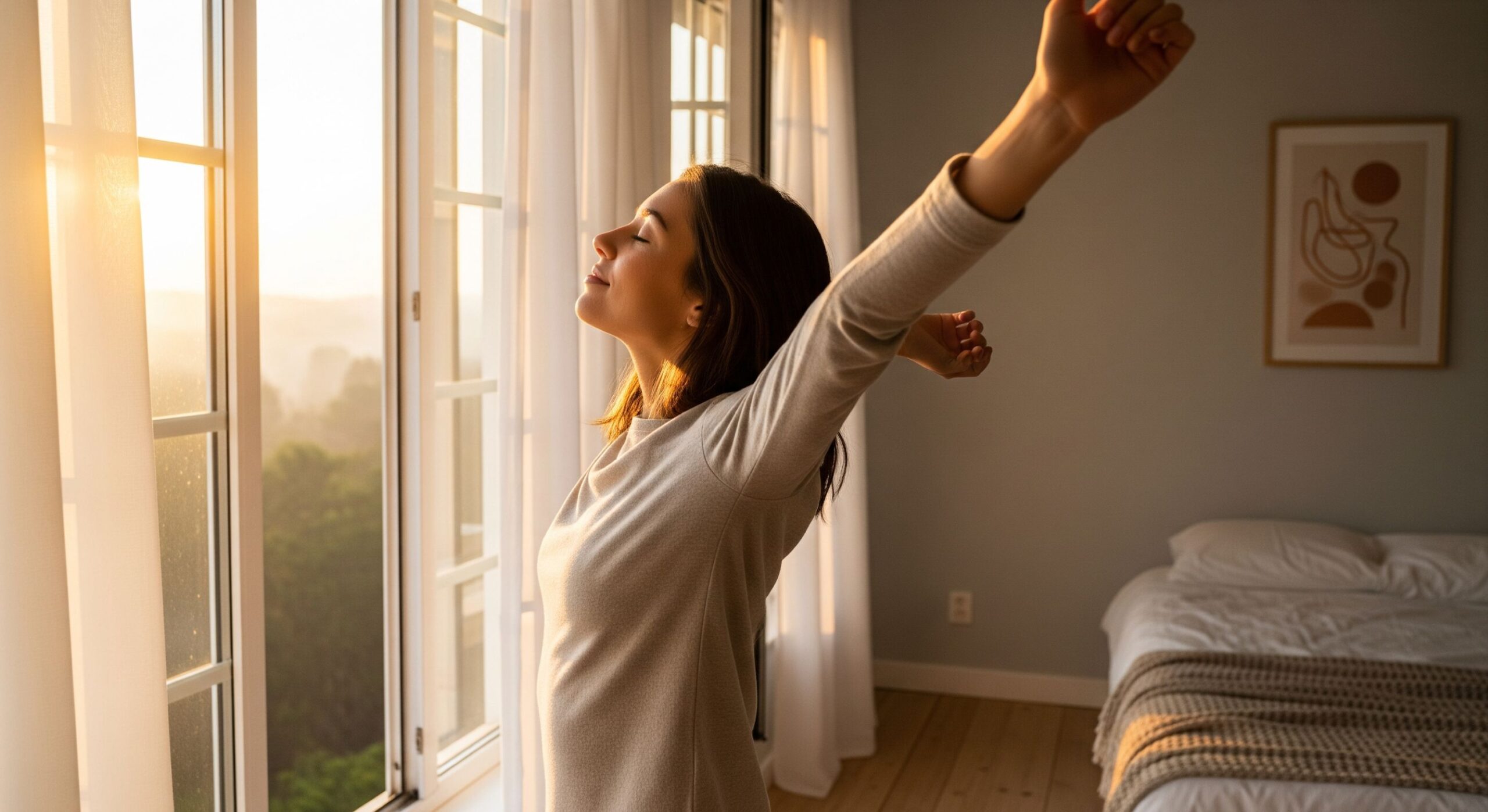
Sunlight triggers two important changes in your body when it hits your eyes early in the morning:
- Melatonin Suppression: Sunlight hits the retina and signals the brain to stop producing melatonin. This is the hormone that makes you feel groggy.
- The Cortisol Pulse: Sunlight triggers a healthy spike in cortisol and serotonin. Cortisol acts as a “get up and go” hormone. It wakes you up and starts a timer. Effectively, your body says, “We are waking up now, so we need to start winding down in about 12 to 14 hours.”
You do not need to run a marathon at dawn; you simply need to get outside. Dr. Andrew Huberman, a neuroscientist at Stanford University, suggests getting 10 to 30 minutes of sunlight into your eyes within the first hour of waking up.
If you live in a cloudy region like the Pacific Northwest or the UK, stay outside a bit longer. Even cloud-filtered daylight is significantly brighter than your office lighting. The goal is to anchor your circadian rhythm. You are chemically programming your body to know when “night” should occur by establishing exactly when “morning” is.
The Caffeine Curfew: Timing is Everything
Alex loves his coffee. He drinks a cup at breakfast, another when he arrives at the office, and usually grabs a “pick-me-up” latte around 3:30 PM to power through his final emails.
That 3:30 PM latte is silently killing his sleep.
To understand why, we must look at a chemical called adenosine. This chemical builds up in your brain throughout the day. It is essentially “sleep pressure.” As you accumulate more adenosine, you feel sleepier. Eventually, the brain clears this chemical away while you sleep.
Caffeine blocks these adenosine receptors. However, it does not actually give you energy. It simply hides the fatigue signals from your brain, much like putting a piece of tape over your car’s “Check Engine” light. The problem is that caffeine has a “half-life” of about five to six hours for the average adult.
Suppose Alex drinks 200mg of caffeine at 4:00 PM. By 10:00 PM, he still has roughly 100mg of caffeine active in his system. This equals a shot of espresso right before he brushes his teeth. This lingering caffeine prevents him from entering deep, restorative sleep even if he manages to fall asleep. Consequently, he wakes up feeling unrefreshed. This prompts him to drink even more coffee the next day, fueling a vicious cycle.
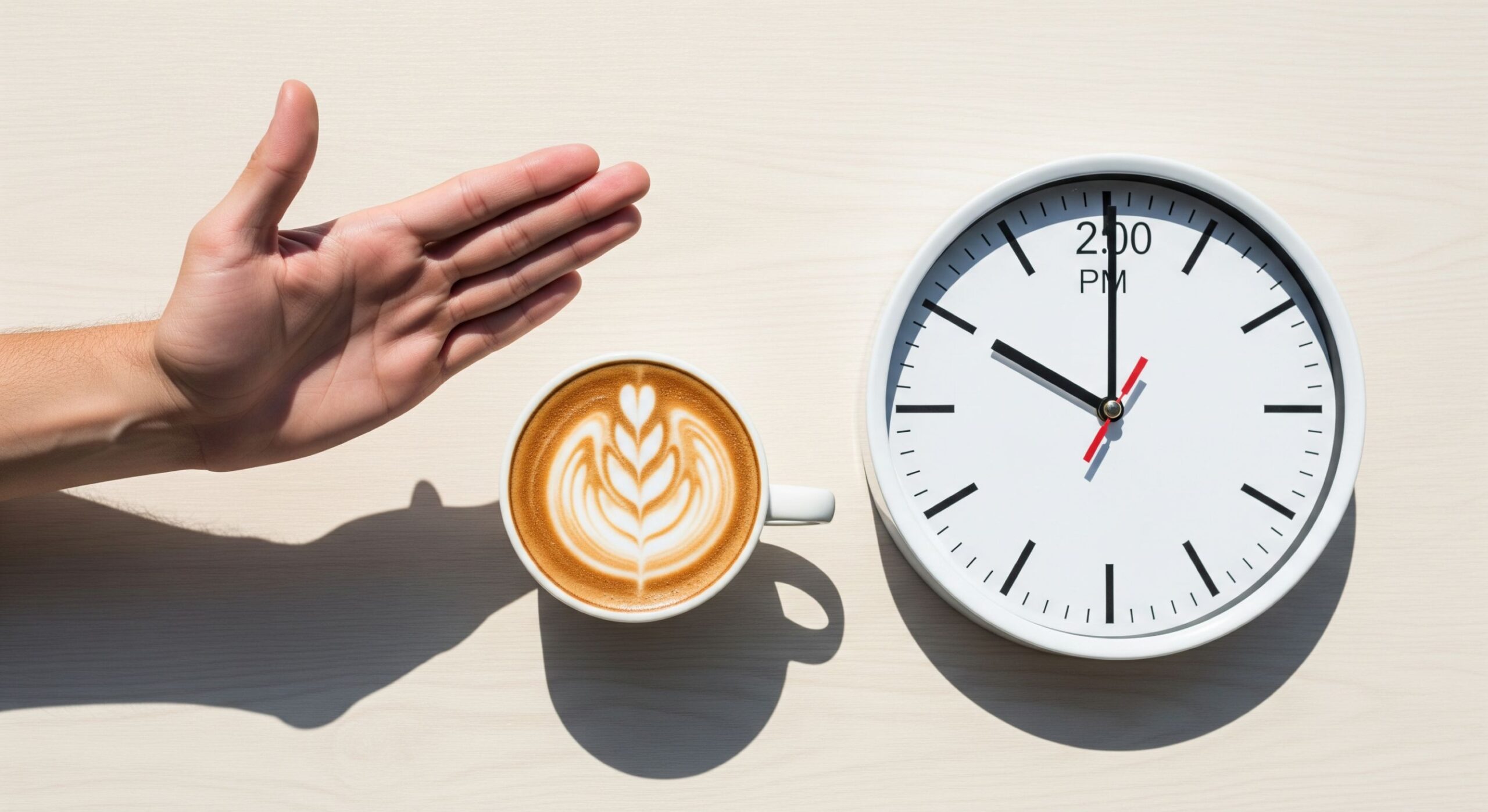
Implement a caffeine curfew. Most people should stop consuming caffeine at least 8 to 10 hours before bed. If you plan to sleep at 10:00 PM, drink your last cup of coffee by noon or 1:00 PM.
Move to Snooze: Exercise and Body Temperature
We know exercise is healthy. However, the specific timing of your workout plays a surprising role in how well you sleep.
Our body temperature naturally fluctuates throughout the day. It rises during the daytime and drops at night. In fact, your core body temperature must drop about 2 to 3 degrees Fahrenheit for your body to initiate sleep.
Vigorous exercise raises your body temperature and heart rate. Imagine Alex goes to a high-intensity interval training (HIIT) class at 8:30 PM. He spikes his temperature right when his body is attempting to cool down. It is like turning on the heater in a house you are trying to air condition. As a result, he might lie in bed feeling “tired but wired,” chemically alert despite being physically exhausted.
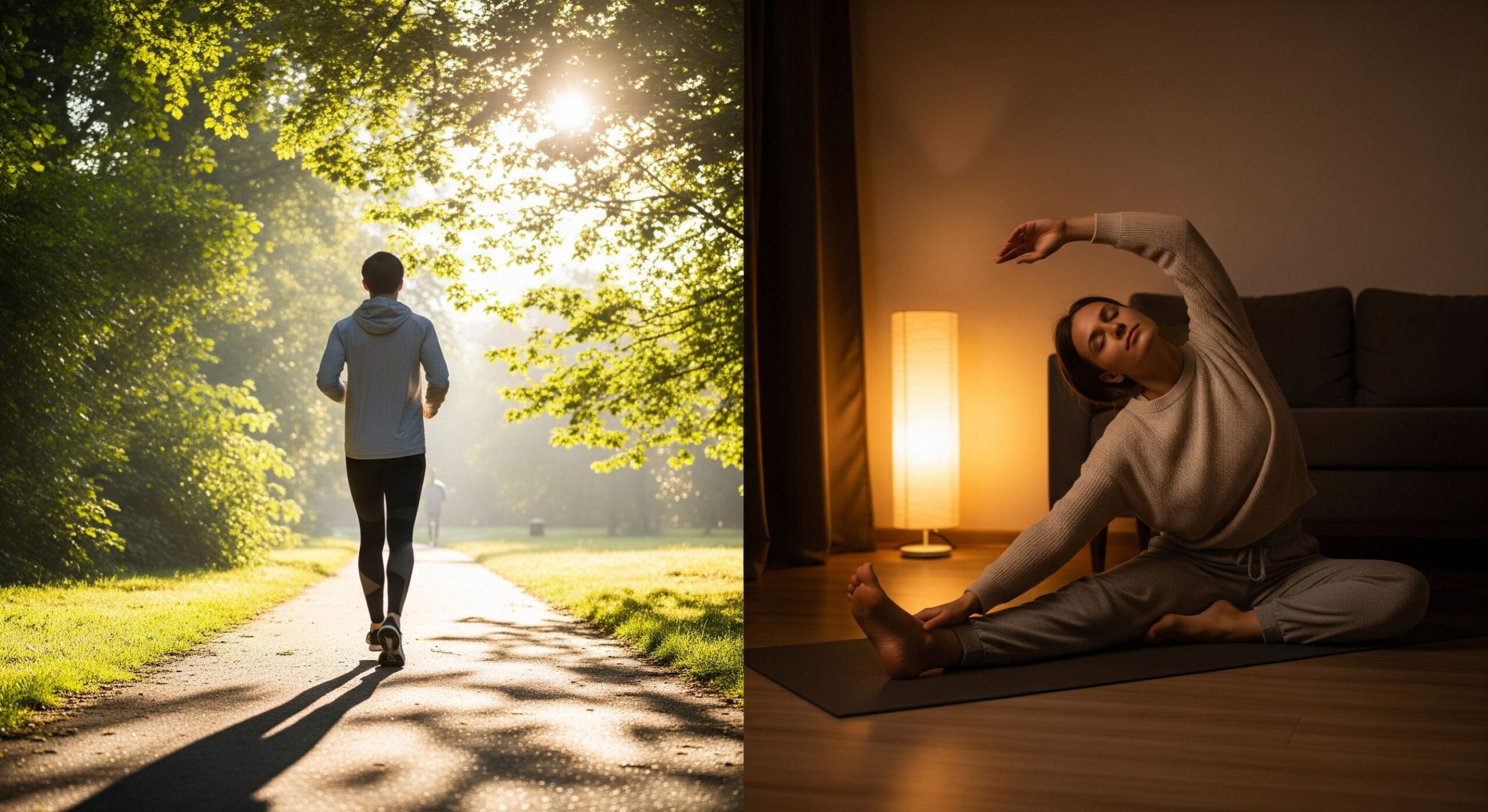
Research suggests that morning or afternoon workouts are best for sleep quality. Morning exercise can help wake you up and regulate your cortisol rhythm. Furthermore, afternoon exercise between 4 PM and 6 PM is beneficial because your body temperature is naturally high then. This allows for peak performance while leaving plenty of time to cool down before bed.
If you must exercise in the evening, try to finish at least 90 minutes before bedtime. Stick to lower-intensity movements like yoga or stretching, as these can actually help induce sleepiness.
The Afternoon Slump: To Nap or Not to Nap?
The notorious “post-lunch dip” usually hits around 2:00 PM. Your eyelids get heavy, and your focus drifts. This is a natural dip in the circadian rhythm.
You might feel a strong temptation to nap for two hours if you are sleep-deprived. However, you should resist it.
Remember adenosine? If you take a long nap, you burn off too much of that built-up “sleep pressure.” Your sleep drive will be too low to knock you out quickly when you finally hit the pillow at night. It is similar to eating a full burger at 5:00 PM and wondering why you aren’t hungry for dinner at 7:00 PM.
Keep your nap in the “power nap” zone of 10 to 20 minutes. This duration is sufficient to refresh the brain and boost alertness. It avoids the deep stages of sleep that lead to “sleep inertia,” that groggy feeling you experience when waking up from a deep sleep.
The Digital Sunset: Preparing for Arrival
Alex has optimized his morning light, cut caffeine by noon, and moved his workout to 5:00 PM. Now he faces the final frontier at 9:00 PM.
In the modern world, screens constantly bathe us in artificial blue light. To your SCN, blue light signifies “noon.” If you stare at Instagram at 10:00 PM, you chemically shout “IT IS MIDDAY! STAY AWAKE!” at your brain. This suppresses melatonin production and significantly delays sleep.
The content we consume matters as well. Doom-scrolling the news or arguing in comment sections raises cortisol levels. You cannot transition into a state of rest if your nervous system remains in “fight or flight” mode.
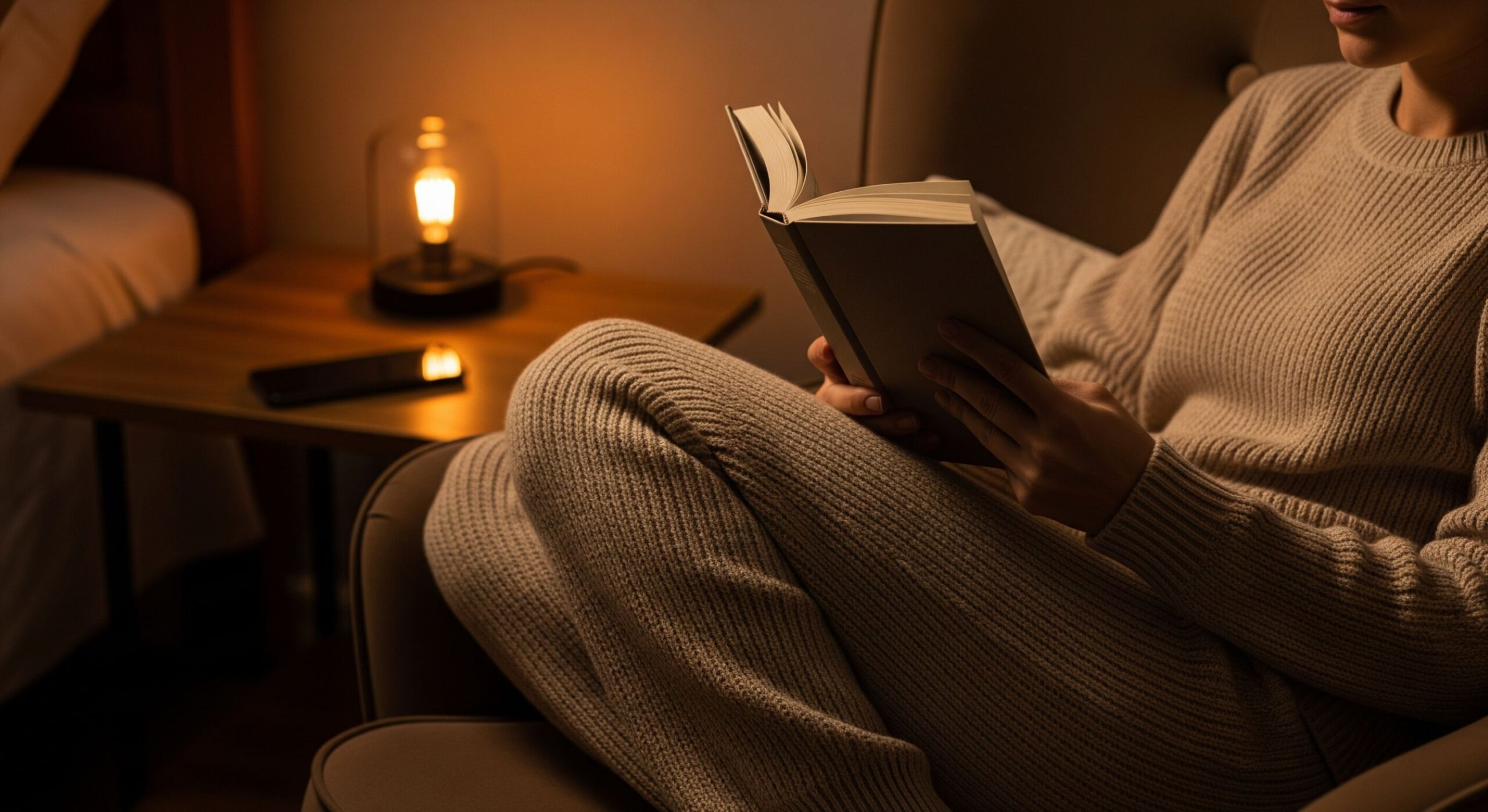
Create a “Digital Sunset.” Shut down your screens about 60 to 90 minutes before your target sleep time. If you must use a device, use “Night Shift” modes or blue-light-blocking glasses, but total avoidance is the better option.
Replace screen time with an “analog” routine. This is where Alex’s lavender spray and white noise become useful. While they are not a cure-all, they act as a final signal for rest.
A Case Study in Success
Let’s look at a real-world example. A study in Sleep Health followed office workers and found that those who received more light exposure during the day slept an average of 46 minutes more per night than those in windowless environments.
Consider “Sarah,” a graphic designer who suffered from insomnia similar to Alex’s. She did not buy a new mattress or take pills. Instead, she made three strategic changes:
- She walked her dog for 20 minutes every morning at 7:30 AM without sunglasses.
- She switched to herbal tea after 1:00 PM.
- She established a “no phone” zone in the bedroom.
Within two weeks, Sarah reported that she naturally felt sleepy by 10:30 PM. Her time to fall asleep dropped from 60 minutes to 15 minutes because she fixed her night by fixing her day.
Your New 24-Hour Sleep Protocol
You have to train like a champion if you want to sleep like one. Here is a summary checklist to stick on your fridge:
- 7:00 AM – 8:00 AM: Wake up and get outside. Aim for 15+ minutes of natural light and avoid checking emails in bed.
- 8:00 AM – 12:00 PM: Consume your caffeine now and enjoy it.
- 12:00 PM – 2:00 PM: Last call for coffee. Set a timer for 20 minutes max if you decide to nap.
- 5:00 PM – 6:00 PM: Get some movement in. Raise that body temperature so it has time to crash later.
- 8:00 PM: Dim the overhead lights and switch to lamps with warm bulbs.
- 9:00 PM: The Digital Sunset. Put phones down to read, stretch, or chat with family.
- 10:00 PM: Bedtime. Your body is now chemically primed for rest.
Frequently Asked Questions
If you wake up in the dark (like in winter or for an early shift), turn on as many bright overhead lights as possible in your home immediately. This mimics the morning sun. Once the sun eventually rises, try to step outside for a few minutes to get the real thing.
Decaf coffee still contains very small amounts of caffeine, but usually not enough to disrupt sleep for most people. However, if you are extremely sensitive to caffeine, it is safer to stick to naturally caffeine-free herbal teas (like chamomile or peppermint) after 12:00 PM.
It is tempting, but sleeping in can confuse your biological clock. Scientists call this “social jetlag.” Try to wake up within one hour of your normal weekday time, even on Saturdays and Sundays, to keep your circadian rhythm anchored.
They can help, but they are not a magic cure. While they block some harmful light spectrums, your brain still gets stimulated by the content you are watching (like a stressful email or an exciting movie). The best method is to stop using screens entirely 60 minutes before bed.
Bonus: Relax in 60 Seconds
If you find yourself lying in bed with a racing mind, try this simple interactive tool based on Dr. Andrew Weil’s 4-7-8 method. It acts as a “natural tranquilizer” for your nervous system.
Inhale
Inhale quietly through your nose to a count of four.
Hold
Hold your breath for a count of seven.
Exhale
Exhale completely through your mouth for eight.
Conclusion
Sleep is not a magical state that simply happens to us; it is a biological process that we must nurture. While it is easy to blame the mattress or noisy neighbors, the culprit is often a hidden habit from twelve hours ago.
Respect your biology and align your behaviors with the sun. This helps you stop fighting your body and start working with it. So, do not just roll over when that alarm goes off tomorrow morning. Open the curtains, step outside, and remember that your good night’s sleep has just begun.