
The Clock Within
At 2:45 a.m., Michael, a 42-year-old software engineer based in Seattle, stared at the ceiling. His Oura ring, glowing faintly on his finger, had already logged three hours of “awake time.” His body was exhausted – he had crushed a high-intensity interval training (HIIT) workout at 8:30 p.m. and devoured a heavy pasta dinner an hour later—but his mind was racing. By 7:00 a.m., his alarm would blare, signaling the start of another caffeine-fueled day.
Michael represents the “chronically misaligned” – a demographic that includes roughly 65% of the American workforce. For decades, the prevailing wellness dogma suggested that what we eat and how much we exercise were the only pillars of health. But as we move deeper into 2026, a third pillar has cemented its place in clinical practice: when we do it.
This is the era of Rhythmic Health. It is a paradigm shift moving away from rigid, punishment-based wellness routines toward a model of synchronization. The science of circadian rhythms – the 24-hour internal cycles that govern everything from hormone release to digestion – has moved from the fringes of biology labs to the forefront of preventative medicine. The evidence is mounting that fighting our internal clock is a losing battle, one that contributes significantly to the United States’ staggering rates of obesity, type 2 diabetes, and cardiovascular disease.
The Anatomy of Time: It’s Not Just About Sleep
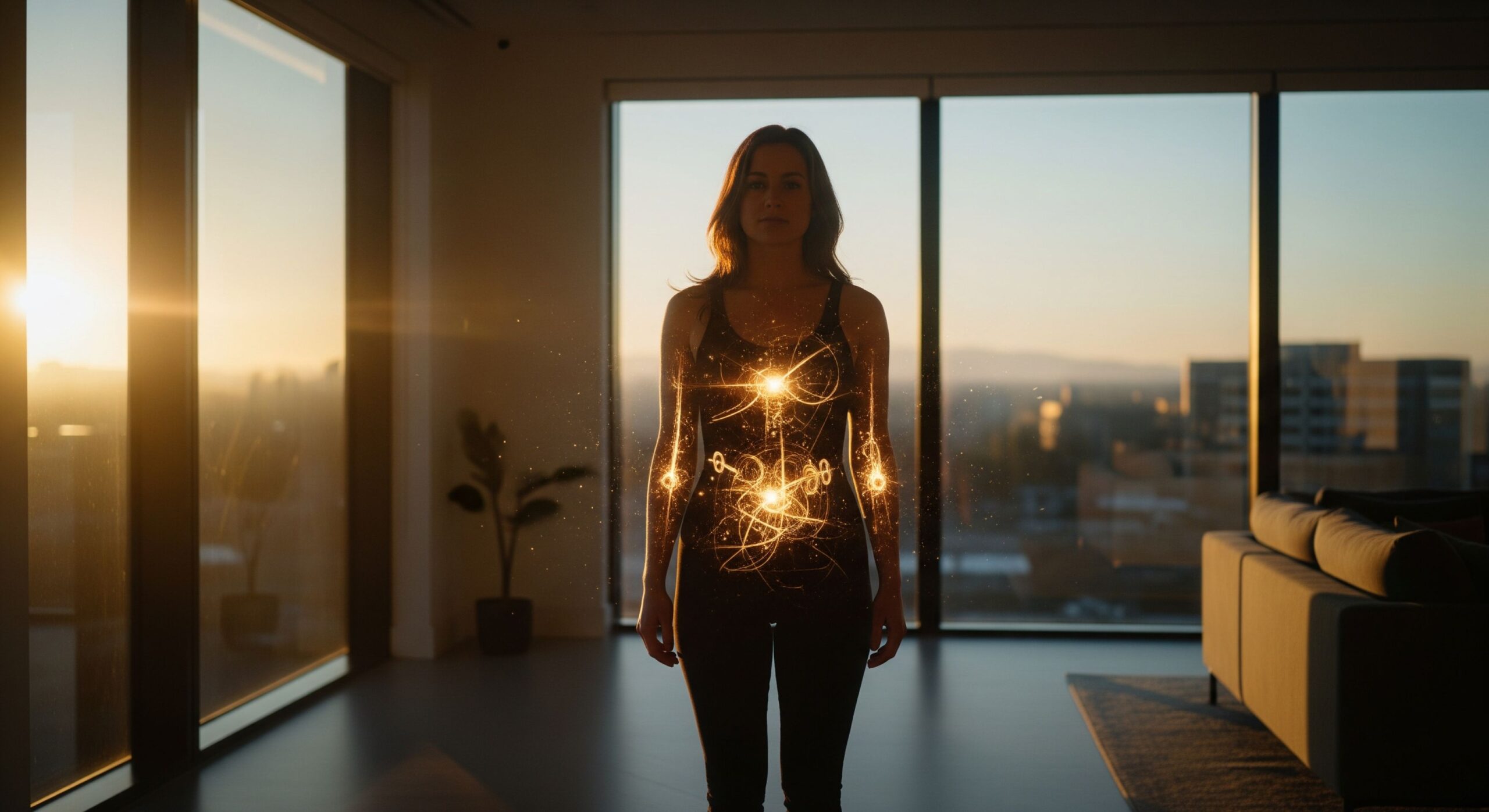
To understand why Michael can’t sleep despite his exhaustion, we have to look beyond the bedroom. The human body is not a single machine; it is a synchronized orchestra of trillions of clocks.
At the center of this system sits the Suprachiasmatic Nucleus (SCN), a tiny region in the brain’s hypothalamus containing about 20,000 neurons. The SCN acts as the conductor. It receives direct input from the eyes regarding light and dark, setting the master tempo for the rest of the body. However, the SCN is not the only timekeeper.
Research over the last decade has confirmed the existence of “peripheral oscillators”- secondary clocks located in nearly every organ and tissue, including the liver, pancreas, gut, and skeletal muscle. In a healthy state, the SCN dictates the rhythm, and the peripheral clocks follow suit. This is “circadian alignment.”
The problem arises when these clocks get decoupled. When Michael eats a large meal at 9:30 p.m., his liver and pancreas clocks wake up, anticipating a period of activity and digestion. Meanwhile, his SCN, sensing darkness (or at least the absence of sunlight), is trying to signal the pineal gland to produce melatonin for sleep. The result is “internal desynchrony.” The brain says sleep; the gut says work. The metabolic consequences are severe.
The Zeitgebers: How We Set the Clock
The circadian system does not run on a perfect 24-hour cycle; it averages about 24 hours and 15 minutes. Without daily resetting, we would drift out of sync with the solar day. The cues that reset our clocks are called zeitgebers (German for “time-givers”).
In 2026, the focus of lifestyle medicine has shifted to manipulating these zeitgebers to optimize health.
1. Light: The Master Switch
Light is the most potent drug most people take, yet few pay attention to the dosage. The discovery of intrinsically photosensitive retinal ganglion cells (ipRGCs) in the early 2000s revolutionized our understanding of this mechanism. These cells do not help us see shapes or colors; they contain a photopigment called melanopsin that specifically detects the intensity and quality of light to regulate the SCN.
Morning light is the “on” switch. Exposure to bright light (ideally sunlight, which provides 10,000 to 100,000 lux) within an hour of waking triggers a cortisol pulse. While cortisol is often demonized as a stress hormone, this morning spike is essential. It clears out adenosine (sleep pressure), mobilizes glucose for energy, and sets a timer for melatonin release 12 to 14 hours later.
Conversely, evening light is the disruptor. The modern American home is flooded with blue-wavelength light from LEDs and screens. Even dim light of 30 to 50 lux can suppress melatonin production by 50%. For Michael, the engineer, his late-night coding sessions under fluorescent bulbs were chemically castrating his ability to sleep, regardless of how tired his muscles were.
2. Food: The Metabolic Clock
While light sets the brain’s clock, food sets the body’s clock. This creates the foundation for “Chrononutrition,” a field pioneered by researchers like Dr. Satchin Panda at the Salk Institute.
The human pancreas has a clock. Insulin sensitivity – the body’s ability to process blood sugar – is highest in the morning and drops precipitously in the evening. A bagel eaten at 8 a.m. elicits a completely different blood sugar response than the same bagel eaten at 8 p.m. Late-night eating forces the pancreas to work during its biological rest phase, leading to higher sustained glucose levels.
Clinical trials have shown that Time-Restricted Eating (TRE) – limiting food intake to a consistent 8-to-10-hour window—can reverse metabolic syndrome even without changing the quality of the diet. By aligning food intake with the body’s active phase, we allow the liver and gut to switch from “storage mode” to “repair mode” during the fast.
3. Temperature and Movement
Core body temperature (CBT) follows a distinct rhythm, hitting its lowest point (nadir) around 4 a.m. and its peak around 5 p.m. This fluctuation dictates performance and recovery.
Athletic records are frequently broken in the late afternoon because that is when CBT is highest, optimizing muscle pliability, reaction time, and grip strength. Exercising at this time also helps anchor the circadian rhythm. However, high-intensity exercise too close to bed – like Michael’s 8:30 p.m. session – spikes CBT and cortisol, physically preventing the body from cooling down enough to initiate deep sleep.
The Pathology of Misalignment: Social Jetlag
You do not need to fly to Tokyo to experience jetlag. Millions of Americans suffer from “Social Jetlag” – a term coined by chronobiologist Till Roenneberg. This phenomenon occurs when there is a discrepancy between our biological clock and our social clock (work/school schedules).
A classic profile involves a worker who wakes up at 6 a.m. Monday through Friday, accumulates sleep debt, and then sleeps until 11 a.m. on Saturday and Sunday to “catch up.” By Monday morning, their body has drifted two time zones west. Waking up at 6 a.m. Monday feels biologically like waking up at 4 a.m.
The health implications are startling. Studies published in journals such as Current Biology and The Lancet have linked social jetlag to a higher BMI, increased systemic inflammation, and a significantly elevated risk of depression. The heart is particularly vulnerable; the “Monday Morning Cardiac Phenomenon”- a statistically significant spike in heart attacks between 6 a.m. and 10 a.m. on Mondays – is partly attributed to this abrupt circadian shifting.
Case Study: The Night Shift Dilemma
The most extreme form of circadian disruption is found in shift workers. The World Health Organization (WHO) and the International Agency for Research on Cancer (IARC) have classified night shift work as a “probable carcinogen.”
Take the case of “Elena,” a 38-year-old ER nurse in Chicago (a composite case based on occupational health data). Elena worked three 12-hour night shifts a week. On her days off, she tried to switch back to a day schedule to spend time with her children. Within two years, she developed pre-diabetes and hypertension, despite being active and eating a vegetarian diet.
Her issue wasn’t calories; it was chaos. Her pancreas was being forced to process glucose at 3 a.m., a time when her melatonin levels were high. Melatonin specifically inhibits insulin secretion to prevent hypoglycemia during sleep. By eating heavily at night, Elena was flooding her system with glucose while her body had actively shut down the mechanism to handle it.
The intervention for Elena didn’t involve medication initially. It involved “Circadian Anchoring.” Her protocol included:
1. Darkness Enforcement: Wearing blue-light blocking glasses for the last 3 hours of her shift (4 a.m. to 7 a.m.) to prevent the morning sun from resetting her clock while she drove home.
2. Nutrient Timing: Eating her main meal before her shift started (8 p.m.) and consuming only light, protein-heavy snacks during the night, avoiding carbohydrates when insulin sensitivity was lowest.
3. Anchor Sleep: Maintaining a core block of sleep overlap (e.g., 4 a.m. to 8 a.m.) even on days off, rather than flipping her schedule entirely.
Six months later, her HbA1c (a marker of blood sugar) dropped from 6.1% (prediabetic) to 5.4% (normal).
The 2026 Tech Landscape: From Tracking to Nudging
In the past, tracking circadian health required a sleep lab. Today, it is on our wrists. The wearable market in 2026 has matured beyond simple step counting. Devices like the Oura Ring 4 and the latest Whoop strap now utilize algorithms that estimate the user’s “Dim Light Melatonin Onset” (DLMO) based on temperature and heart rate variability (HRV) trends.
These devices offer “readiness scores” that are essentially circadian weather reports. They advise users when to push hard and when to pull back. For instance, if a user’s HRV is low and body temperature is elevated, the app might suggest postponing a heavy lift in favor of a zone 2 recovery walk.
However, a new disorder has emerged: Orthosomnia – the perfectionistic pursuit of the perfect sleep score. Clinicians are now seeing patients who sleep well subjectively but suffer anxiety because their “Deep Sleep” percentage was 2% lower than the community average. The goal of rhythmic health is awareness, not neurosis. Technology should serve as a compass, not a cage.
Clinical Outlook: The Rhythmic Prescription
How do we apply this science to the chaotic reality of modern American life? We cannot all live like monks, waking with the sunrise and fasting for 16 hours. But we can implement “Rhythmic Guardrails.”
1. The Morning Anchor
The first 60 minutes of the day determine the quality of your sleep 16 hours later.
* Protocol: Get outside within 30 minutes of waking. Windows filter out too much lux. If the sun isn’t up (common in winter), use a 10,000 lux therapy lamp for 20 minutes.
* Hydration: Drink 16-20 oz of water with electrolytes immediately. The body loses significant water vapor during sleep, and dehydration mimics fatigue.
2. The Caffeine Cutoff
Caffeine has a half-life of roughly 5 to 7 hours. If you drink a 16 oz coffee (approx. 200mg caffeine) at 4 p.m., you still have 100mg active in your system at 10 p.m. This blocks adenosine receptors, preventing the brain from sensing sleep pressure.
* Protocol: No caffeine 10 hours before bed. If you sleep at 10 p.m., the cutoff is noon.
3. The Sunset Protocol
We need to signal safety to the rudimentary brain.
* Light Diet: As the sun goes down, lower the lights in your home. Switch to floor lamps with amber or red bulbs. Avoid overhead LED lighting, which mimics the midday sun.
* Digital Twilight: If you must use screens, use software filters (like f.lux or Night Shift) and reduce brightness to the minimum.
4. The Kitchen Closure
This is the hardest but most impactful change for metabolic health.
* Protocol: Finish the last caloric intake 3 hours before sleep. If bedtime is 10 p.m., the kitchen closes at 7 p.m. This allows the stomach to empty and core body temperature to drop, facilitating the transition into deep (slow-wave) sleep.
The Future of Medicine is Timing
The integration of circadian biology into clinical practice is changing how we treat chronic disease. We are seeing the rise of “Chronotherapy” – administering drugs at specific times of day to maximize efficacy and minimize toxicity.
For example, blood pressure medications are increasingly prescribed to be taken at night (for “non-dippers” whose pressure doesn’t drop during sleep), significantly reducing stroke risk. Chemotherapy efficacy can vary depending on the cell division cycles of both the tumor and the healthy tissue.
The rhythmic health revolution of 2026 is not about adding more to our to-do lists. It is about timing. It is the realization that we are creatures of the sun, living in an illuminated world. By respecting the biological oscillating rhythms that have evolved over millions of years, we can reclaim our energy, stabilize our moods, and build a foundation of health that lasts.
As we look toward the latter half of the decade, the question is no longer “How much sleep did you get?” but rather, “How well is your day aligned?” The answer lies in the clock within.
Deep Dive: The Molecular Mechanism (For the Curious)
To truly appreciate the power of circadian rhythms, one must look at the Nobel Prize-winning science (2017) behind the Period (PER) and Cryptochrome (CRY) genes.
Inside the nucleus of a cell, the CLOCK and BMAL1 proteins bind together and attach to the DNA, initiating the transcription of the PER and CRY genes. The resulting RNA moves out of the nucleus into the cytoplasm, where it is translated into PER and CRY proteins.
Over the course of the day, these proteins accumulate. Once they reach a critical threshold (usually by evening), they travel back into the nucleus and block CLOCK and BMAL1, effectively turning off their own production. This negative feedback loop takes approximately 24 hours to complete.
This molecular ticking happens in your heart cells, your skin cells, and your immune cells. When you expose yourself to bright light at 11 p.m., you aren’t just “staying up late.” You are scrambling this delicate transcriptional-translational feedback loop. You are confusing your DNA.
Practical Troubleshooting: The “Second Wind”
Many people experience a “second wind” around 10:00 p.m. or 11:00 p.m. They feel tired at 9:00 p.m. but push through it to watch a show or finish an email. Suddenly, they feel wide awake.
This is a stress response. When you ignore the initial “sleep gate” (the drop in arousal caused by melatonin onset), the body assumes there is a threat preventing sleep. The adrenal glands respond by releasing cortisol and adrenaline to keep you alert. You are now running on stress hormones.
The solution is to catch the wave. When you feel that first dip in energy between 9:00 p.m. and 10:00 p.m., that is the physiological train leaving the station. If you miss it, the next one might not come for another 90 minutes (the length of an ultradian cycle).
The Role of Temperature Manipulation
Before the invention of HVAC systems, humans were exposed to a natural drop in ambient temperature at night. This drop is a signal to the body to sleep. Modern insulation and central heating have blunted this signal.
The Hot/Cold Paradox:
To sleep, your core body temperature must drop by about 2°F to 3°F. Paradoxically, a warm bath or shower before bed helps this process. The heat dilates the blood vessels in the hands and feet (vasodilation), which draws heat from the core to the surface, where it radiates away. This rapid cooling of the core acts as a powerful hypnotic.
Conversely, sleeping in a room that is too warm (above 70°F) prevents this heat dissipation, leading to fragmented sleep and reduced REM cycles. The National Sleep Foundation recommends a bedroom temperature between 60°F and 67°F.
Conclusion
Rhythmic health is not a trend; it is a return to our biological baseline. In a 24/7 society that celebrates “the grind,” aligning with our circadian rhythms is an act of rebellion. It is a declaration that biology cannot be hacked, only supported. Whether you are a shift worker, a CEO, or a parent, the path to sustainable energy starts with watching the clock – not to beat it, but to join it.
References:
Baron KG, Abbott S, Jao N, Manalo N, Mullen R.Orthosomnia: are some patients taking the quantified self too far? J Clin Sleep Med. 2017;13(2):351-354. doi:10.5664/jcsm.6472.
International Agency for Research on Cancer. IARC Monographs Volume 124: Night Shift Work. Published June 2, 2020.
Manoogian ENC, Panda S. Time-restricted eating for the prevention and management of metabolic diseases. Endocr Rev. 2022;43(2):405-436. doi:10.1210/endrev/bnab027.
Nobel Assembly at Karolinska Institutet. The 2017 Nobel Prize in Physiology or Medicine – Press release. NobelPrize.org. Published October 2, 2017.
Richards J, Gumz ML. Advances in understanding the peripheral circadian clocks. *FASEB J*. 2012;26(9):3602-3613. doi:10.1096/fj.12-203554.
Wittmann M, Roenneberg T. Social jetlag: misalignment of biological and social time. *Chronobiol Int*. 2006;23(1-2):497-509. doi:10.1080/07420520500545979.
MEDICAL DISCLAIMER: This content is for informational purposes only and does not constitute medical advice, diagnosis, or treatment. Always seek the advice of your physician or other qualified health provider with any questions you may have regarding a medical condition. In case of emergency, call 911 immediately.