

Choosing a US rehab center is a major decision. This is especially true when you or a loved one needs help for a substance use disorder. This can be a very stressful time. As a result, finding the right help can feel confusing. It is easy to feel lost.
The main problem is that you often get too much information at once. For example, there are many websites and different opinions. Some places even make promises that are hard to believe. So, how can you tell which place is truly helpful? This is a fair question when you start the process of choosing a US rehab center.
For that reason, we made this guide to be a simple roadmap. We will help you understand your choices and know what questions to ask. In the end, our goal is to help you find a place that offers a true path to recovery. There are many confusing treatment choices, but you can make a smart decision.
Inpatient vs. Outpatient: The First Step in Choosing a Rehab Center
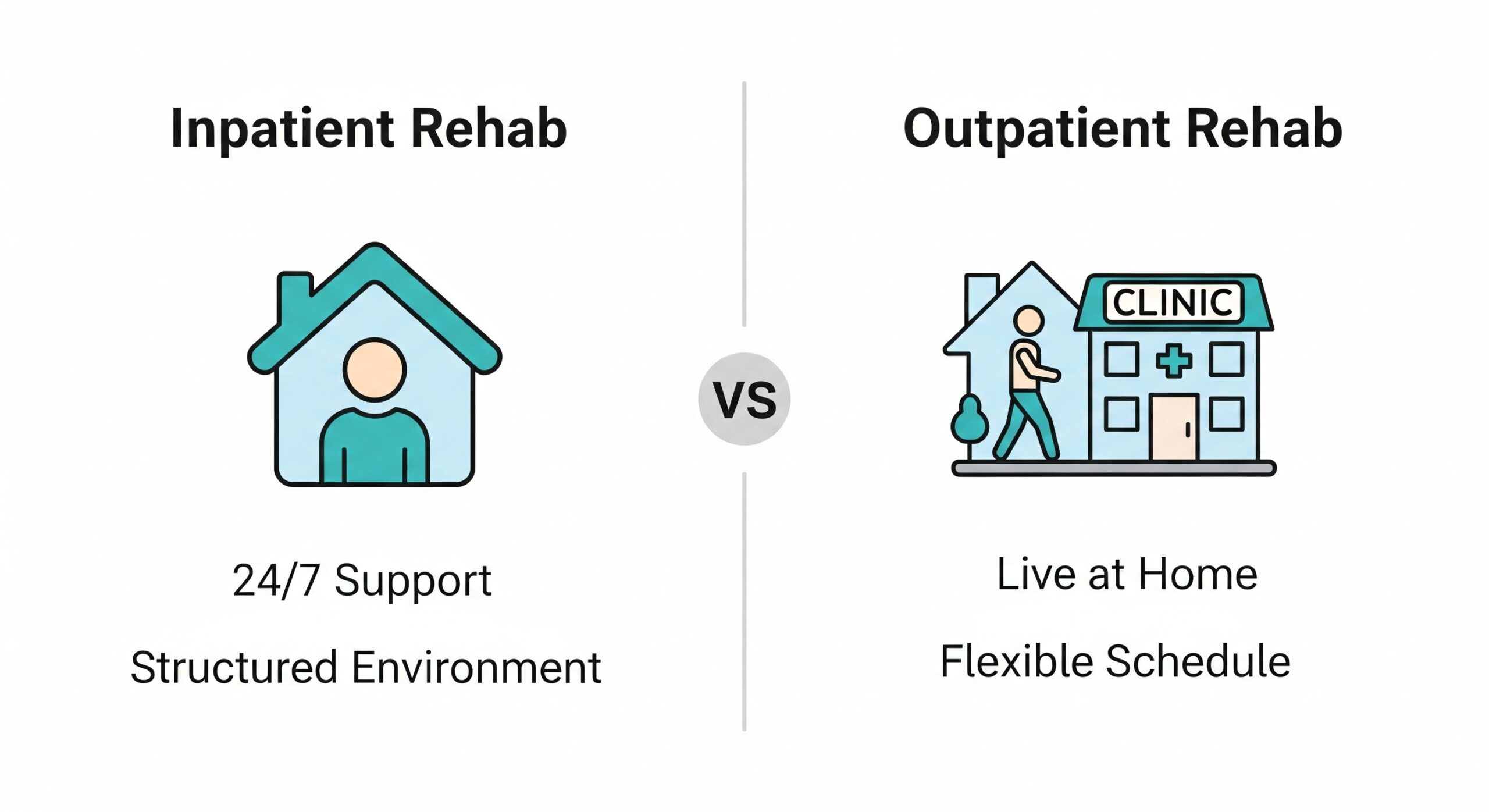
Your first big decision is about the level of care. For instance, Inpatient treatment means you live at the facility. It provides 24/7 support in a drug-free place. This full-time approach is usually best for severe addiction. It also helps those who live in an unstable home. On the other hand, outpatient treatment offers more freedom. It allows you to live at home while you go to therapy sessions. This often works well for milder addiction or for people with strong support at home.
Understanding Treatment Philosophy When Choosing a Rehab Center
Besides nice pictures, the heart of any good rehab center is its treatment philosophy. This is the set of beliefs they use to help people get better. Therefore, it is very important to find a style that feels right. You should ask the staff to explain their philosophy in simple terms. Some key styles include:
- Evidence-Based Therapies (EBT): These are methods that science has shown to work. For instance, Cognitive Behavioral Therapy (CBT) helps change negative thoughts. Another one is Dialectical Behavior Therapy (DBT), which teaches how to manage feelings.
- 12-Step Programs: This approach uses the ideas of groups like Alcoholics Anonymous (AA). As a result, it focuses on support from others with similar problems.
- Holistic Care: These methods treat the whole person. This includes the mind, body, and spirit. For example, some centers offer yoga, meditation, and art. These are often used with other therapies to help a person’s overall health.
For example, a woman named “Sarah” first picked a center because it looked nice. However, she soon found its general plan did not help with her past trauma. Because of this, she switched to a center that focused on trauma care. After that, she finally started to heal. Her story shows that the style of therapy is more important than the perks.
Verifying Credentials: A Critical Step in Choosing a Rehab Facility
Trust is a key part of recovery. This trust starts with knowing a facility is real and follows the rules. In short, a good facility will be open about its credentials. Here’s how you can check them:
- State Licensing: First, this is the most basic requirement. You can check it by searching online for your state’s “department of health” or licensing board. They usually have a public list of approved places.
- Program Accreditation: Second, this means a center meets a higher standard. You should look for logos from groups like The Joint Commission or CARF on their website. These groups check the quality and safety of the center.
- Staff Credentials: In addition, you should ask about the staff’s training. Are the therapists licensed? Is there a medical doctor on staff, especially if they offer detox services?

Navigating Costs When Choosing a Rehab Center
The cost of rehab can be a big worry. However, try not to let it stop you. Thankfully, most centers take private insurance. Before you call, have your insurance card ready. While a good admissions team will guide you, you should also feel ready to ask direct questions. In fact, clear money details are a key part of choosing a US rehab center.
- Initial Check: First, the center should offer a free, private check of your insurance benefits.
- Ask Specific Questions: For instance, don’t just ask “Do you take my insurance?” Instead, ask specific questions like: “What is my deductible?” or “What will my out-of-pocket cost be for 30 days?”
- Get it in Writing: Finally, you should ask for a written summary of your costs before you agree to anything. A good facility will be happy to provide this. If a center is unclear about money, that is a big red flag.

Finding Specialized Programs When Choosing a Rehab Center
Addiction is a complex issue. Because of this, a “one-size-fits-all” plan rarely works. For this reason, a quality rehab center will offer special programs for different groups of people. You should look for a center that understands these unique needs:
- Dual Diagnosis: This is for people who have both an addiction and a mental health condition like depression. It is very important that both issues are treated at the same time.
- Gender-Specific: People of all genders can face unique pressures. Therefore, programs designed for specific gender identities can create a more comfortable and safe space.
- Trauma-Informed Care: This approach understands that past trauma is often a root cause of addiction. As a result, the staff is trained to create a safe place that avoids causing more trauma.

Red Flags to Avoid When Choosing a Rehab Center
Unfortunately, some places use bad marketing tricks. You should be careful if you see these things:
- Promises of a cure: Be careful, because there is no such thing as a “cure” or guarantee in recovery.
- Vague details: A good center will always be able to clearly explain its treatment methods.
- Pressure to decide quickly: Above all, you should have enough time to make a calm, thoughtful decision.
Frequently Asked Questions (FAQ)
How long does rehab last?
Most programs last 30, 60, or 90 days. However, the right amount of time really depends on a person’s needs and progress.
Can I lose my job for going to rehab?
In many cases, laws like the ADA and FMLA can protect your job while you get treatment. You should talk to your HR department to learn more.
Your Next Step: Taking Action with Confidence
You have now learned about the key things to look for when choosing a US rehab center. Knowledge is a powerful tool. However, using it is the most important part. Remember that this process is a journey, not just one decision. Therefore, it is okay to feel unsure, but don’t let that stop you from moving forward.
So, your next step is to take one small action. You don’t need to have everything figured out. For example, that action could be:
- Making a list of 2-3 centers that look promising from this guide.
- Calling your insurance company to ask about your benefits.
- Reaching out to just one center on your list to ask a few questions.
- Talking to a trusted friend or doctor about your options.
In the end, taking this single step is a brave act of hope. Trust your gut, be patient, and know that the right help is out there. You are making a courageous choice for a healthier future by carefully choosing a rehab center.

How to Choose the Right US Rehab Center: An Interactive Guide
Step 1: Choose Your Level of Care
The first decision is how immersive your treatment should be. This depends on addiction severity, your home environment, and personal commitments.
Inpatient (Residential)
You live at the facility 24/7. Best for severe cases and those needing a structured, substance-free environment.
Outpatient
You live at home and attend sessions at a clinic. Ideal for milder cases and those with strong home support.
Step 2: Verify Credentials
Legitimacy is non-negotiable. A quality facility must have proper credentials, which proves they meet high standards of care and safety.
- State Licensing: This is the absolute minimum requirement. Check your state’s health department website to verify.
- National Accreditation: Look for seals from respected bodies like The Joint Commission or CARF. This indicates a superior level of quality.
Step 3: Ask About Treatment Philosophy
Amenities are nice, but the therapeutic approach is what drives success. Ensure their philosophy aligns with your needs.
- Evidence-Based Practices: The center should use scientifically-backed therapies like Cognitive Behavioral Therapy (CBT) or Dialectical Behavior Therapy (DBT).
- Individualized Plans: Avoid “one-size-fits-all” programs. Treatment should be tailored to your specific history, needs, and goals.
- Holistic Options: Ask if they offer complementary therapies like yoga, mindfulness, or nutritional counseling to treat the whole person.
Step 4: Understand the Costs
Financial clarity is crucial. A reputable center will be transparent about all costs and help you navigate your options.
- Insurance Verification: A good admissions team will perform a free, confidential check of your benefits and explain your coverage clearly.
- Full Transparency: They should provide a detailed breakdown of costs, including what’s covered and what your out-of-pocket expenses will be.
- Financing Options: Ask about payment plans or financing options if you need them. Vague answers about cost are a major red flag.
Step 5: Look for Specialized Programs
Addiction is complex and often intersects with other challenges. The right facility will offer specialized tracks for specific needs.
- Dual Diagnosis: For co-occurring mental health issues like depression, anxiety, or PTSD. This is critically important.
- Gender-Specific: Separate programs for men or women can provide a more focused and comfortable healing environment.
- Trauma-Informed Care: A crucial specialty that addresses underlying trauma as a root cause of substance use.
Step 6: Watch for Red Flags
Be wary of unethical marketing and high-pressure tactics. Your decision should be made with clarity and confidence, not fear.
- “Guaranteed Success”: There are no guarantees in recovery. This is a false and dangerous promise.
- Vague Program Details: If they can’t clearly explain their daily schedule and therapeutic methods, be cautious.
- High-Pressure Sales Tactics: You should never feel rushed. A quality provider will respect your need to make a careful decision.